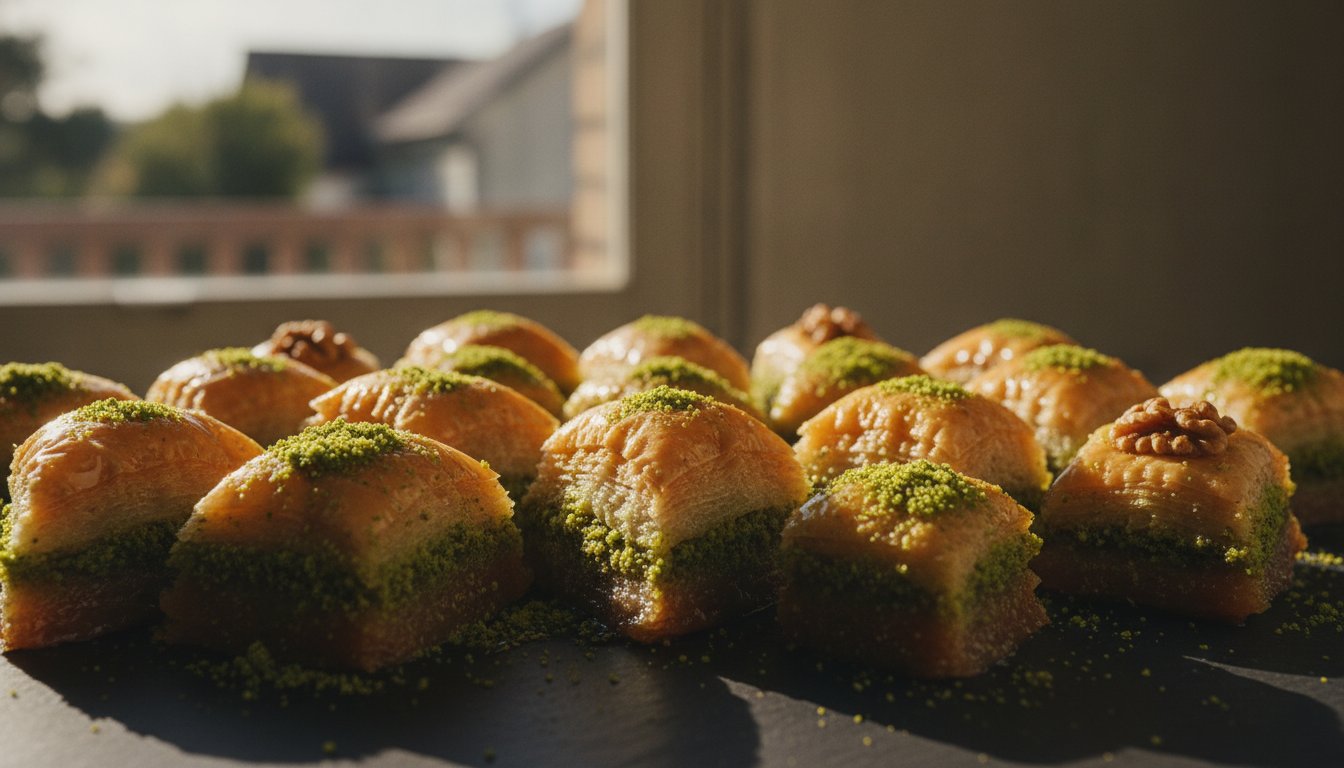
Most people think they’ve tasted real baklava, but if it doesn’t shatter into forty paper-thin shards of buttery gold at the first bite, you’re missing the true soul of this ancient craft. You’ve likely encountered those soggy, cloyingly sweet versions that leave you reaching for water rather than another piece. It’s a common frustration when a treat promised to be legendary feels more like a sugar-coated disappointment. We understand that finding an authentic experience can be tricky, especially when different regional styles get blurred together and the true essence of the dessert is lost.
In this guide, you’ll discover the rich history and meticulous craftsmanship that defines genuine Turkish Baklava. We’ll show you exactly how to identify high-quality layers and why the right balance of syrup and crunch matters so much for that perfect flavour profile. You’ll also learn the best ways to store and serve these delicate sweets to keep them fresh at home. Finally, we’ll point you toward a cherished Sydney institution where the tradition of handmade excellence has been alive since 1985, ensuring your next bite is nothing short of spectacular.
Key Takeaways
- Understand why the strict “40 layers” rule and the use of clarified butter are essential for achieving that perfect, delicate crunch.
- Explore the distinct flavour profiles of vibrant pistachio and toasted walnut varieties to help you choose your favourite treat.
- Learn the traditional “upside down” method for eating Baklava to ensure every bit of syrup and pastry hits your palate perfectly.
- Discover a legendary Surry Hills spot that’s been handcrafting authentic Turkish sweets using time-honoured family traditions since 1985.
What is Baklava? The Golden Icon of Turkish Sweets
Imagine a dessert so delicate it requires forty layers of pastry, each thinner than a sheet of silk. This is Baklava, the undisputed crown jewel of Turkish confectionery. At its heart, it’s a masterpiece of texture and taste, constructed from stacks of paper-thin filo pastry, a generous filling of crushed nuts, and a final drenching of shimmering syrup. If you’re wondering What is Baklava? beyond its basic ingredients, it’s essentially a culinary legacy that dates back to the imperial kitchens of the Ottoman Empire. It was once a luxury reserved for royalty and the wealthy, served during lavish palace banquets to impress foreign dignitaries. Today, it remains a symbol of abundance and meticulous craftsmanship.
The Cultural Significance of the Sweet Treat
In a Turkish household, these golden diamonds are far more than just a post-dinner snack. They represent a deep-seated tradition of hospitality and communal joy. You’ll always find a platter at the centre of the table during religious holidays like Eid or at significant family milestones. There’s a beautiful Turkish proverb, “tatlı yiyelim, tatlı konuşalım,” which literally translates to “let’s eat sweet and talk sweet.” It perfectly captures the philosophy that sharing a sweet treat fosters kindness and harmony between people. Bringing a box of handcrafted sweets to a host isn’t just polite; it’s a gesture of profound respect and friendship that we’ve seen shared in Sydney for decades.
Turkish Baklava vs. Other Regional Varieties
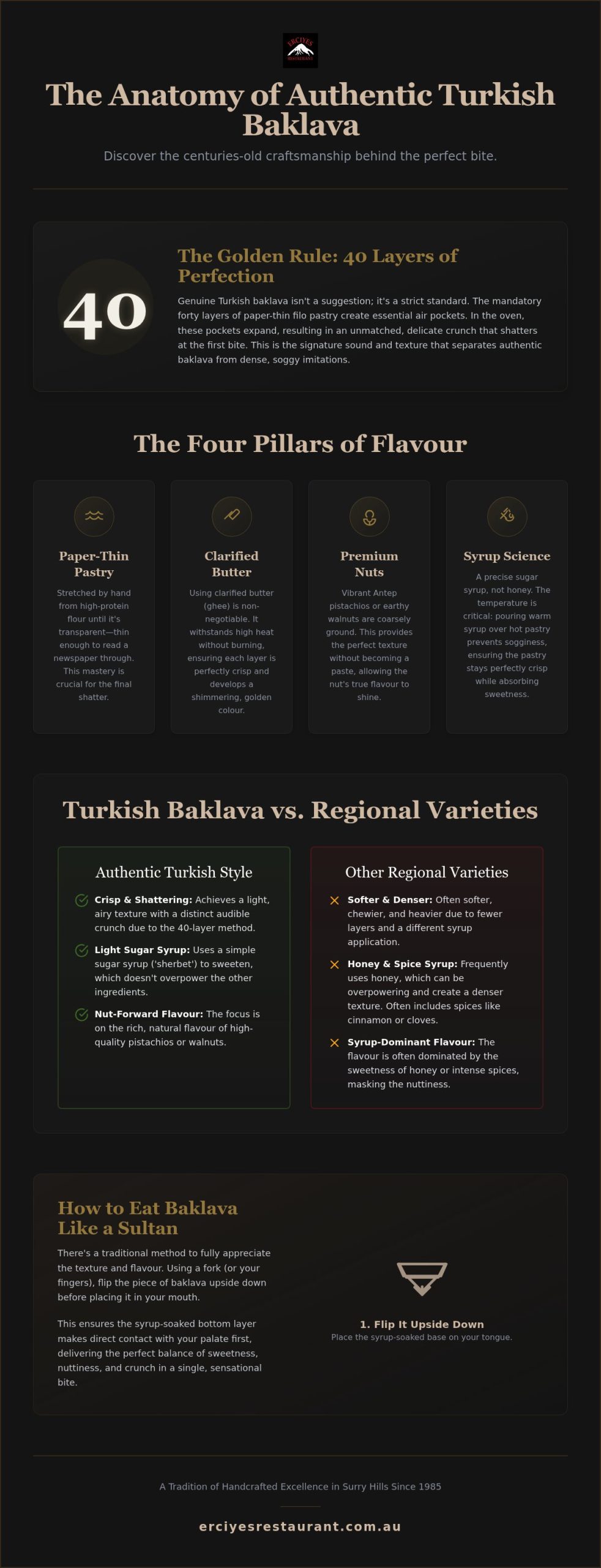
While you’ll find similar pastries across Greece and the Levant, the Turkish version has distinct characteristics that set it apart. The most significant difference lies in the syrup. While other cultures might use honey or heavy spices like cinnamon and cloves, authentic Turkish Baklava relies on a simple, precise sugar syrup called sherbet. This allows the natural flavour of the nuts, usually vibrant green pistachios or earthy walnuts, to take centre stage. The focus here is also heavily on the “crunch.” A master baker aims for a pastry that’s so crisp it makes a distinct sound when your fork pierces the layers. This sensory detail is often lost in heavier, honey-soaked regional varieties which tend to be softer and more floral.
The Anatomy of Perfection: What Makes Authentic Turkish Baklava?
Achieving the perfect tray of Baklava isn’t about luck; it’s about precision engineering. Most home recipes suggest using store-bought pastry, but true masters know that the “40 Layers” rule is the baseline for quality. This specific number of sheets creates the necessary height and internal air pockets required for that legendary crunch. It’s why this dessert has been hailed as The Golden Icon of Turkish Sweets for centuries. Without those distinct, paper-thin divisions, the pastry becomes dense and loses its ability to breathe.
The Pastry: Paper-Thin Mastery
To get those forty layers right, you need high-protein flour. It gives the dough the necessary elasticity to be stretched by hand until it’s virtually transparent. We often say the pastry should be thin enough to read a newspaper through it. When these layers are stacked and brushed with butter, they trap tiny pockets of air. Once they hit the heat of the oven, these pockets expand and crisp up. This creates the signature “shatter” effect. It’s a multisensory experience where the sound of the crunch is just as important as the taste itself.
The Filling: Pistachios, Walnuts, and Beyond
The heart of the sweet depends entirely on the quality of the nuts. For the ultimate experience, we look to Antep pistachios from Gaziantep. They’re prized for their intense green colour and concentrated flavour. If you prefer a more robust, earthy profile, walnut baklava is the traditional choice. Regardless of the variety, the nuts must be coarsely ground. If they’re too fine, they turn into a paste; if they’re too large, they ruin the pastry’s delicate structure. We ensure the nuts are distributed evenly so every single bite offers a perfect balance of crunch and creaminess.
Clarified butter, or ghee, is the secret to that shimmering golden hue. By removing the milk solids, we ensure the butter can withstand high oven temperatures without browning too quickly or burning. Then there’s the syrup science. It’s a delicate dance of temperature control. Pouring boiling syrup over hot pastry leads to a soggy, heavy mess. A master baker knows exactly when to marry the two, often waiting for the tray to reach a specific warmth before adding the sherbet. This ensures the pastry stays crisp while absorbing just enough sweetness to satisfy. This level of precision is why hand-rolled trays always outshine machine-made versions. You can taste this dedication to the craft in every bite of our handcrafted Turkish sweets.
Exploring the Varieties: From Classic Pistachio to Regional Delights
Once you’ve appreciated the craftsmanship of the layers, it’s time to explore the vibrant world of flavours. Baklava isn’t a one-size-fits-all dessert; it’s a diverse family of sweets with unique personalities. Fıstıklı Baklava is the iconic choice, packed with those bright green pistachios that look like jewels tucked between the pastry. If you’re after something with a deeper, more earthy profile, Cevizli Baklava uses toasted walnuts to create a robust contrast against the sweet syrup. It’s a traditional favourite for those who prefer a less intense sweetness and a more savoury nuttiness.
For travellers or those wanting a treat that lasts, Kuru Baklava is the “dry” variant. It has a thicker syrup and is cooked slightly differently to extend its shelf life without losing that essential crunch. On the opposite end of the spectrum is Sütlü Nuriye. This variation uses a milk-based syrup instead of water, resulting in a lighter, whiter appearance and a much softer, creamier texture that’s incredibly refreshing on a warm Sydney afternoon. It’s the perfect choice if you find traditional versions a bit too heavy.
Shapes and Textures
The way the pastry is cut and folded changes how you experience the flavours. Havuç Dilimi, or the “carrot slice,” is a large triangular wedge that’s often sliced open and stuffed with a thick slab of Turkish ice cream. Then you have the Bülbül Yuvası, which translates to “nightingale’s nest.” These are circular, hollowed-out pastries with a concentrated centre of nuts. If you love a high nut-to-pastry ratio, look for Sarma. These are tightly rolled cylinders of vibrant green pistachio that melt in your mouth and offer an explosion of flavour in every bite.
Modern Twists in the 21st Century
While we honour tradition, the world of Turkish sweets is always evolving. Modern patisseries now experiment with chocolate and hazelnut infusions, creating a richer, more decadent experience for a new generation of dessert lovers. We’re also seeing the development of vegan-friendly options that replace traditional butter with plant-based fats, carefully selected to maintain that vital shatter. All these innovations still look back to Gaziantep, which has been the world capital of Authentic Turkish Baklava since the Ottoman era and remains the ultimate benchmark for quality. Gaziantep is widely recognised as the historic heart of baklava production, where the techniques we use today were first perfected centuries ago.
How to Eat Baklava Like a Sultan: Pairings and Etiquette
Eating this legendary dessert is far more than a simple act of consumption; it’s a sensory ritual that has been refined over centuries. If you want to experience the full depth of flavour, you must adopt the “Upside Down” method. Before taking a bite, flip the piece over so the bottom layers rest against your palate. Since the syrup naturally settles at the base, this technique ensures the sweetness hits your taste buds first, followed by the buttery crunch of the pastry. It’s a small adjustment that completely transforms the experience, allowing the rich textures to mingle perfectly.
Freshness is something you can actually hear. When you press your fork into a piece of high-quality Baklava, or take that first bite, you should hear a distinct, crisp “snap.” This sound confirms the pastry is perfectly dry and the layers haven’t become a dense, soggy mass. Temperature also plays a vital role in this experience. You should never serve these sweets straight from the fridge. Cold temperatures cause the clarified butter to seize, resulting in a waxy texture that masks the delicate flavours of the nuts. Room temperature is the sweet spot where the pastry remains light and the syrup stays fluid.
Because of its richness, portion control is part of the etiquette. Traditionally, one or two pieces are considered the perfect serving. It’s designed to be a concentrated burst of indulgence rather than a heavy meal. Savouring each bite slowly allows you to appreciate the craftsmanship that went into every thin layer.
The Perfect Pairings
To balance the intense sweetness, the right beverage is essential. We recommend these traditional pairings to enhance your experience:
- Turkish Tea (Çay): Served in tulip-shaped glasses, the slight astringency of black tea cuts through the sugar and cleanses your palate between bites.
- Turkish Coffee: The bold, bitter profile of a finely ground Turkish coffee provides a sophisticated contrast to the honeyed pastry.
- Kaymak: For the ultimate luxury, add a dollop of this thick, clotted cream. It provides a velvet finish that rounds out the crispness of the layers.
Identifying High-Quality Baklava
Before you even take a bite, your eyes and nose can tell you if you’ve found the real deal. Start with the Colour Test. You’re looking for a bright, translucent gold. If the pastry looks dull or dark brown, it’s likely overbaked or made with inferior fats. Next, try the Pool Test. Tilt the tray or look closely at the bottom of the piece; there should be no puddle of syrup. A master baker ensures the pastry absorbs the syrup without becoming a “puddle.” Finally, trust the aroma. It should smell predominantly of fresh, high-quality butter and toasted nuts. If you detect a heavy scent of old oil, it’s best to look elsewhere.
Ready to put these tips to the test? Come and enjoy a traditional serving of our Turkish sweets at our Surry Hills home and taste the difference that forty years of tradition makes.
Handcrafted Baklava in Sydney: The Erciyes Restaurant Legacy
Erciyes Turkish Restaurant isn’t just a place to eat; it’s a living piece of Sydney’s culinary history. Since 1985, we’ve been dedicated to bringing the authentic flavours of Istanbul to the heart of Surry Hills. In an era where mass production is the norm, our commitment to traditional, labour-intensive methods remains unchanged. Every tray of Baklava we serve is handcrafted right here on-site, ensuring that the forty layers of pastry are as crisp and delicate as they were forty years ago. It’s this unwavering dedication to the craft that has made us a reliable local staple for generations of Sydney families who value authenticity above all else.
There’s no better way to conclude a smoky, savoury charcoal grill feast than with a plate of our golden sweets. The contrast between the robust, charred flavours of the grill and the delicate, honeyed crunch of the pastry is a sensory delight. Whether you’re dropping in for a quick lunch or settling in for a long, communal dinner, our Turkish sweets provide that final, indulgent note of satisfaction. We take immense pride in being a cultural ambassador for our heritage, ensuring every guest feels like an expected friend in our home.
A Family Tradition in Every Layer
Our story began with our founders’ vision to share the genuine warmth of Turkish hospitality. The secret to our success lies in the consistency of our syrup and the quality of our hand-picked nuts, a formula we’ve protected for four decades. We maintain this level of excellence through a personal, heartfelt touch that machines simply cannot replicate. We invite you to step into our restaurant and experience the Erciyes tradition for yourself, where the passion of a family-run business is evident in every shimmering layer.
Functions and Catering in Sydney
If you’re planning an event, our Baklava is the ideal “mess-free” dessert that always impresses a crowd. It’s a popular addition to any private function menu, offering a touch of cultural elegance to birthdays, anniversaries, and family milestones. For those looking to elevate the workplace, our corporate catering in Sydney packages provide a sophisticated alternative to standard office treats. You can even pair your feast with our live belly dancing entertainment for a truly unforgettable night of celebration. Book your next gathering with us and let us share the joy of our heritage with your guests in an atmosphere of abundance and comfort.
Experience the Golden Crunch of Tradition
Authentic Turkish sweets are a labour of love that shouldn’t be rushed or mass-produced. You now know that the secret to the perfect Baklava lies in those forty hand-rolled layers and the precise temperature of the syrup. Whether you prefer the vibrant green of pistachios or the earthy depth of walnuts, the true test is always in the shatter of the pastry and the warmth of the hospitality that accompanies it. It’s about more than just sugar; it’s about a legacy of craftsmanship that has been perfected over generations.
As a Surry Hills local favourite since 1985, we invite you to join our family table and experience this heritage firsthand. Our pastry is hand-rolled daily to ensure every guest enjoys the freshest, most authentic bite possible. Book your table at Erciyes and taste our handcrafted baklava today! We look forward to welcoming you and sharing the sweet traditions that have defined our restaurant for four decades. Come and discover why some secrets are best shared over a glass of tea and a plate of gold.
Frequently Asked Questions
Is baklava originally Turkish or Greek?
While many cultures across the Mediterranean claim this dessert, the modern version was perfected in the Ottoman Palace kitchens in Istanbul. It’s a shared culinary heritage, but the specific technique of rolling paper-thin layers is distinctly Ottoman. Most historians point to the Topkapi Palace as the site where the “Baklava Procession” originated. This makes the Turkish claim particularly strong in terms of technical development and historical documentation over the centuries.
What is the best way to store baklava so it stays crunchy?
Store your sweets in an airtight container at room temperature in a cool, dry place. Avoid the fridge at all costs, as the humidity will soften the pastry and cause the butter to crystallise, ruining the texture. If kept correctly, it will stay fresh and crisp for up to five days. For longer storage, a pantry shelf away from direct sunlight is your best bet to maintain that essential golden crunch.
Does baklava contain honey or sugar syrup?
Authentic Turkish Baklava uses a simple sugar syrup known as sherbet rather than honey. This is a key distinction from Greek varieties. The sugar syrup is carefully boiled with a touch of lemon juice to prevent crystallisation. This choice is deliberate; it allows the natural flavours of the high-quality pistachios or walnuts to shine through without being masked by the strong, floral notes often found in honey-based versions.
Is baklava suitable for vegans or vegetarians?
Traditional versions are perfectly suitable for vegetarians but usually aren’t vegan because of the clarified butter used between every layer. Some modern patisseries are now developing vegan-friendly alternatives that use high-quality plant-based oils to achieve a similar shatter. If you have specific dietary requirements, it’s always best to ask your host about the fats used in their specific recipe before you dive in for a bite of these rich treats.
How many layers are actually in a piece of baklava?
A standard, high-quality piece typically features forty individual layers of filo pastry. This isn’t just a random number; it’s a traditional benchmark for excellence that ensures the dessert has the right height and internal air pockets. Each sheet must be hand-rolled until it’s virtually transparent. This meticulous stacking process is what creates the legendary “shatter” effect that distinguishes professional-grade sweets from simpler, home-baked versions found in some Sydney cafes.
What nuts are typically used in traditional Turkish baklava?
Pistachios and walnuts are the two most traditional choices used in Turkey. Specifically, the bright green Antep pistachios from the Gaziantep region are considered the gold standard for their intense colour and flavour. Walnuts are a popular alternative, offering a more robust and earthy profile. While some regional variations might experiment with hazelnuts or cashews, the classic Turkish experience almost always centres on these two iconic and delicious nut varieties.
Can you freeze baklava for later?
You can freeze it, but you should do so carefully to protect the delicate layers. Wrap the Baklava tightly in several layers of plastic wrap and then place it in a heavy-duty freezer bag to prevent freezer burn. When you’re ready to eat it, let it thaw completely at room temperature for several hours. Don’t use a microwave to speed up the process, as this will turn the pastry into a soggy mess.
Why is my baklava soggy at the bottom?
Sogginess usually happens because the syrup was added at the wrong temperature or in excessive amounts. If the syrup is too thin or poured over the pastry while both are boiling hot, the layers absorb too much liquid and lose their structural integrity. A master baker knows to wait until the tray has cooled slightly before adding the hot syrup. This ensures the bottom layers stay firm while still soaking up that essential sweetness.