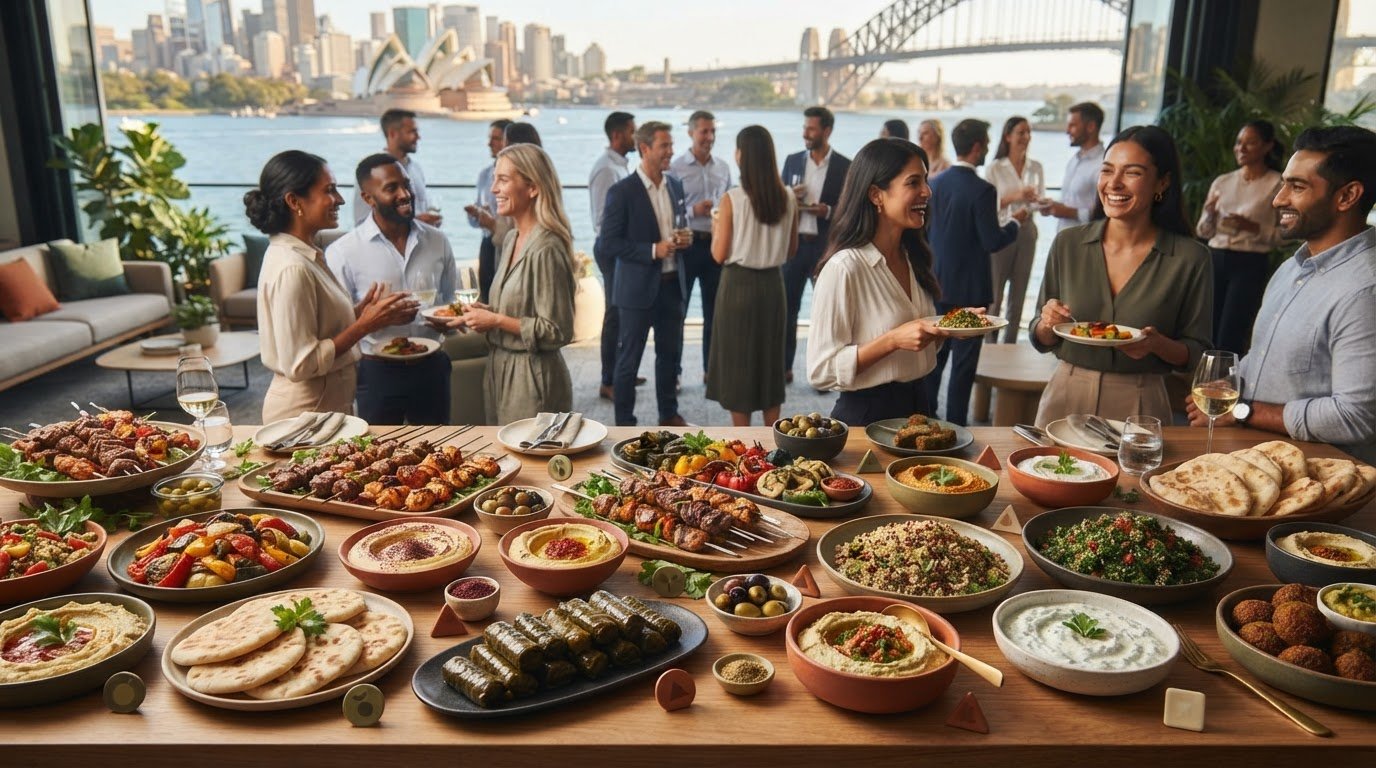
A welcoming corporate menu starts with clear information, not guesswork. For catering for dietary requirements in Sydney, collect dietary needs with RSVPs, clarify whether each request is an allergy, intolerance or preference, then send a written summary to the caterer. Begin planning at least two weeks before the event, and send a formal dietary requirements request at least 72 hours ahead.
Serving a varied group can be tricky when you want every guest to have a meal that feels considered. A clear plan helps you gather allergy information, label dishes accurately and offer vegetarian, vegan and dairy-free choices as part of the menu. This guide covers what to ask guests, how to organise their responses and practical ways to plan corporate event catering for different needs, so everyone can enjoy the shared table.
Key Takeaways
- Start planning at least two weeks ahead, and use RSVPs to gather clear details about allergies, intolerances and food preferences.
- Separate life-threatening allergies from other requests, then share dietary counts and relevant details with the caterer in writing.
- For coeliac requirements, plan for cross-contact risks as well as gluten-containing ingredients, and make dietary labels easy to spot.
- Make vegetarian and vegan meals satisfying options in their own right, and consider making at least 30% of the menu vegetarian.
- Distinguish dairy-free needs from other dietary requests so guests can choose suitable meals and drinks with confidence.
1. How do you manage multiple dietary requirements at a corporate event?
Catering for dietary requirements in Sydney starts with gathering guest needs and sharing clear meal counts. Sydney caterers can offer vegetarian, vegan and gluten-free options for corporate events. Ask whether each request relates to an allergy, intolerance, medical condition or preference, then plan the dishes and service around those details.
Start with a flexible menu built from components that suit different guests. For example, serve a base dish with toppings or sides on the side. One dish might have gluten-free and vegetarian versions, keeping the menu manageable while offering a satisfying choice. Keep each version separate during preparation and service so guests can identify the right dish.
Gluten-free planning requires particular care for guests with coeliac disease. Coeliac disease is an autoimmune condition, and trace amounts of gluten can damage the small intestine. Gluten-free diets exclude wheat, barley and rye, which can be found in bread, pasta, pastry and noodles. Ask guests to distinguish coeliac disease from a general gluten-free preference.
For a coeliac request, consider preparation as well as ingredients. A dedicated gluten-free kitchen area and separate cooking utensils can help reduce cross-contact. A meal made without gluten-containing ingredients may still be unsuitable if shared surfaces or equipment introduce traces. In NSW, food businesses must follow the Australia New Zealand Food Standards Code.
Make the serving area easy to navigate. Label every dish with its name and relevant category, such as gluten-free, lactose-free or vegan. At a buffet, place gluten-free dishes in a dedicated section, away from utensils used for other foods. Keep an ingredient list on site so organisers can answer questions about sauces, garnishes and other components.
Plan a small buffer for late changes. Keep 1-2 extra dietary-safe meals available, including vegetarian and gluten-free options, rather than relying on leftovers. Confirm dietary counts before ordering, then label and store reserve meals separately. This practical step helps deliver an appropriate alternative if attendance changes or an individual request arises.
Distinguish “no added gluten” from a meal prepared to avoid gluten cross-contact. Apply the same clarity to “no added dairy” and record what each guest means by their request. A gluten-free and dairy-free option may suit more than one need, but the ingredients, preparation and labelling must match. Careful planning makes catering for dietary requirements in Sydney more considered and easier for guests to navigate.
2. Communicating dietary requirements and allergies when ordering
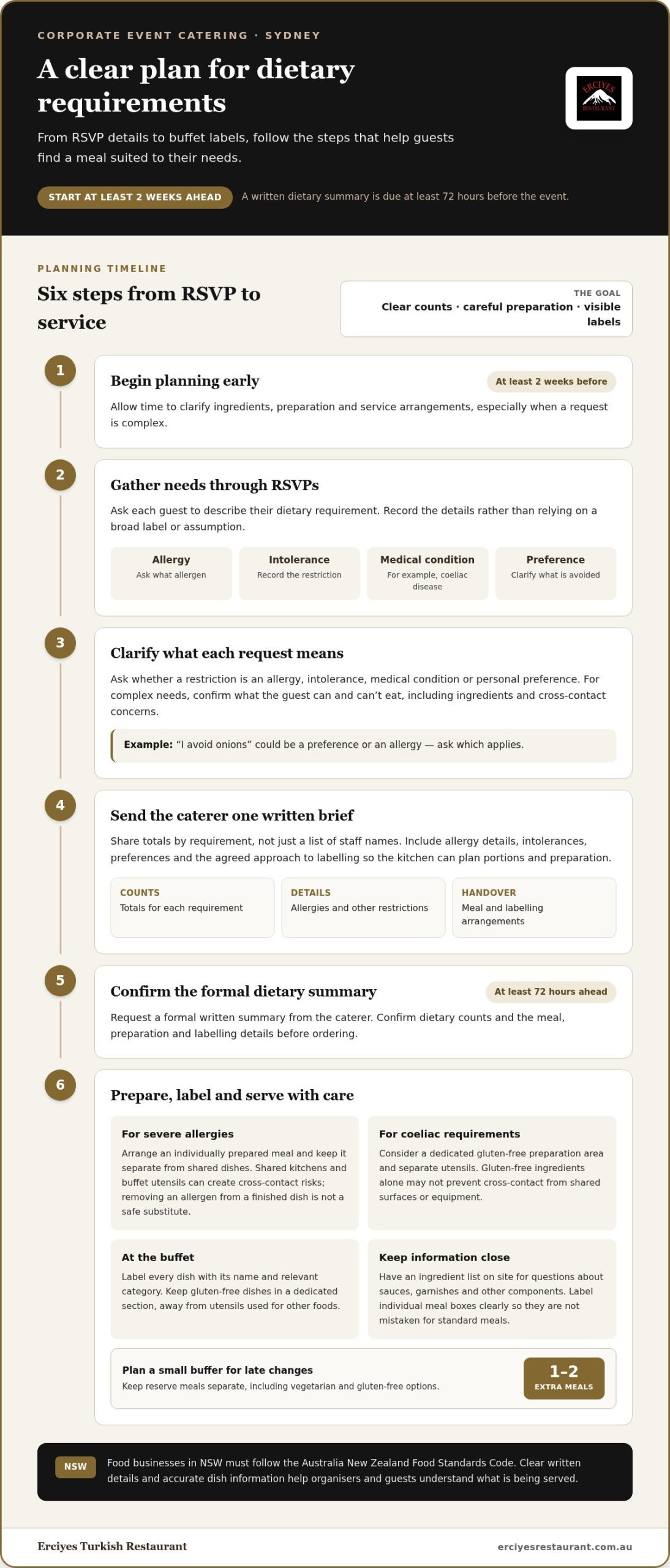
Send dietary details to the caterer in writing as soon as guests respond. For a Sydney corporate event, provide totals by requirement, not just a list of staff names. This helps the kitchen plan portions and distinguish allergies from other restrictions. Request a formal dietary summary at least 72 hours before the event.
Allow extra time for complex needs. Begin dietary planning at least two weeks before the event to clarify ingredients, preparation and service arrangements. Ask guests whether each request relates to a food allergy, intolerance, medical condition such as coeliac disease, or personal preference. These distinctions affect how the meal should be prepared and served.
Clarify requests that could mean different things. If someone says they avoid onions, ask whether it’s a preference or an allergy. For a complex restriction, ask what the guest can and can’t eat, including relevant ingredients and cross-contact concerns. Pregnancy-related food needs can also vary, so gather each guest’s specific requirements rather than making assumptions.
For severe food allergies, shared kitchens and buffet utensils can create cross-contact risks. Separate preparation areas and utensils can help reduce that risk, but removing nuts from a finished dish isn’t a safe substitute. Anaphylaxis can occur from trace amounts of an allergen. For high-risk allergies, arrange an individually prepared meal and keep it separate from shared dishes during service.
Make allergen information easy to use at the event. Request a written allergen breakdown for every dish, then label each buffet item with its name and relevant dietary categories. Place labels directly in front of dishes so guests can read them before serving. Individual meal boxes also need a clear dietary key so they aren’t mistaken for standard meals.
For a smaller corporate gathering, individual meals can be practical for guests with identified food allergies. At a buffet, a dedicated server who knows each dish’s allergens can answer questions and help prevent cross-contact. Keep the ingredient list on site as well. It gives organisers a useful reference when guests ask about sauces, garnishes or hidden ingredients.
Before placing the order, send one consolidated written summary with guest counts, allergy details, intolerances, preferences and the agreed labelling approach. A clear brief supports careful preparation and a smoother handover on the day. For help shaping the menu around your event brief, explore corporate catering packages.
3. Vegetarian and vegan catering
Sydney caterers can plan for vegetarian, vegan and gluten-free requests, alongside halal and kosher requirements. Share the exact needs early, because menu choices depend on ingredients and preparation, not just labels. A vegetarian meal excludes meat, while a vegan meal also excludes products obtained from animals.
For a corporate menu, make plant-based dishes satisfying main options, not just side plates. A roasted vegetable and chickpea dish, for example, can bring colour, texture and substance to the table. Rice, lentils, beans and vegetables are useful building blocks, while herbs, spices and sauces add flavour. Check sauces and garnishes too, as they may contain ingredients unsuitable for a vegan request.
Sydney office caterers are advised to make at least 30% of a menu vegetarian. This gives guests a meaningful choice without requiring every dish to be meat-free. A balanced spread might include a vegetarian main, a vegan main and shared vegetable dishes. Keep serving utensils with each item, so guests can choose without mixing dishes or ingredients.
Plan vegan meals as complete dishes. Pair a hearty legume or grain base with vegetables and a flavourful dressing, for example, rather than offering a plain salad as the only option. Vegetarian dishes may include eggs or dairy, so don’t assume they’re vegan. Record each request separately and label meals clearly, especially when several options are served together at a buffet.
Halal and kosher requests need specific details of their own. Ask guests what their requirements mean for ingredients and preparation, then pass the information to the caterer in writing. A vegetarian or vegan dish doesn’t automatically meet every halal or kosher requirement. Keep these meals identifiable at service, and don’t use one dietary label as a substitute for another.
For coffee service, include dairy, soy and nut milks so guests can choose an option that suits them. Label each alternative clearly and keep cartons or serving vessels separate. This small service detail matters to guests with preferences or restrictions, particularly when a coffee station serves a group with varied needs.
Use RSVP responses to set the number of vegetarian and vegan portions, then review the count before ordering. Record related restrictions, such as gluten-free requirements, separately rather than assuming one choice covers both. A plant-based meal can contain gluten, and a gluten-free dish can contain animal products. Clear meal descriptions help organisers accommodate requests without making assumptions.
For a corporate event in Australia, invite guests to state their needs plainly and describe each dish accurately. Thoughtful menu planning makes vegetarian and vegan choices feel generous and considered, while helping every guest find food suited to their requirements.
4. Collecting dietary requirements through event RSVPs
Include dietary questions in the event invitation instead of gathering answers informally later. Ask about allergies, dietary preferences, and intolerances or conditions such as coeliac disease. Add a text field for details so guests can explain specific ingredient restrictions. Set an RSVP deadline and state that special requests can’t be accommodated during the event.
Use the responses to create a clear catering summary. Group requirements by meal type and count, such as vegetarian portions, vegan meals and allergy-related requests. Where possible, keep personal names separate from the summary, then share the relevant details with the caterer in writing. This gives the kitchen practical numbers for planning while keeping each dietary requirement visible.
For a large event, a group menu designed around common dietary needs can simplify service. Choose dishes with flexible components, such as salad with dressing served separately or a grain bowl with optional toppings. Guests can select combinations that suit their preferences while the menu remains cohesive. Keep meals for specific allergies separate from shared dishes.
A custom event menu can balance shared choices with individual meals. Start with the event format, serving time and guest responses, then identify where one dish can meet several needs. For example, a plant-based main may suit vegan and vegetarian guests, while a separately prepared gluten-free option addresses another request. Record ingredients and dietary labels before finalising the menu.
Include beverages in the RSVP and menu plan. Ask whether guests need alcohol-free options, and provide caffeine-free drinks beyond water for those avoiding caffeine. For coffee service, list dairy, soy and nut milks separately. Clear names at the drinks station help guests choose without having to ask about each option.
Menu variety can bring flavour and warmth to corporate events without complicating the RSVP process. Consider a spread of salads, hot finger foods, desserts and drinks rather than relying only on sandwiches. Make each dish name and dietary category easy to match with the RSVP summary. This reduces guesswork for guests choosing food at a buffet.
After the event, gather feedback through a short email survey or a conversation during a break. Ask whether the meal matched the dietary information, the labels were clear and guests could find suitable dishes. If someone reports a reaction or confusion, record which dish and service point were involved. Use those specific observations to improve the next invitation form and menu plan.
5. Dairy-free and lactose-intolerant catering
Start by asking whether a guest needs dairy-free food or has lactose intolerance. These requests can affect different ingredients and menu choices, so record the guest’s own description. Discuss ingredients such as milk, cheese and yoghurt when planning suitable meals. A precise note helps the kitchen select ingredients and prepare a dish that matches the stated need.
For dairy-free fillings, sourdough sandwiches can hold together without butter. Add flavour with roasted vegetables, hummus or herbs, and check spreads and dressings for milk ingredients. A crisp salad with dressing served separately is another simple option. Describe the ingredients clearly so guests can make an informed choice at the table.
Keep dairy-free and lactose-free labels distinct in the menu plan. Don’t assume a dish described one way automatically meets the other request. Ask guests to identify their needs, then pass the details to the caterer. For a mixed group, choose a clearly described dairy-free dish alongside other options rather than relying on guests to remove ingredients themselves.
Low-FODMAP requests need specific planning rather than a general “light meal” substitution. A person following a low-FODMAP diet should follow it exactly for at least 2 weeks before beginning to reintroduce foods one at a time. Ask the guest to share their current food requirements, and record permitted ingredients for the event meal. Don’t label a dish low-FODMAP based only on its appearance.
For nut-free requests, gather the exact allergy information and list the ingredients in each dish. If a guest has a severe allergy, separate preparation areas and utensils can help reduce cross-contact. A nut-free label should reflect the meal’s ingredients and preparation, not just the absence of visible nuts. Keep a written ingredient list available to answer questions about sauces, toppings and garnishes.
Drinks deserve the same thoughtful planning as food. Include alcohol-free beverages for guests who request them, and offer caffeine-free choices beyond water. At a coffee station, label dairy, soy and nut milks separately. Clear names on jugs and cartons help guests choose without interrupting service or guessing what’s inside.
Bring these details together in a menu brief: list each request, the matching dish, its ingredients and the label guests will see. That practical preparation helps create delicious choices without treating dietary needs as an afterthought. Plan your corporate event menu with these requirements in mind.
Erciyes Turkish Restaurant: Turkish Pide
Erciyes Turkish Restaurant is a natural next step when you’re planning a corporate event and want Turkish dishes on the menu. Turkish Pide, Handcrafted Mezzes, Charcoal Grills and Turkish Sweets offer a range of flavours and formats to consider as you plan for your guests.
Use the RSVP details you’ve gathered to guide your menu discussion. Share dietary counts and specific requirements, including allergies, intolerances and preferences, so they can inform event planning. Clear information connects your menu choices to guests’ needs and helps create a warm, considered dining experience.
Contact Erciyes Turkish Restaurant to discuss the menu for your next event.
Make your next event meal part of the occasion
A well-planned menu can do more than feed a room. It can bring colleagues together to share new flavours and enjoy the occasion. As you move from dietary planning to choosing the meal, keep your event’s atmosphere and the experience you want guests to remember in mind.
For catering for dietary requirements in Sydney, Erciyes Turkish Restaurant brings Turkish Pide, Handcrafted Mezzes and Charcoal Grills to the menu discussion. Use your event brief to guide the conversation, keeping guest needs and meal preferences in view. The aim is a welcoming table where the food feels considered and the occasion is easy to enjoy.
Take the next step and start planning your event menu with Erciyes Turkish Restaurant. A thoughtful menu can help turn a corporate gathering into a shared experience worth savouring.
Frequently Asked Questions
How do you manage multiple dietary requirements at a corporate event?
Group requests by meal type, then identify where one menu choice can suit several guests. A vegetarian dish may also be vegan, for example, but it won’t necessarily be gluten-free. Keep separate counts for each requirement and note overlaps, such as a guest needing both dairy-free and gluten-free food. This gives the organiser a clearer picture of portions and helps avoid using a single dietary label too broadly.
How to label food for dietary restrictions at events?
Give every dish a clear name and list relevant categories in plain language, such as “vegan” or “contains dairy”. Avoid unexplained abbreviations that leave guests guessing. For mixed dishes, name key ingredients such as tahini, yoghurt or nuts rather than relying on a broad label. Place each label beside its dish, and make sure serving staff can match meal boxes to their dietary descriptions.
Is it better to have a separate menu or a universal dietary-friendly menu?
A universal menu can work well when a group has common needs, while separate meals suit requirements that call for distinct ingredients or preparation. A shared plant-based main may suit vegan and vegetarian guests, for example, but a severe allergy may require an individual portion. Consider the guest mix, service style and ingredient overlap. A blended approach can give the group shared choices while keeping specific meals identifiable.
How do Sydney caterers prevent cross-contamination for allergies and coeliac disease?
Preventing cross-contact means controlling contact throughout preparation, storage and service, not just removing an ingredient from the finished dish. Separate work surfaces, utensils and containers can reduce the chance of allergen or gluten traces reaching another meal. Separate serving utensils matter at a buffet, too. For a coeliac guest or someone with a severe allergy, communicate the exact requirement and identify which preparation and serving steps need particular care.
What information should I give a Sydney caterer about guests’ allergies and dietary needs?
Provide the number of meals for each requirement, the exact allergen or excluded ingredient, and whether the request relates to an allergy, intolerance, medical condition or preference. Include known cross-contact concerns and whether an individual meal is needed. “One guest has a peanut allergy” is more useful than “one special meal”. Add the event format and serving method so meal identification fits the occasion.
Which Sydney catering services provide clearly labelled meals for dietary requirements?
Erciyes Turkish Restaurant provides corporate catering packages and offers vegan, vegetarian and gluten-free options. For a Sydney event, include clear meal descriptions in the written menu plan, with dish names and relevant dietary categories easy to identify. Specify how guests will recognise each option during service. Accurate labels help guests choose, especially when several dishes are served together.
Can Sydney caterers accommodate severe allergies, and what risks should I check?
Severe allergy planning needs details about the allergen, possible cross-contact and how the meal will stay separate during service. Ask whether the proposed meal involves shared equipment, preparation areas or serving utensils, and whether an individual portion is appropriate. Removing an ingredient, such as nuts, from a finished dish doesn’t address traces already present. Communicate the guest’s specific needs in writing.
What are the food safety and allergen labelling rules for catering in NSW?
In NSW, food businesses must follow the Australia New Zealand Food Standards Code. At catered events, organisers can make dietary information easier to use by displaying each dish’s name and relevant categories beside the food. Keep ingredient information available for questions, and don’t treat a buffet label as a substitute for accurate preparation details. Distinguish practical event labels from claims about what a meal can safely accommodate.