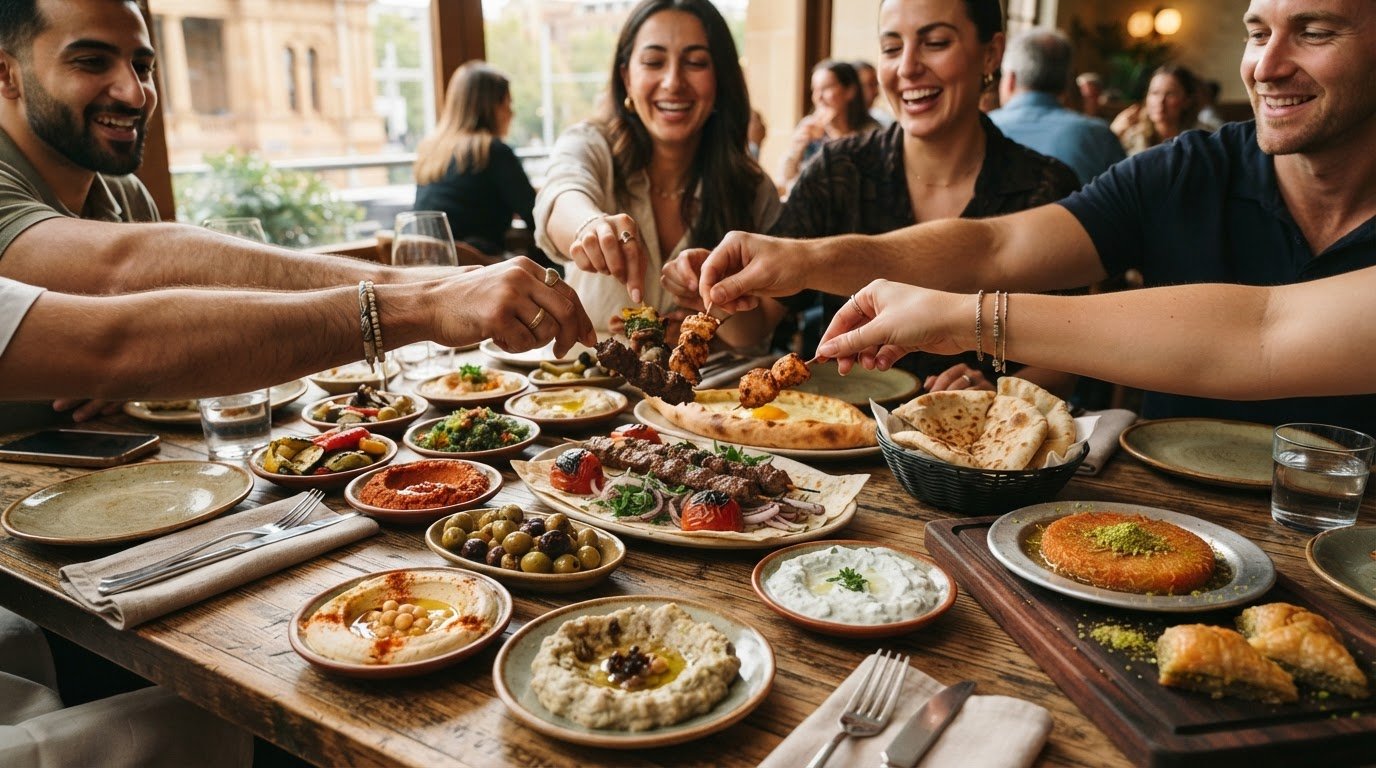
A first Turkish meal can begin with pide and fresh bread, not just a kebab. If you’re choosing what to order at a Turkish restaurant, try a few meze to share, then a charcoal-grilled kebab or a filled pide, with künefe or baklava to finish. Bread brings the table together, ready to scoop up dips and savour every last bite.
It’s easy to see why Turkish desserts catch your eye: künefe arrives warm, with crisp pastry, a soft cheese centre and sweet sauce, while baklava layers flaky filo with honey and nuts. But the meal is just as rewarding before dessert, especially when you balance familiar flavours with something new.
This guide will help you choose meze, grilled meats, traditional dishes, pide and breads, then pick a sweet ending to suit your appetite. Whether you’re sharing several plates or ordering for yourself, you’ll find a simple way to explore Turkish cooking, one delicious bite at a time.
Key Takeaways
- Build your first meal around a mix of shared plates and a filling main, choosing flavours and textures that appeal to you.
- Compare kebab styles by how the meat is prepared and served, from skewers to bread-based options.
- Choose traditional dishes and meze to explore different Turkish flavours, and use bread to scoop up dips and sauces.
- For a sweet finish, look for contrasting textures, such as crisp pastry with a soft, warm centre.
- Try pide for a satisfying bread-based meal, with fillings that can include meat, chicken, vegetables or cheese.
1. Kebabs and grilled meats
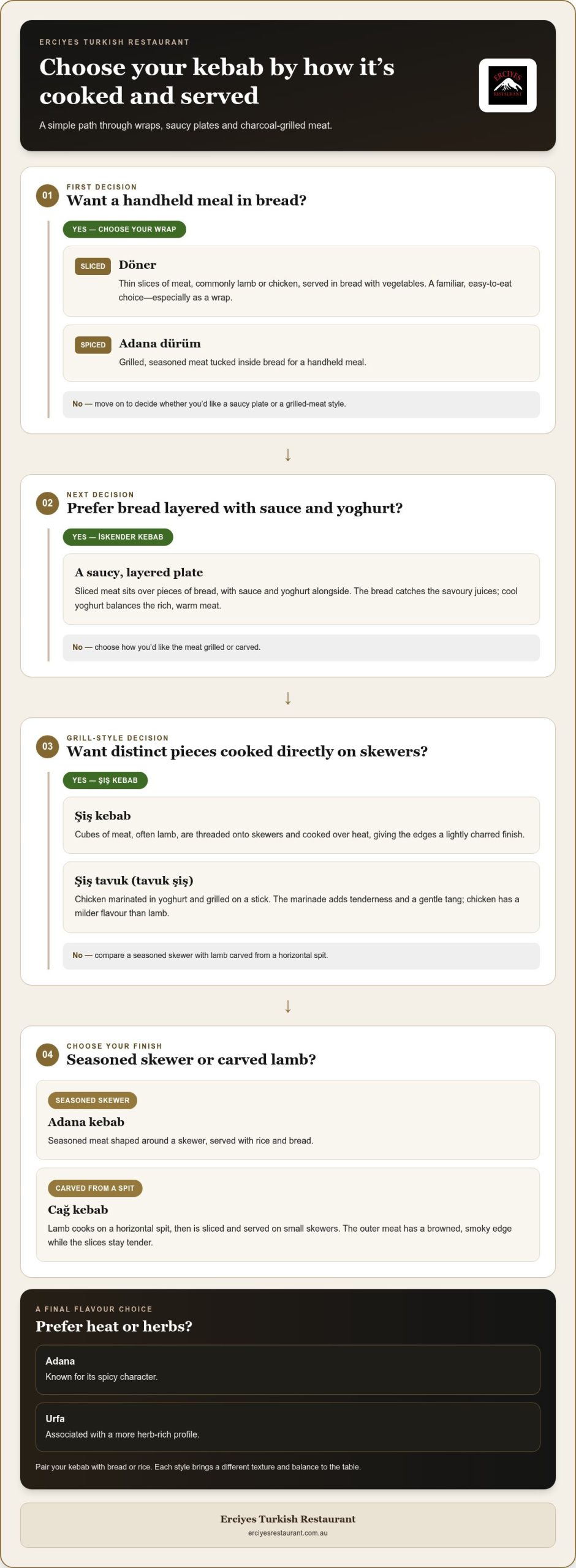
For a first taste of Turkish cuisine, choose a kebab by its cooking style and how you want it served. Döner offers thin slices of meat, commonly lamb or chicken, served in bread with vegetables. It’s a familiar, easy-to-eat option, especially as a wrap. For a more substantial plate, compare skewered meat with dishes served over bread, rice or other accompaniments. Each style brings a different texture and balance to the table.
İskender kebab layers sliced meat over pieces of bread, with sauce and yoghurt alongside. The bread catches the savoury juices, while cool yoghurt balances the rich, warm meat. It’s a classic choice if you enjoy a saucy dish rather than a dry-grilled skewer. Adana kebab takes another route: seasoned meat is shaped around a skewer and served with rice and bread. Choose Adana dürüm for the wrapped version, with grilled meat tucked inside bread for a handheld meal.
For a straightforward grilled option, order şiş kebab. Cubes of meat, often lamb, are threaded onto skewers and cooked over heat, giving the edges a lightly charred finish. Şiş tavuk, also called tavuk şiş, is chicken marinated in yoghurt and grilled on a stick. The marinade adds tenderness and a gentle tang, while chicken’s milder flavour suits diners who prefer less richness than lamb. A mixed table can compare lamb şiş with chicken şiş in the same meal.
Regional kebabs offer a useful guide to flavour. Adana is known for its spicy character, while Urfa is associated with a more herb-rich profile. Comparing the two shows how seasoning changes grilled meat. Choose according to your preference for heat or herbs, then pair the kebab with bread or rice. If you’re ordering börek, a savoury Turkish pastry, grilled kebab adds a different texture and a heartier centrepiece.
Cağ kebab is another regional style to look for: lamb is cooked on a horizontal spit, then sliced and served on small skewers. The layered cooking gives the outer meat a browned, smoky edge while the slices stay tender. This differs from şiş, where cubes are cooked directly on each skewer. Pick cağ for carved lamb and şiş for distinct grilled pieces. Both put the meat centre stage, but the cut and cooking method shape every bite.
To decide what to order at a Turkish restaurant, start with the serving style. Choose döner for sliced meat in bread, Adana dürüm for a spiced wrap, or İskender for bread, sauce and yoghurt. Pick şiş for grilled cubes of meat, and cağ for lamb carved from a horizontal spit. These contrasts make it easier to find a favourite without treating every kebab as the same dish. If you enjoy smoky, savoury flavours, charcoal-grilled meat is a satisfying place to begin.
2. Which authentic Turkish dishes should you try first to experience the flavours of Turkey?
For a lamb dish beyond a skewer, try Ali Nazik: chargrilled lamb sits over smoky aubergine purée. The aubergine makes a soft, savoury base, while the lamb brings a deeper grilled flavour. Bostan kebabı takes a more comforting approach, combining lamb and aubergine in a casserole. Choose it if you’d rather have a spoonable dish than meat served straight from the grill.
Kağıt kebabı offers another lamb preparation, with the meat cooked in a paper wrapping. The enclosed cooking keeps the focus on tender lamb, rather than the charred edges of open grilling. For a familiar aubergine combination, karnıyarık is aubergine filled with minced meat. Its vegetarian counterpart, imam bayıldı, uses a vegetable and tomato filling instead. In these dishes, aubergine is the centrepiece, not simply a side.
Turkish cuisine also has satisfying choices without meat. Order imam bayıldı for a vegetable-based main, or choose börek, a thin pastry that can be stuffed with spinach, cheese or meat. Menemen brings eggs gently cooked with tomatoes, peppers and olive oil; fresh bread is a natural match for its soft, saucy texture. It’s commonly eaten at breakfast, but its familiar ingredients make it an approachable savoury choice at other times, too.
Rice can be a dish in its own right. İç pilav combines rice with lamb, meat broth, pistachios and cinnamon. The result is richer and more aromatic than plain rice, with nuts adding texture and spice lending warmth. If you’re choosing between lamb dishes, iç pilav offers a different experience from grilled meat or a casserole. Each spoonful brings together savoury broth, tender rice and the gentle sweetness of cinnamon.
Halal status depends on the restaurant’s meat and preparation, so ask which dishes are halal and how they’re prepared. If you have an allergy or dietary restriction, tell the server clearly and ask about ingredients and preparation; börek may contain cheese, while iç pilav includes pistachios.
To decide what to order at a Turkish restaurant, match the dish to the meal you want: choose Ali Nazik for smoky aubergine and lamb, imam bayıldı for a vegetable-filled option, or menemen for eggs and tomatoes. Pick iç pilav for rice with a distinctive savoury-sweet flavour. Turkish coffee can round off a leisurely meal, while a breakfast-style dish such as menemen offers a gentle introduction to these traditional flavours.
3. Meze and shared appetisers
Meze brings several small dishes to the table, giving everyone a chance to sample different flavours. Turkish dining is often communal, so order a selection to share rather than choosing one appetiser each. For two people, a useful guide is three to four meze dishes; for four, five to six; and for groups of six or more, seven to eight. Adjust the mix to leave room for the main meal.
Choose variety by flavour and texture. Traditional meze can include yoghurt with mint, aubergine dips, hummus, stuffed vine leaves, grilled halloumi and fresh vegetables. A cool yoghurt dip contrasts with smoky aubergine, while halloumi brings a savoury, springy bite. Stuffed vine leaves add a compact, tender option. Choose different styles instead of filling the table with similar dips.
Fresh bread is a practical companion for dips: tear off a piece and scoop up yoghurt, hummus or aubergine. This simple pairing brings a spread together, especially when the dips have different textures. If a dip has tomato or spices, bread can soften its sharper, savoury notes. Leave room for the other plates, then return to your favourite combination.
Salads add freshness beside richer meze. Look for crisp vegetables, such as tomato, cucumber and greens, to balance creamy yoghurt or grilled halloumi. A fresh salad also offers a lighter contrast to bread and dips. For a more varied spread, pair a vegetable-forward plate with a stuffed vine leaf and one dip. That way, everyone can build a few different bites.
How do you order and share food at a Turkish restaurant? Choose several meze for the table, then pass the plates around so everyone can taste each dish. For two diners, start with three or four; for four, consider five or six, adding more only if you want a larger spread.
For a first order, combine one yoghurt-based dip, one aubergine dish, a fresh salad and a contrasting texture, such as halloumi or stuffed vine leaves. This creates a balanced selection without making every plate taste alike. If you’re also ordering grilled meat or pide, keep the meze selection focused. Finish with Turkish coffee and baklava for a familiar sweet ending.
4. What are popular Turkish desserts I should try?
For a famous Turkish sweet, start with baklava: layers of filo pastry, honey and nuts, often pistachios or walnuts. Its crisp, delicate sheets contrast with the sticky sweetness of the syrup and the crunch of the filling. Butter-rich pastry adds a rounded, savoury note. Choose baklava if you enjoy layered pastry, or share a piece after a substantial meal. The nuts add texture, so the dessert needs no complicated topping to be satisfying.
Künefe, also written kunefe, offers a very different finish. It’s served warm, with kadayif pastry around a soft cheese filling and sweet sauce on top. The contrast is the pleasure: crisp strands outside, warm, yielding cheese inside. Some versions come with ice cream, adding a cool, creamy counterpoint. Choose künefe when you want a freshly cooked dessert with several textures, rather than baklava’s crisp layers and nut filling.
Lokum is a simpler sweet to try alongside those richer desserts. This chewy Turkish confection is dusted with icing sugar and comes in flavours such as rose, lemon, pomegranate and pistachio. Its soft, yielding texture differs from flaky baklava and crisp kadayif. If you’re sharing dessert, a piece of lokum offers a small taste without another pastry course. Pick a flavour you already enjoy, or choose pistachio for a familiar nutty note.
For a natural drink pairing, finish with Turkish coffee after dessert. Its strong, concentrated taste makes a striking companion to honey-sweet baklava or the gentle floral flavour of rose lokum. Turkish tea is another option and can be enjoyed before, during or after a meal. Choose coffee for a more intense final sip, or tea for a lighter pause. Either drink gives everyone time to linger over the last sweet bites.
Decide by texture and richness. Order baklava for crisp filo, honey and nuts; choose warm künefe for cheese-filled kadayif and sweet sauce; or try lokum for a chewy, sugar-dusted bite. If you’re sharing, select contrasting desserts rather than several that rely on pastry. A small piece of baklava beside lokum lets you compare crisp and soft textures, while künefe makes a more substantial centrepiece. Finish with Turkish coffee if you’d like a bold drink after the sweetness.
5. Pide and Turkish bread
Pide is a rewarding first order if you want Turkish bread to be the main event. This boat-shaped dish is made from dough and baked with fillings, including cheese, vegetables or meat. Its familiar, pizza-like format makes the ingredients easy to recognise, while the shaped edges hold the topping in place. Cheese is a consistent ingredient, so expect a savoury, rich centre rather than plain bread. Choose pide when you want a filling dish that combines bread and toppings in each bite.
Look at the filling to find a style that suits you. Spinach offers a vegetable-led option, while chicken or beef makes the pide heartier. Beef pide is a good introduction if you enjoy familiar, savoury flavours; spinach suits diners after something greener. Each slice combines the crust with its filling. Share it at the table, or make it your main dish alongside lighter plates.
Lahmacun is a close relative, but its thin base and topping create a different meal. Minced meat, vegetables and spices sit on the bread, which is commonly rolled up before eating. Choose lahmacun for a thinner, lightly topped bite; choose pide for thicker dough with cheese as a defining ingredient. The contrast is useful when comparing Turkish cuisine: one is rolled and crisp-edged, the other shaped to hold a more substantial filling.
Bazlama brings bread back to the centre of the table. This fluffy Turkish bread is often served as a restaurant starter with sauces. Tear off a piece to scoop up a dip, or gather the last of a sauce from another dish. Unlike filled pide or topped lahmacun, bazlama lets the bread itself take the lead. It’s a simple way to enjoy soft Turkish bread before choosing a more substantial main.
Turkish meals are often leisurely and communal, with bread accompanying almost every dish. In Istanbul, simit is sesame-coated bread commonly sold from street carts, while bazlama offers a softer restaurant-style choice. These examples show how bread can be a snack, a starter or the base of a full meal. For a first order, choose pide for a filling, topped dish, lahmacun for thin bread with minced meat, or bazlama to share with sauces.
For a bread-led meal, try Turkish pide and compare its filled dough with a lighter bread on the table. That contrast makes the meal more interesting, especially when you’re sharing several dishes. Choose a topping you enjoy, then let the crust and filling bring the flavours together.
Erciyes Turkish Restaurant: Turkish Pide
Erciyes Turkish Restaurant brings the flavours in this guide together, making it a natural place to try Turkish dishes in Sydney. Start with Turkish Pide for a satisfying bread-based meal, then add Handcrafted Mezzes to share contrasting dips and textures at the table.
If you’re drawn to smoky flavours, Charcoal Grills offer another way to enjoy Turkish cooking. Finish with Turkish Sweets for something sweet after your meal. The menu makes it easy to shape your order around the flavours and dishes that caught your eye, whether you’re sharing plates or choosing a main.
Visit Erciyes Turkish Restaurant to plan your meal.
Make your next meal a shared experience
Your first Turkish meal doesn’t need to follow a set formula. Let your appetite and the people around your table guide your choices, and leave room to discover a flavour or texture you haven’t tried before. If you’re still deciding what to order at a Turkish restaurant, choose a dish that sounds inviting, then build the rest of the meal around it.
At Erciyes Turkish Restaurant, you can explore Turkish Pide, Handcrafted Mezzes and Charcoal Grills. Choose a familiar favourite or make the meal an opportunity to try something new with the people you’re dining with. Sharing plates can make that first taste relaxed and memorable.
Contact Erciyes Turkish Restaurant to plan your visit. Come hungry, bring your curiosity and enjoy discovering a new favourite.
Frequently Asked Questions
What are popular Turkish desserts I should try?
Try künefe if you enjoy warm, crisp pastry and a soft centre; choose lokum for a smaller, chewy sweet. Baklava suits diners who like layered pastry and nuts. For a shared finish in Sydney, order contrasting textures rather than several similar pastries. That gives everyone a chance to compare crisp, soft and chewy sweets without making dessert feel like another full course.
What are the most famous Turkish foods?
Well-known Turkish foods include döner kebab, pide, börek, menemen and baklava. They offer very different first impressions: a bread-based meal, savoury pastry, eggs with vegetables, or a sweet finish. If you’re new to Turkish food, choose one dish that feels familiar and one that’s less familiar. That makes it easier to explore the variety of the cuisine without committing your whole meal to one style.
Which authentic Turkish dishes should you try first to experience the flavours of Turkey?
Start with a combination that showcases different preparations: shared meze, a grilled main and a bread-based dish. Menemen is another approachable choice, especially if you enjoy eggs and vegetables. For a meal with friends in Sydney, let each person choose a different style, then sample across the table. You’ll experience more variety than if everyone orders dishes with similar ingredients or textures.
What are the most popular dishes to order at a Turkish restaurant?
A balanced order often combines a few shared appetisers with one main dish per diner, then leaves room for dessert. Pide works well as a substantial bread-based centrepiece, while grilled meat or a kebab wrap offers a different style. In Sydney, Erciyes Turkish Restaurant serves Turkish Pide, Handcrafted Mezzes and Charcoal Grills, making it easy to build a meal around shared plates or a main.
What Turkish appetisers and meze should I try?
For a varied starter, pair a creamy dip with a vegetable-based plate and something firmer, such as grilled halloumi. Fresh bread helps scoop up dips and sauces, while salad adds a crisp contrast. If the main course is rich or filling, keep the appetisers lighter. At Erciyes Turkish Restaurant in Sydney, Handcrafted Mezzes let diners share several flavours before the main meal.
What are the best Turkish main dishes for first-time diners?
Choose according to the style of meal you enjoy. A kebab wrap is handy to eat and brings meat, bread and vegetables together; pide gives you a baked, filled option; grilled meat suits diners who want the flavours of the grill to take centre stage. In Sydney, Erciyes Turkish Restaurant offers all three styles, so first-time diners can choose a familiar format while exploring Turkish flavours.
What Turkish dishes are suitable for vegetarians or vegans?
Vegetarians can look for imam bayıldı, aubergine filled with vegetables and tomato, or spinach börek; börek may contain cheese. Vegan diners should choose dishes identified as vegan, rather than assuming a vegetable-based recipe contains no animal ingredients. Erciyes Turkish Restaurant offers vegan and vegetarian options in Sydney, giving diners with these preferences choices alongside its broader Turkish menu.
What Turkish desserts and drinks should I order?
Pair baklava or lokum with Turkish tea for a lighter finish, or choose Turkish coffee after dessert for a stronger, concentrated drink. Tea can be enjoyed before, during or after a meal, so it isn’t limited to the final course. If you’re sharing sweets, tea is an easy pairing while everyone samples different flavours. Choose coffee when you’d like a bolder finish.