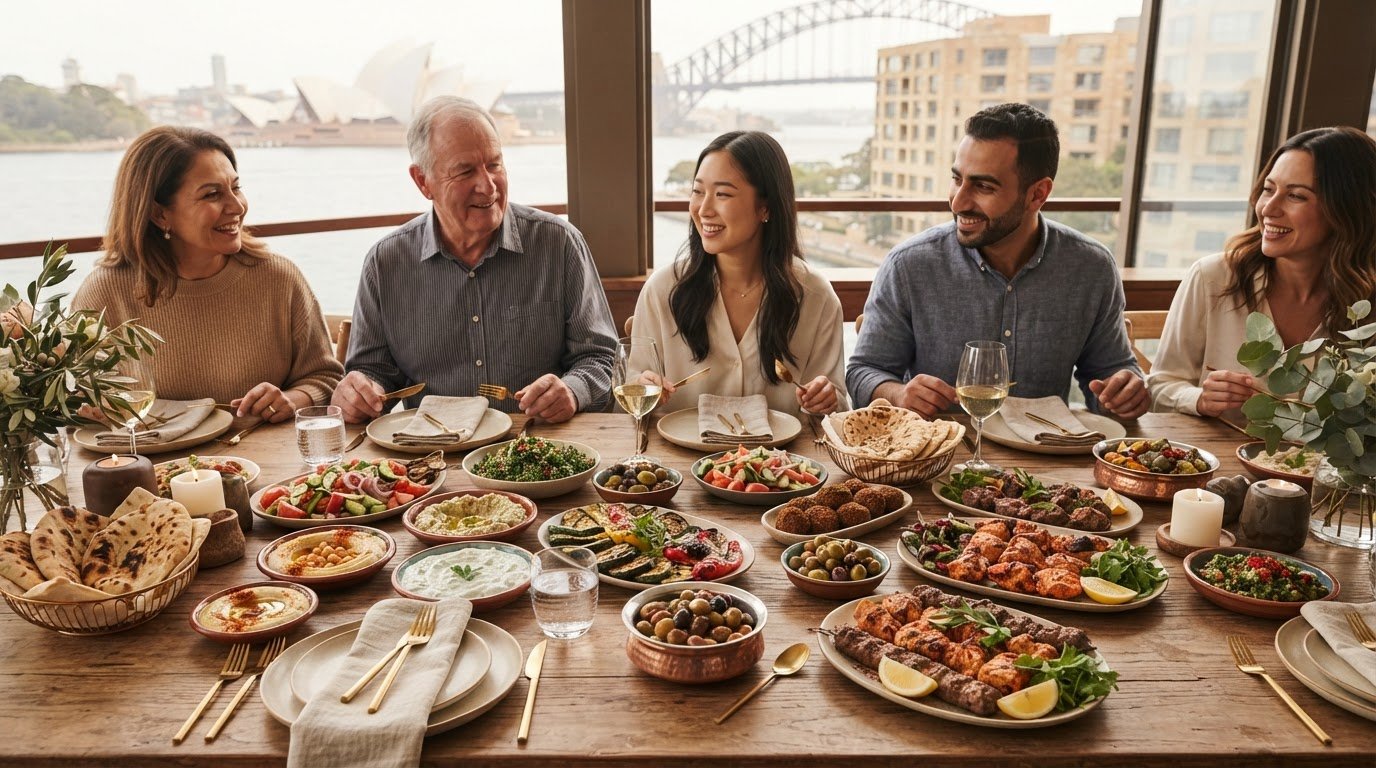
A banquet can bring everyone to the table without making dietary needs an afterthought. Vegan, vegetarian and gluten-free diners can be catered for, so judge a best-value banquet in Sydney by how well the menu suits the whole group, not just its headline price. A thoughtful mix of shared dishes can make the meal feel generous and welcoming.
Weigh menu variety, dietary choices, your per-person budget and how far ahead to book. Considering these details early helps you plan a relaxed gathering and settle practical arrangements before everyone sits down to share.
Key Takeaways
- Compare banquet menus by their variety of shared dishes and what’s included, not just the per-person price.
- Gather guests’ dietary requirements early so you can assess whether the menu suits vegan, vegetarian and gluten-free diners.
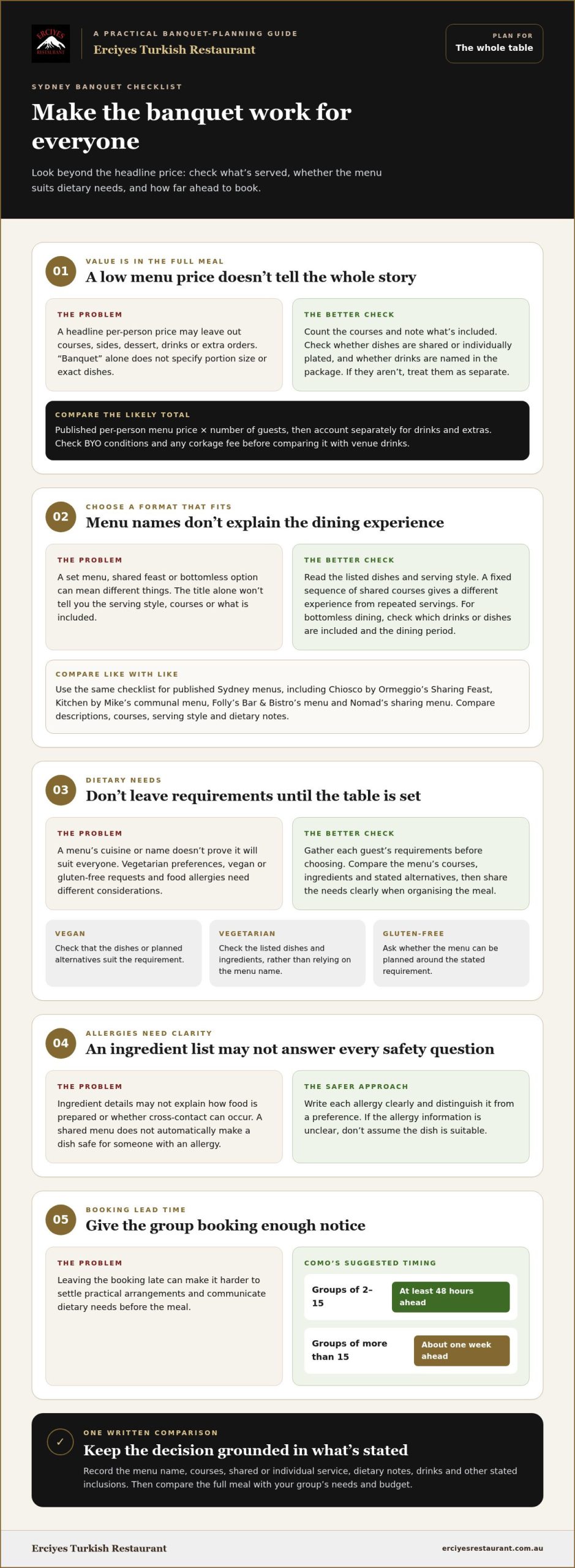
- For groups of 2-15, Como recommends booking at least 48 hours ahead; for groups of more than 15, it suggests booking about one week ahead.
- Share dietary needs and allergen concerns clearly when organising the meal, so they can be considered in the banquet plan.
1. Menu dishes and dining experiences
A banquet menu groups several dishes into a planned meal, often served for sharing. It might move from small starters to larger mains and finish with dessert, giving the group a shared dining rhythm instead of asking each guest to order every course separately. Check whether dishes arrive in the centre of the table or as individual plates, as this affects how guests share food and how the meal unfolds.
Look for variety in flavour, texture and dietary options. A spread might pair grilled chicken with vegetables, salads and a richer dish such as burrata, if those items appear on the restaurant’s menu. These are examples, not standard banquet inclusions. Check which dishes the set menu names, how many courses it covers, and whether sides or dessert are included. The word “banquet” alone doesn’t tell you the portion size or exact dishes.
To compare Sydney banquet menus, look for restaurants that publish a banquet or set-menu option. Read the listed courses and serving style, then compare inclusions such as shared starters, mains, sides or dessert. A menu listing selected dishes may not include drinks, so check those separately.
Drinks are included in a Sydney banquet only when the menu or package says so; otherwise, they’re ordered separately. Look for wording that specifies drinks rather than assuming a set price covers them. For a group, agree before booking whether guests will order individually or share a drinks arrangement. This makes the expected spend easier to manage.
Bottomless dining is a separate format, not a guaranteed feature of a banquet. Its terms should state which drinks or dishes are included and the dining period. Compare those details with a standard set menu: a fixed sequence of shared dishes may suit guests who want a meal, while a bottomless option may focus on repeated servings. Treat the name as a reason to read the inclusions, not as a complete description.
For affordable group dining, compare the full menu with what your guests will eat. Check whether the menu is available to the whole group and note any extra orders that could change the final bill. BYO also depends on the restaurant’s policy. Corkage is a fee a venue may charge for bringing your own wine, so check the amount and conditions before choosing BYO. Compare that cost with ordering drinks from the restaurant. Clear details about the menu, serving style and drinks policy make it easier to choose a banquet that suits the group.
2. CAN YOU ACCOMODATE DIETARY REQUIREMENTS IN BANQUET MENU?
Banquet menus can suit dietary requirements when the dishes and substitutions are planned around guests’ needs. List each requirement before choosing a set menu, then compare its courses, ingredients and alternatives. This helps you assess the full selection rather than judging a restaurant by its cuisine or menu name alone.
To find the best value, compare what each set menu includes, not just its price. Count the courses, note whether sides and dessert are included, and consider how much variety your group wants. A menu with shared starters, a main course and a potato side offers a different experience from one centred on fewer, individually plated dishes. Value comes from choosing inclusions that suit your guests.
Compare named Sydney menus, including Chiosco by Ormeggio’s Sharing Feast, Kitchen by Mike’s communal menu, Folly’s Bar & Bistro’s menu and Nomad’s sharing menu, using the same checklist. Review each published description, serving style, course selection and dietary notes. These details help show whether the format suits your gathering, without assuming every menu includes the same dishes or accommodates every requirement.
What are the best-value banquet restaurants in Sydney? The best fit is a restaurant whose set-menu inclusions match your group’s appetite, dietary needs and budget. Compare the complete course selection and any stated extras before deciding.
Which Sydney banquet restaurants have the best reviews and ratings? Look for review patterns that specifically mention banquet meals, portioning, service and dietary care, rather than relying on a single rating. That gives you more relevant context for a group booking.
For dietary planning, distinguish preferences from allergies and write each requirement clearly. Vegetarian preferences, gluten-free requests and food allergies call for different considerations. Ingredient details can help identify suitable dishes, but may not explain preparation or cross-contact. If allergy information is unclear, don’t treat the dish as suitable or assume a shared menu makes it safe.
Keep your comparison organised with a simple written checklist: menu name, courses, shared or individual service, dietary notes, drinks and other stated inclusions. Compare like with like across restaurants. Shared dishes can create a lively table, while a set course sequence can make planning more straightforward. Choose the format and menu whose stated dishes work for everyone attending.
3.
Compare the restaurant’s current set-menu price with its inclusions, then account for drinks and extra orders separately. A lower headline price may mean fewer courses, while a fuller selection could reduce the need for additional dishes. Judge the meal as a whole.
Start with the menu. Note how many courses are listed, whether dishes are shared, and whether sides or dessert are included. A shared starter, grilled main and side make a different meal from a single main course. This comparison shows where the best value banquet Sydney options lie without assuming every bistro uses the same format.
Next, compare the food with your group’s preferences. A menu built around grilled dishes may suit guests seeking smoky flavours, while an authentic spread from Erciyes Turkish Restaurant might focus on meze, charcoal-grilled meats, seasonal vegetables or freshly baked bread. Prawns or lamb may be a welcome feature for some diners, but won’t suit everyone. Check the dish descriptions rather than treating a cuisine label as a complete menu.
Before booking for a group, work out the likely total. Multiply the published per-person menu price by the number of guests, then add separately priced drinks or extras. Keep those costs distinct. If the drinks policy or menu inclusions aren’t clear, don’t count drinks as part of the food price. This simple calculation makes restaurant comparisons fairer.
Value also depends on how well the menu works at the table. Shared dishes encourage a communal meal, while individually served courses give each guest a defined portion. Consider whether the selection offers enough variety and meets dietary needs. A cheaper menu may not be useful if guests need extra meals to find suitable options.
For a practical shortlist, record each restaurant’s menu price, courses, serving style and stated extras. Compare like with like: a banquet with several courses shouldn’t be judged against a single-course menu as though they offer the same meal.
Read the menu details before booking. Check how the restaurant describes portions, shared dishes and included sides, and whether the menu is offered to the whole group. A charcoal-grilled main contributes to value when it’s part of a satisfying menu your guests can enjoy. Clear inclusions make budgeting easier.
4. Booking lead times
For a Sydney banquet, set the date once you know the group size, then book with enough time for the menu and table arrangements. According to Como, groups of 2-15 guests should book banquet menus at least 48 hours before the booking. For groups of more than 15, Como suggests booking about one week ahead. Use these lead times as a planning starting point.
Group size matters because a shared banquet requires a coordinated menu and suitable seating. Settle the guest list as far as possible and choose one person to organise the reservation. Give the restaurant the expected number of diners, preferred date and meal time, and dietary requirements. Clear details help with planning the table and meal.
For a smaller gathering of 2-15, leave at least 48 hours before the booking, as Como recommends. That gives you time to select a menu, share the plan with guests and gather their dietary information. For a group above 15, use Como’s suggested one-week lead time. A larger party can take more coordination, so avoid leaving the decision until the last moment.
Plan the booking around the meal, not just the date. Decide whether you want a set sequence or shared plates, then note preferences that could shape the menu. For instance, a group keen on sourdough starters, kingfish or a particular finish to the meal can use these as examples to explain what they enjoy. They’re planning prompts, not guaranteed inclusions.
Once you’ve chosen a date, send one clear booking request with the group size, preferred time and menu style. Include dietary requirements and update the expected numbers as soon as they change. Keeping details together reduces back-and-forth and helps prevent conflicting instructions from different guests. For a large group, nominate one organiser to manage updates.
Planning doesn’t end with the booking. Before the event, compare the agreed details with your guest list: date, time, number attending, menu format and dietary notes. If someone drops out or joins, update the reservation promptly. This helps the restaurant plan shared dishes and place settings around an accurate headcount.
For a date with limited flexibility, arrange the booking as soon as your group is ready, especially when more than 15 guests need to attend. Keep a preferred alternative date in mind, and make the menu decision alongside the reservation. A tidy plan, with the lead time matched to your group size, leaves more room to enjoy the meal from first plate to final finish.
5. Dietary requirements and allergen handling
Start by distinguishing food preferences from allergies. “Vegetarian” describes a dietary choice, while an allergy can involve a serious reaction to a specific ingredient. Tell the organiser which applies to each guest, then share the information with the restaurant before selecting a banquet. A clear description is more useful than a broad note such as “special diet”.
Make a guest-by-guest list that names the ingredient or food to avoid. For example, note whether a guest avoids dairy, needs gluten-free choices or has an allergy to nuts or seafood. Include the list with the booking details and update it if the guest list changes. Don’t assume a dish is suitable because its name sounds simple or its description omits an ingredient.
Ask for the menu’s ingredient details and review every course, including sauces, marinades, sides and dessert. A braised main may have a sauce with ingredients that aren’t obvious from its name; a dessert may contain dairy or nuts. Check garnishes and shared accompaniments too. This gives the organiser a fuller picture than looking at the main dish alone.
Shared dining needs particular care. Guests serve themselves from dishes in the centre of the table, so utensils and serving arrangements matter as well as ingredients. Identify which dishes need to be kept separate, and communicate any allergy clearly rather than relying on a guest to pick around an ingredient. Removing a topping is not a substitute for understanding how the whole dish was prepared.
For a group with mixed preferences, map out the menu before confirming the meal. Mark dishes suitable for vegetarian or vegan guests separately from those that need allergy-related clarification. A menu inspired by different cuisines may offer variety, but variety doesn’t establish that a course is allergy-safe. The ingredients and preparation process matter for each person’s needs.
Keep information consistent from booking to arrival. Have one organiser share the same written requirements with the restaurant and the group, then remind guests which dishes are intended for them. If an ingredient or serving detail remains unclear, don’t present that dish as suitable for someone with an allergy. Clear communication supports a thoughtful shared meal without assumptions about individual risk.
For Turkish dining with vegan, vegetarian and gluten-free options, explore Turkish dining options and consider how the menu could suit your gathering.
Erciyes Turkish Restaurant: Turkish Pide
Erciyes Turkish Restaurant is a natural fit for a group looking to share Turkish dishes around the table. Turkish Pide makes a distinctive centrepiece, while Handcrafted Mezzes offer smaller plates to enjoy together. Charcoal Grills and Turkish Sweets can add savoury depth and a traditional finish to the gathering.
Choose Erciyes when you want Turkish flavours and a communal dining feel. The menu offers a starting point for planning a gathering with family or colleagues. For a shared meal in Sydney, make a reservation or explore the menu at erciyesrestaurant.com.au.
Make the next gathering one to remember
The best-value banquet in Sydney is the one that works for your guests, not simply the one that looks good on paper. Consider the occasion: a lively family table, a relaxed catch-up or a meal with colleagues. That can guide the atmosphere you want and make menu planning part of the welcome.
For Turkish flavours, Erciyes Turkish Restaurant brings Turkish Pide, Handcrafted Mezzes and Charcoal Grills to the table. These dishes offer different ways to shape a meal around sharing, conversation and the pleasure of eating together.
Let the menu be the beginning of the occasion. Contact Erciyes Turkish Restaurant to take the next step towards a warm, memorable gathering.
Frequently Asked Questions
Can you accommodate dietary requirements in a banquet menu?
Sydney banquet menus can include choices for vegan, vegetarian and gluten-free diners. Tell the organiser which guest needs a plant-based meal and which needs gluten-free food, rather than grouping both under “dietary needs”. If someone has an allergy, name the specific ingredient and explain that it’s an allergy. This helps distinguish a preference from a safety concern when planning the meal.
How far in advance should I book a banquet menu?
For groups of 2-15, Como recommends booking at least 48 hours ahead; for groups of more than 15, it suggests booking about one week ahead. Start organising once you have a likely headcount and preferred date. That gives you time to coordinate the menu and collect guest requirements. If the date is important to your group, make the booking plan early.
What is the minimum number of people for a banquet menu?
There’s no single minimum group size across Sydney; each restaurant sets its own banquet and group-booking conditions. The required party size may depend on whether you choose a shared set menu, reserve a private event space or arrange catering. Before choosing a format, decide whether everyone will eat from the same menu or guests need individual orders. Those details help determine which booking arrangement fits.
How much do banquet menus cost per person in Sydney?
Banquet prices vary by restaurant, menu selection and package inclusions, so compare the listed courses with any separately charged drinks or extras. At Erciyes Turkish Restaurant, the price depends on the menu, group size and event arrangements, and is provided after a quote request. When planning your budget, separate food from drinks and additional orders to estimate the likely total.
What are the best-value banquet options for groups in Sydney CBD?
The best-value banquet in Sydney CBD is the one that fits your group’s budget, menu preferences and plans for the occasion. Compare set menus by courses, serving style and included items, then consider how easily guests can reach the venue. A shared menu may suit a celebratory table, while individually served courses can work for a more structured group dinner. Check the full inclusions before choosing.
What are the minimum group sizes and booking rules for Sydney banquets?
Minimum group sizes and booking rules vary between Sydney restaurants and banquet formats. Check whether the whole party must choose the same menu, and have one organiser manage the headcount and dietary details. For example, a work dinner with guests arriving separately benefits from a clear arrival time and one agreed menu. Share attendance changes promptly to keep booking details accurate.
Which Sydney banquet restaurants have the best reviews and ratings?
Look for review patterns that mention banquet meals, portioning, service and dietary care, rather than relying on a single rating.