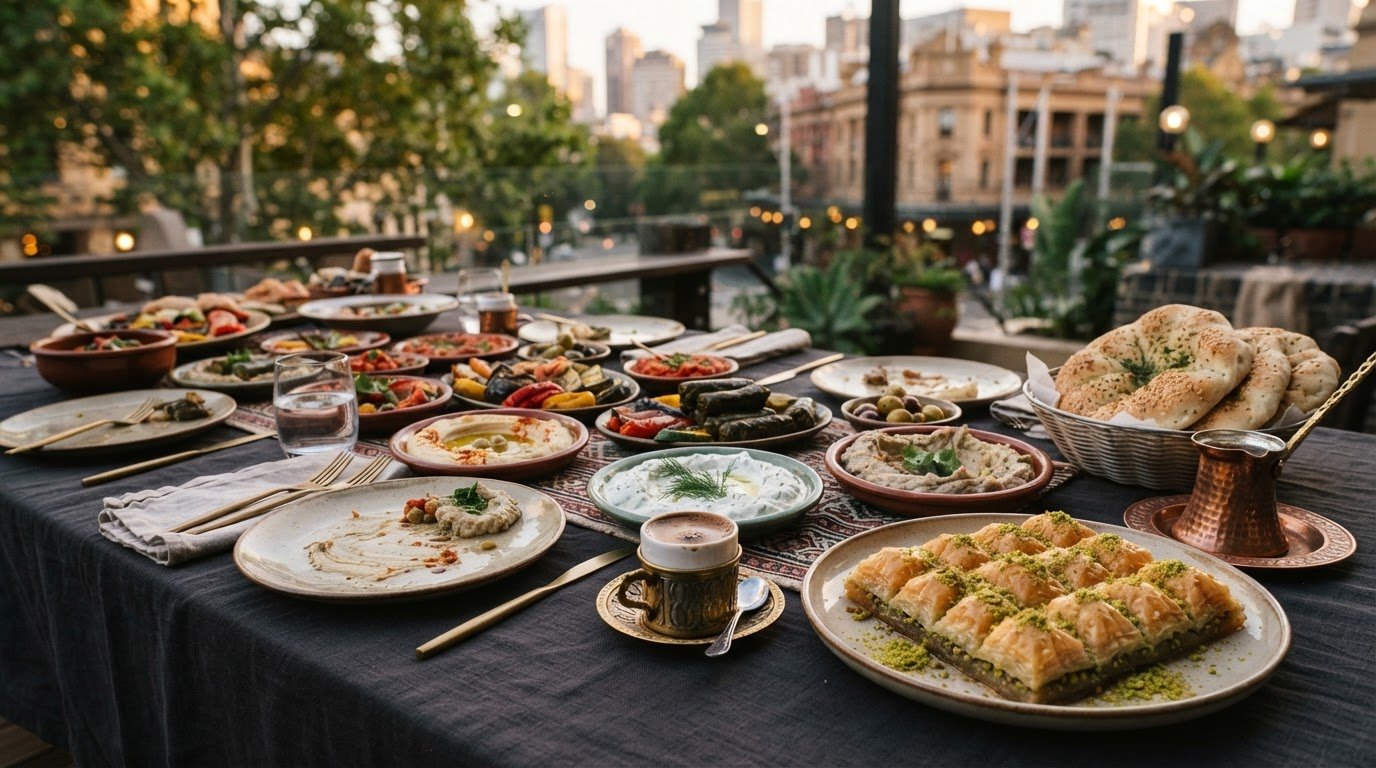
A memorable Turkish dinner party doesn’t need a complicated menu. To learn how to host a Turkish dinner party, start with cold meze, follow with hot appetisers and pide for dipping, then finish with baklava or fresh fruit and Turkish coffee. Keep the pace relaxed so guests can savour each dish and enjoy one another’s company.
You don’t need to cook everything from scratch or serve a long list of courses. Thoughtful preparation and a generous table matter more. Make-ahead meze means less time in the kitchen when guests arrive, while a few Turkish phrases add a warm, personal touch. This guide covers what to prepare ahead, how to serve pide, which desserts to choose and useful phrases to share around the table, giving you a practical plan for a Turkish-inspired meal at home in Australia.
Key Takeaways
- Choose a Turkish-inspired dessert to suit the mood, from flaky baklava to a lighter finish of seasonal fruit.
- Plan a mix of make-ahead meze so you can welcome guests without spending the evening in the kitchen.
- Serve pide alongside shared dishes, giving guests a warm, soft bread for dipping and scooping.
- Learn a few useful Turkish dinner-party phrases to add a thoughtful, welcoming touch to the meal.
1. Baklava and Turkish-inspired desserts
Baklava makes a celebratory finish after a table of shared meze. Its crisp layers, fragrant syrup and crushed nuts contrast beautifully with savoury appetisers. For a Turkish-style version, top it with pistachios. Cut the pastry into small diamonds before serving so each piece is easy to enjoy after a generous meal.
Turkish baklava is made with phyllo dough sweetened with şerbet, a syrup, and topped with crushed nuts. Prepare it ahead so the pastry has time to absorb the syrup before guests arrive. Serve small portions with Turkish-style coffee to balance the sweetness. A scattering of pistachios adds colour and a familiar flavour.
For variety, pair baklava with tulumba or revani instead of filling the dessert table with several equally rich pastries. Tulumba has a crisp, syrupy bite, while revani is a tender semolina cake. Choose one additional sweet, then add fruit. Adapt recipes to the number of guests and the other dishes on your menu.
Seasonal fruit gives guests a lighter option alongside baklava. Arrange sliced fruit on a platter or serve whole pieces that are easy to pick up. Add pomegranate seeds for a jewel-like garnish and tart note. This simple choice suits diners who prefer a fresh finish, while adding colour and texture to the table.
Keep dessert portions modest and offer a choice between syrup-soaked pastry and fresh fruit. The balance feels generous without overwhelming the meal. For an easy hosting plan, prepare baklava in advance, arrange fruit shortly before serving and brew Turkish coffee as guests settle in for a relaxed finish.
2. Make-ahead Turkish meze party planning
Meze means small dishes shared around the table, either as an appetiser course or as the main meal. A Turkish spread can include dips, salads, pastries and vegetables cooked in olive oil. Cold meze traditionally comes first, followed by hot appetisers, creating a relaxed progression instead of one crowded serving.
Build your menu around contrasting flavours and textures. Pair cucumber and walnut salad with cacik, a cool dip made with cucumber, yoghurt, garlic and mint. Add smoky red peppers, olives or pastry, then choose a hot meze such as herby spring onion fritters with garlicky yoghurt. Many Turkish dishes can be prepared ahead, leaving only the hot items to finish near serving time.
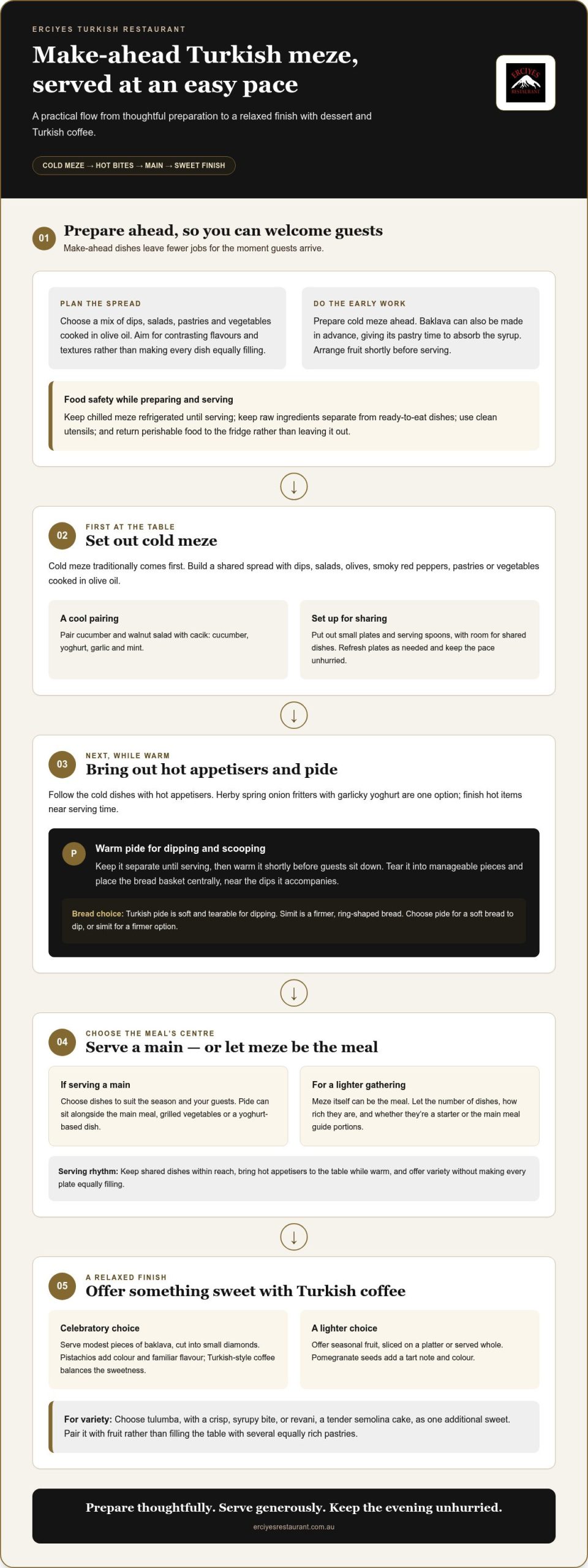
For food safety when preparing and serving a large dinner in Australia, keep chilled meze refrigerated until serving and use clean utensils. Keep raw ingredients separate from ready-to-eat dishes, and return perishable food to the fridge rather than leaving it out.
A Turkish dinner menu for guests can begin with cold meze, then hot appetisers, followed by a main course and Turkish coffee. Choose dishes to suit the season and your guests, such as cucumber salads, olive-oil vegetables and savoury pastry. For a lighter gathering, meze itself can be the meal.
How much food should you prepare per guest? Let the number of dishes, how rich they are and whether meze is a starter or the main meal guide your portions. Offer variety without making every plate equally filling, and prepare more of the dishes guests are most likely to share.
Set the table with small plates, serving spoons and room for shared dishes. Put out cold meze first, then bring hot appetisers to the table while warm. Turkish meals are often enjoyed at an unhurried pace, so refresh plates as needed and leave room for Turkish coffee at the end.
3. Pide bread for dipping
Warm pide gives guests soft, tearable bread for scooping dips and gathering small bites. Serve it with meze such as cacik, a cucumber, yoghurt, garlic and mint dip, or smoky eggplant. Its mild flavour complements savoury dishes without competing with herbs, spices or tangy yoghurt. Tear the bread into manageable pieces before serving so guests can reach for it easily.
Turkish pide and pita bread are related flatbreads, but they aren’t the same dish. Turkish flatbread may be called pide ekmeği or Ramazan pidesi, and can be topped with sesame seeds. Simit is different: a round bread ring sold from carts in Istanbul. For a dinner-party table, choose pide for soft bread to dip, or simit for a firmer, ring-shaped option.
Soup can begin a Turkish meal, with bread as a useful companion. Offer pide with red lentil soup on a cool evening, or serve it alongside a lighter soup before the meze. Keep the bread separate until serving, then warm it shortly before guests sit down. This helps it stay soft and inviting rather than drying out beside the soup.
Set pide near the dishes it’s meant to accompany. Place a small plate beside a yoghurt dip and use a separate serving plate for bread shared across the table. Guests can tear off a piece, dip it and move between flavours without extra cutlery. If the meze includes several sauces, place each dip within easy reach and keep the bread basket central.
For a delicious spread, serve sesame-topped pide with cold and hot meze, then bring out the main meal. It also goes well beside grilled vegetables or a yoghurt-based dish, helping guests gather the last flavours. Pide is savoury, so serve it with the meal rather than dessert. This small choice gives your table a classic Turkish touch.
4. Useful Turkish dinner-party phrases
A few Turkish phrases can make a shared meal feel more welcoming, even if your guests are new to the language. Learn each phrase before the evening, practise it aloud and use it at the right moment. A genuine greeting or thank-you matters more than perfect pronunciation.
- Hoş geldiniz means “welcome”. Say it as guests arrive; it’s a polite greeting for a group.
- Afiyet olsun means “enjoy your meal” or “bon appétit”. Offer it as you serve the first dishes.
- Elinize sağlık means “health to your hands”, a warm way to praise someone’s cooking.
- Teşekkür ederim means “thank you”. Use it when a guest passes the stuffed peppers or offers coffee.
- Çok güzel means “very nice” or “delicious”. It suits a favourite dish, from walnut dip to baklava.
Make the phrases part of the meal’s rhythm. Welcome everyone with Hoş geldiniz, then say Afiyet olsun when the food reaches the table. If a guest made a dish, Elinize sağlık recognises their effort. Keep a small note of the Turkish spelling and meaning near your place setting so you can glance at it naturally.
With dessert, offer Turkish coffee and say Kahve ister misiniz?, meaning “Would you like coffee?” If you’re serving Turkish delight, you could say Çok güzel after tasting it. These simple exchanges give guests an easy way to join in without turning dinner into a language lesson.
Hosting costs in Australia depend on the guest count, menu, ingredient choices and what you already have at home. For a catered Turkish dinner, the price depends on the menu and guest requirements, and is provided after a quote request.
To bring Turkish flavours to your gathering without preparing every dish yourself, explore Turkish sweets and shared dishes for inspiration.
Erciyes Turkish Restaurant: Turkish Pide
Erciyes Turkish Restaurant can make a Turkish-inspired gathering easier when you’d rather spend less time preparing the menu. Turkish Pide pairs naturally with Handcrafted Mezzes, giving guests warm bread and shared dishes to enjoy around the table.
For a fuller spread, add Charcoal Grills as the savoury centrepiece and finish with Turkish Sweets. Shape the meal around your gathering, whether you’re arranging a shared dinner or planning food for a group. Choose dishes that complement your menu, then leave room for conversation and a relaxed meal.
Visit erciyesrestaurant.com.au to explore Erciyes Turkish Restaurant’s Turkish offerings.
Make your next gathering a shared experience
Let the meal invite everyone to slow down, pass dishes around and make room for conversation. If you’re deciding how to host a Turkish dinner party, choose a menu that suits your guests and the evening you want to create. Prepare the table yourself, or let ready-made dishes take some pressure off the kitchen.
Erciyes Turkish Restaurant offers Turkish Pide, Handcrafted Mezzes and Charcoal Grills to bring traditional flavours to your gathering. They can complement dishes you’ve prepared at home or help shape a shared meal when you’d rather spend more time with your guests.
Start planning your gathering around the flavours you’d most like to share. Contact Erciyes Turkish Restaurant to explore its Turkish offerings, and take the next step towards a warm, welcoming meal with family or friends.
Frequently Asked Questions
What dishes are traditionally served at a Turkish dinner party?
A Turkish dinner can move from soup and shared appetisers to a main dish, dessert and coffee. For a gathering in Sydney, try red lentil soup, then serve a main such as shish kebab with tomatoes, cucumber and yoghurt sauce. Vegetable pilaf adds another filling choice, while Turkish coffee makes a familiar finish. Adapt the menu to the season and your guests’ preferences.
How do I make Turkish meze, kebabs and desserts ahead of time?
Prepare cold meze and dessert components in advance, then leave the final cooking for dishes best served hot. For kebabs, organise the accompaniments and serving plates before cooking so you can bring the grilled food to the table promptly. Set out small plates and serving spoons before guests arrive. If you’re deciding how to host a Turkish dinner party, planning tasks in stages helps the meal flow.
What drinks pair well with a Turkish dinner?
Sparkling water works throughout the meal, while pomegranate juice offers a fruity non-alcoholic choice. Turkish tea suits a relaxed gathering, and Turkish coffee pairs naturally with sweets at the end. If you serve alcohol, offer wine or beer as options rather than assuming every guest drinks. A simple drinks station with water, glasses and a non-alcoholic choice lets guests help themselves between courses.
What Turkish dining customs and etiquette should guests know?
Expect shared dishes to be passed around, and take a little at a time so everyone can try several flavours. A warm “Hoş geldiniz” means “welcome”, while “Afiyet olsun” is a gracious way to wish everyone an enjoyable meal. Guests can show appreciation by thanking the host and complimenting a dish they enjoyed. Follow the host’s pace, especially during a leisurely meal with several courses.
What are good vegetarian and gluten-free Turkish dinner options?
Build a vegetarian menu with seasonal vegetables, olive-oil dishes, vegetable pilaf, yoghurt dips and stuffed vegetables. For gluten-free guests, choose dishes made without wheat-based bread or pastry, and check ingredients in sauces and prepared foods. Erciyes Turkish Restaurant offers vegetarian and gluten-free options, including Turkish dishes such as Handcrafted Mezzes. In Sydney, these choices can help shape a shared meal.