A good first dish to try when exploring Turkish food for beginners is mercimek çorbası, a smooth red lentil soup simmered with onions and blended until silky. It’s a welcoming introduction to Turkish flavours: fragrant and savoury rather than intensely hot.
If Turkish food appeals to you but you’re unsure where to begin, you don’t need to start with a complicated feast. Familiar ingredients such as lentils, vegetables, yoghurt, olive oil and lemon feature in approachable dishes that are inviting to make at home or share at the table.
This guide introduces the flavours and traditions that make Turkish cuisine distinctive, then explores legumes, meze, fresh salads and cool yoghurt dips. For a sweet finish, discover sütlaç and revani, two Turkish desserts worth trying early on. You’ll find ideas for what to try or cook, and how each dish fits into a generous Turkish spread.
Key Takeaways
- Discover how bread brings a Turkish meal together, and what to look for in pide and börek.
- Find approachable ways to enjoy beans, chickpeas and lentils, from hearty dishes to smooth soup.
- Learn how meze, crisp salads and cool yoghurt dips add contrast and variety to a shared spread.
- Explore the different textures of sütlaç and revani to choose a sweet introduction to Turkish desserts.
What makes Turkish food distinctive?
Turkish cuisine brings together influences from the Balkans, Central Asia, the Middle East and Mediterranean traditions. Bread, savoury pastries and warmly seasoned dishes make it easy to explore through familiar flavours.
Turkish breads and flatbreads
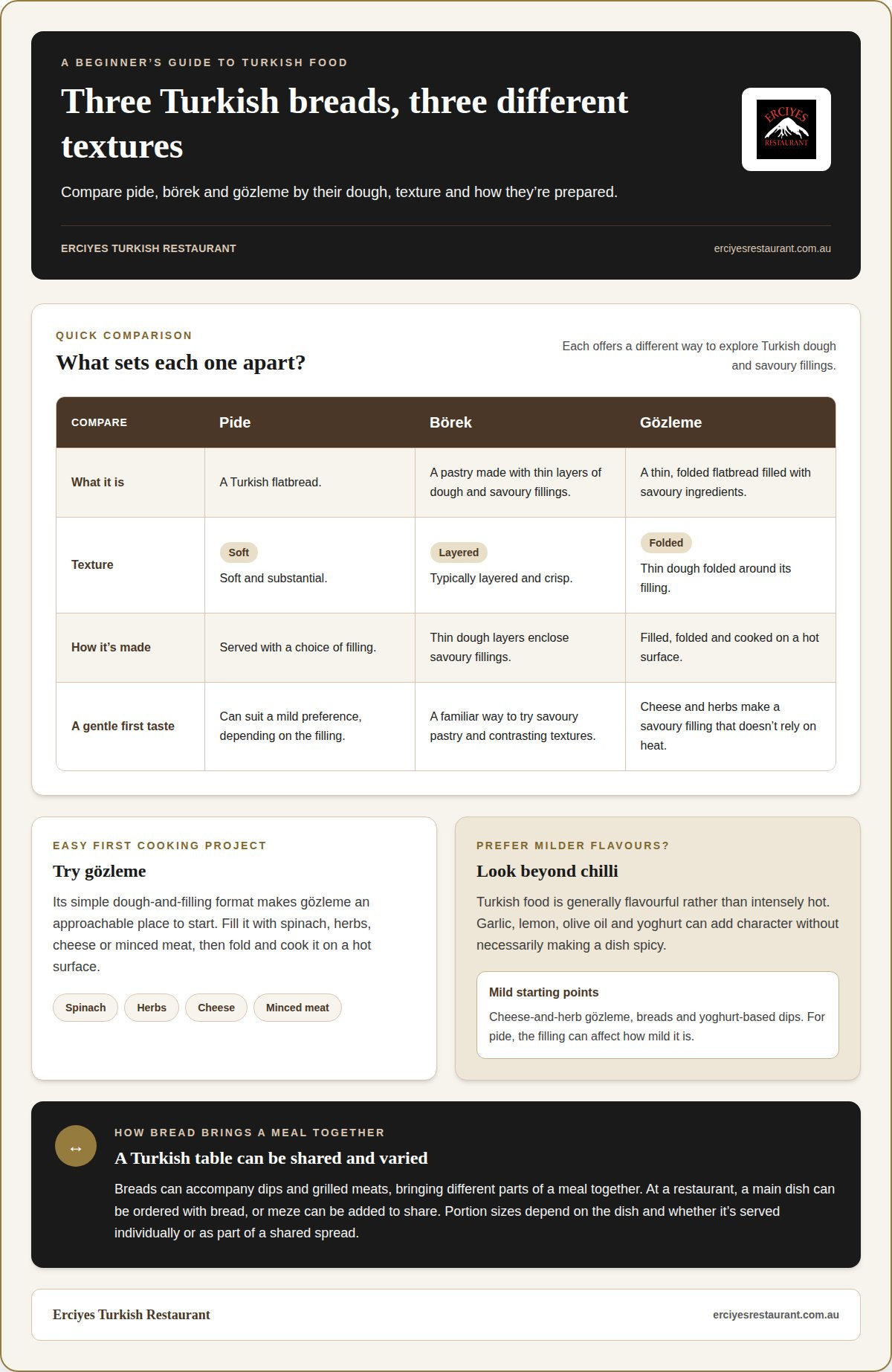
Turkish breads range from everyday loaves to flatbreads made for wrapping, dipping or sharing. They accompany dips and grilled meats, bringing different parts of a meal together. Gözleme is a useful example: thin dough is filled with ingredients such as spinach, herbs, cheese or minced meat, then folded and cooked on a hot surface. Its simple dough-and-filling format makes it an approachable first cooking project.
Pide and börek
Pide is a Turkish flatbread, while börek is a pastry made with thin layers of dough and savoury fillings. Their contrasting textures offer a clear introduction to Turkish baking: pide is soft and substantial, while börek is typically layered and crisp. Gözleme is another favourite, made with folded flatbread cooked on a hot surface. Trying these dishes lets you compare dough, fillings and cooking methods without starting with a complex recipe.
Mild Turkish dishes
Turkish food is generally flavourful rather than intensely hot, so if you avoid chilli, start with breads, yoghurt-based dips or gently seasoned dishes. Gözleme filled with cheese and herbs is savoury without relying on heat. Pide can also suit a mild preference, depending on the filling. Garlic, lemon, olive oil and yoghurt add character without necessarily making a dish spicy.
There is no single average price for Turkish food in Australia. Menu prices vary by dish, restaurant and serving size, so compare the specific dishes you plan to order rather than assuming one price applies everywhere.
For a first taste of Turkish street food, try gözleme, a folded flatbread filled and cooked on a hot surface. Pide and börek are other familiar choices, with savoury fillings and contrasting bread or pastry textures.
At a Turkish restaurant, order a main dish with bread or add meze to share. Portion sizes depend on the dish and whether it’s served individually or as part of a shared spread.
In Australia, search local listings for Turkish restaurants and grocers using terms such as pide, gözleme and red lentils. Menus and shop ranges can help you find places with Turkish dishes and ingredients. In Sydney, Erciyes Turkish Restaurant serves pide, handcrafted mezzes and grilled dishes.
Legume dishes with beans, chickpeas and lentils
Lentils, chickpeas and beans bring different textures to Turkish cooking, from smooth soups to hearty, spoonable dishes. For anyone exploring Turkish food for beginners, mercimek çorbası is a gentle place to start: red lentils and onions simmer together, then blend into a velvety soup. Its familiar ingredients make it approachable to try or cook.
Mercimek çorbası is easy to recognise by its warm colour and smooth consistency. Red lentils soften as they simmer, while onion gives the soup a savoury base. Blend the cooked mixture for a silky finish, or leave it slightly textured for more body. Carrots and potatoes can make it heartier, while lemon adds a bright contrast to the lentils.
Chickpeas and beans offer a firmer bite than blended lentils. In home cooking, serve them whole in a stew or alongside vegetables to retain their texture. Their mild, earthy flavour works well with olive oil, garlic and herbs. For a balanced bowl, combine legumes with vegetables and season gradually, tasting as the flavours come together.
To choose between them, consider the texture you enjoy. Red lentils suit a smooth soup; chickpeas hold their shape in a substantial dish; beans offer another tender, hearty option. A bowl of mercimek çorbası can begin a meal, while whole chickpeas or beans can make vegetables more filling. These differences make Turkish food for beginners easier to explore through familiar ingredients and varied textures.
Start with mercimek çorbası if you’re new to Turkish cooking, then try chickpeas or beans in a more textured dish. For another way to experience a variety of flavours together, explore a shared Turkish meal.
Meze and salads, including yoghurt dips
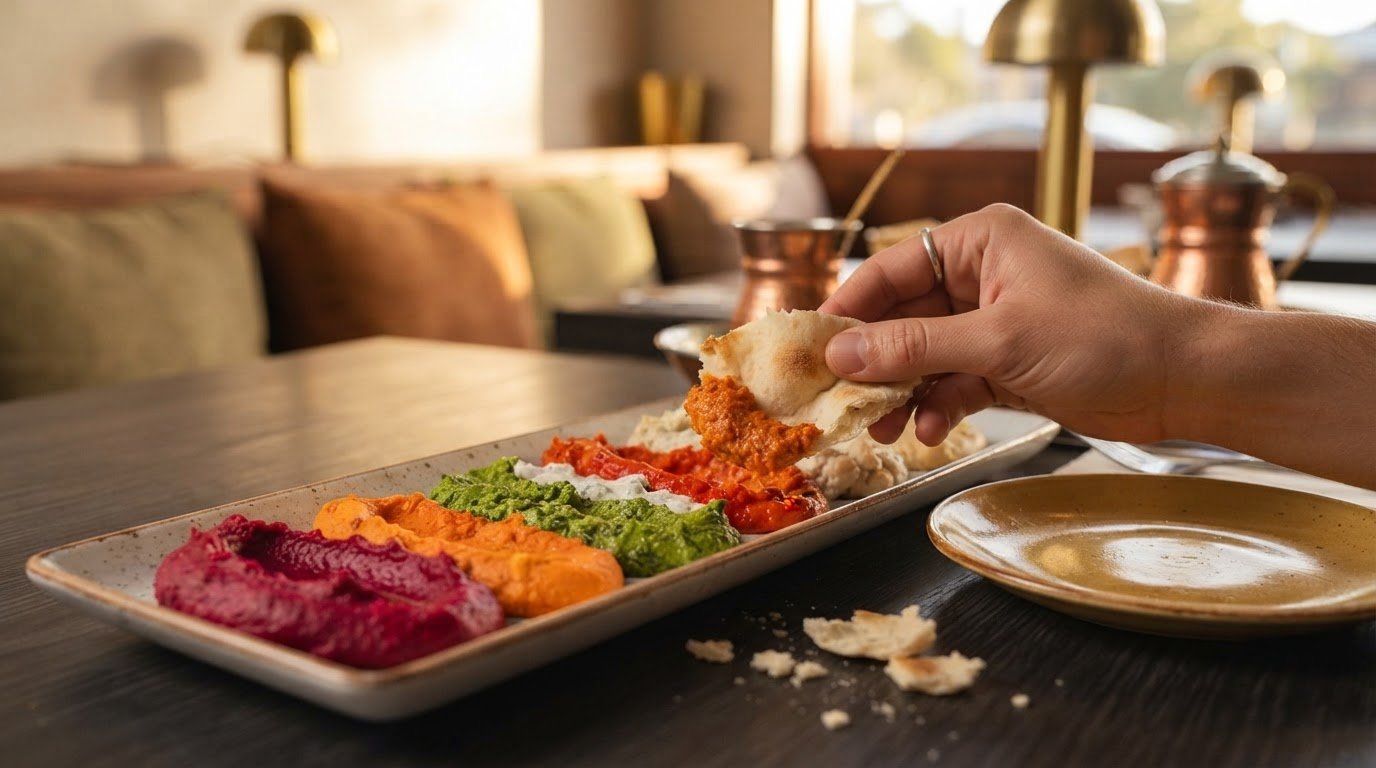
Turkish meze brings smaller dishes together in a colourful shared spread. Vegetables, salads, dips, grilled meats, rice and bread can all appear at the table. For Turkish food for beginners, sampling a few contrasting flavours is a practical way to discover favourite ingredients and textures.
Meze for sharing
Choose meze for variety: a creamy dip, a vegetable dish and a fresh salad bring different textures to one meal. Imam bayildi is a well-known example, made by cooking aubergines with onion, olive oil and tomatoes until soft. Its tender texture and savoury, gently sweet filling distinguish it from crisp salads and cool dips. Set the dishes out together so everyone can try different combinations with bread.
Salads with a tangy lift
Turkish salads pair fresh vegetables and herbs with bright, savoury seasonings. Sumac adds a distinctive tangy, lemon-like flavour and is often used with salads, meats and vegetables. Sprinkle it over chopped vegetables for a citrusy note without adding lemon juice. It also gives a salad a different character from a simple olive oil dressing.
Consider how each salad balances the rest of the spread. Crisp vegetables offer freshness beside tender imam bayildi, while herbs lift richer dishes. Olive oil and lemon are common ingredients in Turkish cuisine, and each can sharpen or soften a salad’s flavour. A small taste helps you notice the contrast between sumac’s tang and ripe tomatoes’ sweetness.
Cool yoghurt dips
Yoghurt dips bring a cool, creamy contrast to vegetables, salads and grilled dishes. Garlic and lemon add savoury depth and brightness, while yoghurt provides a smooth base. For a simple homemade dip, stir crushed garlic and a little lemon juice into plain yoghurt, then taste and adjust gradually. Keep it thick enough to scoop with bread or fresh vegetables.
At the table, pair a spoonful of yoghurt dip with a bite of salad or aubergine. This makes meze an inviting first step for anyone exploring Turkish food for beginners, with creamy, fresh, tangy and savoury flavours to sample together.
Turkish desserts, including sütlaç and revani
Turkish desserts offer a sweet ending with contrasting textures, from creamy rice pudding to syrup-soaked cake. Sütlaç and revani make a useful first pairing: one is cool and spoonable, the other tender and syrupy. Comparing them helps beginners explore Turkish sweets beyond pastries and discover which style they enjoy most.
Sütlaç is Turkish rice pudding, made by cooking rice with milk until soft and creamy. Its gentle flavour and familiar ingredients make it approachable to try or prepare at home. Look for a smooth, spoonable consistency with soft grains of rice throughout. If you enjoy classic rice pudding, sütlaç offers a straightforward introduction to Turkish dessert traditions.
Revani is a semolina cake soaked in syrup, giving each slice a moist texture and sweet finish. Semolina brings a delicate graininess that distinguishes it from a light sponge cake. The syrup is absorbed after baking, so the cake tastes tender rather than dry. Choose revani to sample a dessert with more structure and sweetness than creamy sütlaç.
For a first taste, try a small portion of each side by side. Notice the contrast between sütlaç’s creamy rice and revani’s soft, syrupy crumb. Turkish delight and baklava are other familiar sweets with different textures to explore. Comparing desserts is a simple way to find your favourite without knowing every regional variation.
A typical Turkish breakfast can include bread, olives, cheese, eggs, tomatoes, cucumbers, honey and jam. The exact spread varies, but these savoury and sweet elements make for a generous meal.
Turkish cuisine includes vegetarian and vegan dishes, and gluten-free options are available in Australia. Halal suitability depends on ingredients and preparation; a dish’s Turkish name alone doesn’t establish it. Check the specific ingredients and how the dish is prepared when halal suitability matters.
To explore the dessert contrast at the table, try Turkish sweets alongside your meal.
Erciyes Turkish Restaurant: Turkish Pide
Erciyes Turkish Restaurant offers a welcoming way to explore Turkish flavours in Sydney. Turkish pide is an approachable choice if you’re ready to try the filled flatbread you’ve been reading about. Add Handcrafted Mezzes to sample smaller dishes, or choose Charcoal Grills for another taste of Turkish cooking.
For a sweet finish, Turkish Sweets let you continue exploring beyond savoury dishes. Try different offerings to compare flavours and textures, whether you’re sharing a meal or tasting Turkish cuisine for the first time.
Contact Erciyes Turkish Restaurant to talk about your meal.
Let your next meal be a discovery
Exploring Turkish food for beginners doesn’t need to end with a recipe. Let your tastes guide what you try next: choose a familiar favourite, then add something new to share. A meal is a relaxed way to notice how different flavours and textures work together, without needing to master every dish first.
At Erciyes Turkish Restaurant in Sydney, choose Turkish Pide, Handcrafted Mezzes or Charcoal Grills to shape a meal around what appeals to you. Bring your curiosity, follow your appetite and enjoy discovering a new favourite at your own pace.
Contact Erciyes Turkish Restaurant to plan your next Turkish meal. There’s always another flavour to discover.
Frequently Asked Questions
What is a good Turkish dish for beginners to cook?
Gözleme is a good first cooking project because its basic method is easy to follow: prepare thin dough, add a filling, fold and cook in a hot pan. Choose spinach and cheese or potato and cheese for a familiar savoury flavour. Work with one flatbread at a time, cooking until the dough is golden and the filling is hot.
What is gözleme?
Gözleme is a Turkish filled flatbread, often enjoyed as a quick, savoury bite. Common fillings include cheese, spinach, herbs or minced meat, so choose a combination that suits your taste. Its folded shape keeps the filling inside as it cooks. For a first taste, look for one that’s freshly cooked, with a soft centre and browned patches.
What spices are common in Turkish cooking?
Common examples include cumin, paprika, black pepper and pepper flakes, which season sucuk, a spiced fermented sausage. Sumac brings a tangy, lemon-like note to salads, vegetables and meats. These ingredients show how Turkish dishes build flavour through different seasonings rather than relying only on chilli heat. Notice which spice gives a dish warmth, fragrance or a sharper finish.
What are the most popular Turkish dishes for beginners?
Approachable dishes to start with include mercimek çorbası, gözleme, menemen, köfte and pide. Choose based on what you already enjoy: soup for a spoonable meal, eggs for a familiar breakfast, or filled flatbread for something easy to eat by hand. At a restaurant, order a few different dishes to share and compare flavours without committing to one style.
What are the main ingredients and flavours in Turkish cuisine?
Olive oil, garlic, lemon and yoghurt are among the ingredients used across Turkish cuisine. Depending on how they’re combined, their flavours can be savoury, tangy, creamy or fresh. Herbs, vegetables and grilled meats add further variety. When choosing a dish, consider whether you’d prefer a bright citrus note, a creamy accompaniment or a deeper, savoury flavour.
What are common Turkish desserts and drinks for first-time diners?
Sütlaç and revani are two Turkish desserts worth trying, while Turkish delight offers a smaller sweet taste. Turkish coffee is a traditional drink commonly served with a glass of water and Turkish delights. For a first visit, order coffee after a meal and sample a sweet alongside it. The water offers a refreshing contrast between sips of rich coffee.