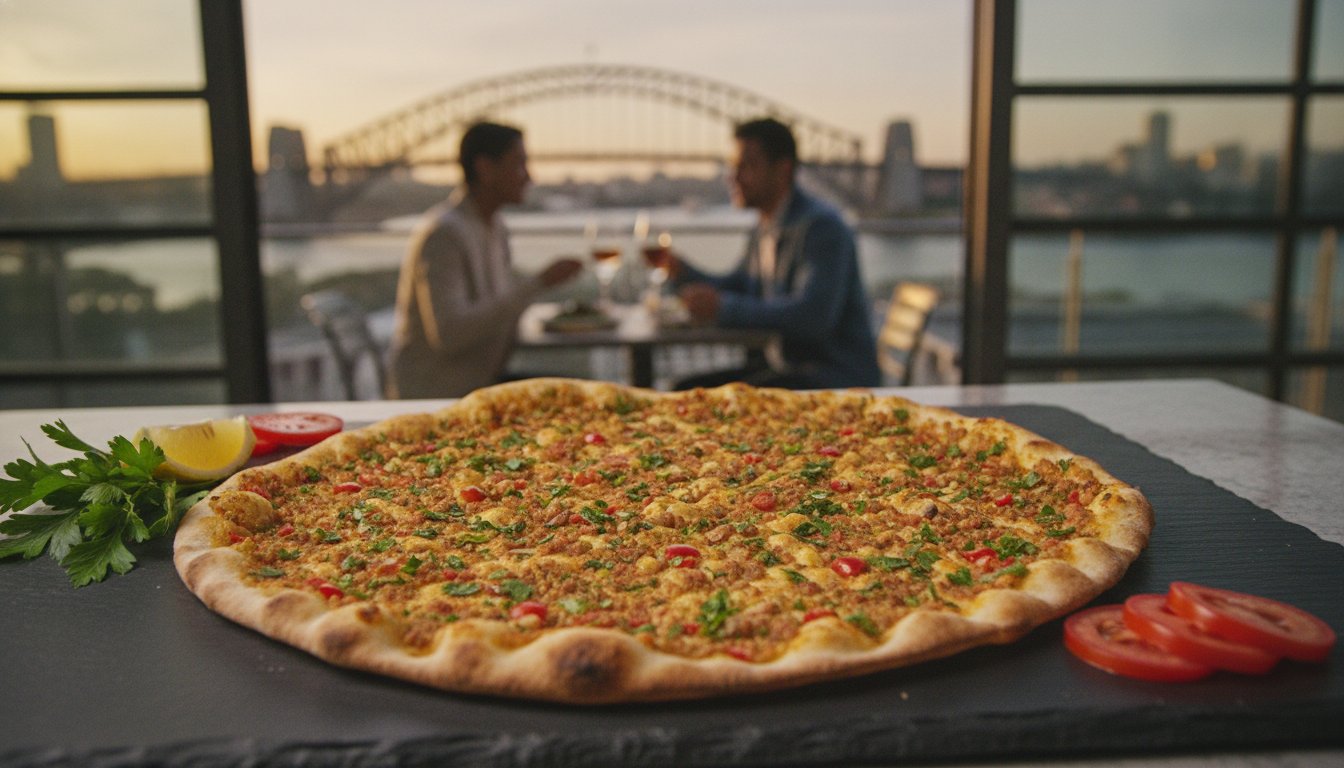
Despite what many takeaway menus might suggest, lahmacun is definitely not just a Turkish version of pizza. This ancient, paper-thin flatbread is a masterpiece of balance; it features a spiced minced meat topping and a signature crispness that has been perfected over centuries. If you’ve ever felt confused by how to properly eat one or ended up with a soggy, bland imitation, you aren’t alone. Many diners across Sydney find it difficult to track down that authentic, wood-fired crunch that truly honours the dish’s heritage.
We believe that every meal should feel like a warm invitation into a shared cultural story. We’re going to share the secrets behind the perfect lahmacun, from its traditional Levantine origins to the precise blend of herbs and spices that create its vibrant flavour. You’ll learn the essential ritual of garnishing and rolling your flatbread like a local; plus, we’ll show you exactly where to find the most authentic, handcrafted versions in the heart of Sydney for a dining experience that feels genuinely special.
Key Takeaways
- Uncover the ancient origins and etymology of this “meat with dough” delicacy to understand its unique place in Turkish culinary heritage.
- Learn the secret to identifying a perfect flatbread by its translucent, hand-rolled dough and that signature crispy-yet-flexible edge.
- Master the traditional eating ritual of Lahmacun by layering fresh garden garnishes and rolling it up, rather than using a knife and fork.
- Distinguish between the paper-thin lahmacun and the thicker, boat-shaped Turkish pide to ensure you always order the right texture for your palate.
- Identify where to find time-honoured, stone-oven baked authenticity in Sydney from a family-run landmark that has been welcoming guests since 1985.
What is Lahmacun? Discovering the Authentic “Turkish Pizza”
When you first encounter this traditional dish, the first thing you’ll notice is the incredible aroma of toasted flour and warm spices. It’s a paper-thin, remarkably crispy flatbread that’s been topped with a delicate layer of minced meat, finely diced vegetables, and a secret blend of herbs. While it’s often the centre of a busy family lunch, its simplicity is what makes it so special.
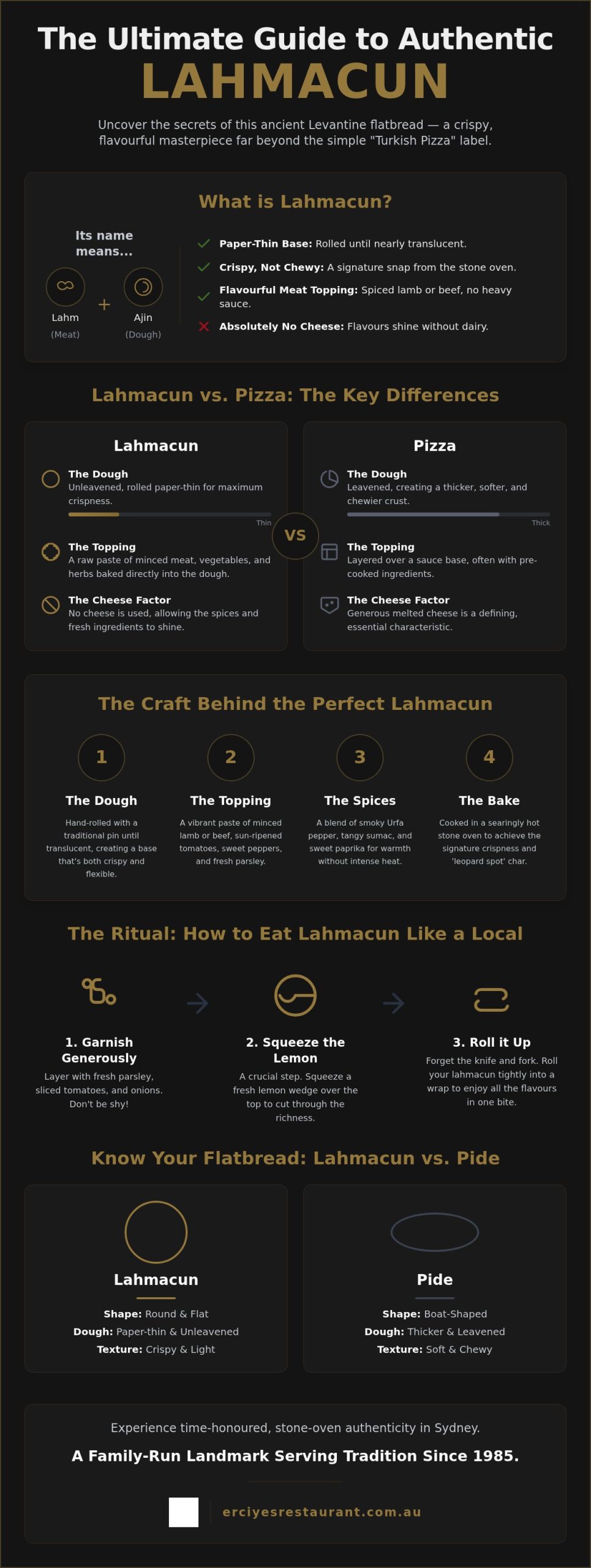
The name itself tells a story. To discover What is Lahmacun? in its truest form, we look to the etymology; ‘lahm bi-ajin’ simply means ‘meat with dough’. This dish has ancient roots in the Levant region, travelling through history to become a cornerstone of Turkish hospitality. It’s a recipe that has been passed down through generations, arriving in Sydney with the same pride and tradition it held centuries ago.
The “Turkish Pizza” label is a bit of a double-edged sword. It helps newcomers understand the shape, but it misses the soul of the dish. A pizza is often heavy, defined by its thick crust and melted cheese. In contrast, this flatbread is light and punchy. It doesn’t need cheese to be satisfying. Instead, it relies on the quality of its ingredients and the intensity of the oven’s heat.
The Cultural Heart of Turkish Street Food
Think of lahmacun as the heartbeat of a Turkish city. It’s the go-to meal for a quick, nutritious lunch or a shared treat among mates. In a traditional ‘Lahmacun Salonu’, the atmosphere is electric. You’ll see chefs stretching dough until it’s nearly translucent before sliding it into a roaring stone oven. This isn’t just food; it’s a social ritual. The magic happens when you add a handful of fresh parsley and a squeeze of lemon, turning a simple flatbread into a vibrant, sensory experience.
Lahmacun vs. Pizza: The Key Differences
The technical differences are what set this dish apart. First, the dough is unleavened, meaning it doesn’t rise like a standard pizza base. It’s rolled so thin you can almost see through it, resulting in a wafer-like snap. Second, there’s a total absence of cheese. This allows the subtle flavours of the lamb, tomatoes, and peppers to take centre stage. Finally, the topping is applied as a raw paste. As it bakes, the juices from the meat soak directly into the dough, creating a depth of flavour that a pizza simply can’t match.
The Craft Behind the Perfect Lahmacun
Creating the perfect lahmacun isn’t about speed; it’s about the patient hands of a master baker who understands the heritage of the dish. The dough serves as the foundation. It must be rolled out by hand using a traditional rolling pin until it’s so thin you can almost see the grain of the wooden bench beneath it. This translucency ensures that when it hits the heat, it transforms into a wafer-thin base that carries the flavour without becoming heavy or doughy.
A true masterpiece achieves what we call “the snap”. The edges should be golden and crackle at the slightest touch, yet the centre must remain just flexible enough to roll. This balance is vital because knowing how to eat lahmacun properly depends on that specific flexibility. If the base is too hard, it breaks; if it’s too soft, you’re left with a soggy mess that can’t hold its toppings.
The meat topping is a vibrant, finely minced paste that requires meticulous preparation. We use a succulent blend of lamb or beef, mixed thoroughly with sun-ripened tomatoes, sweet peppers, and onions. It isn’t just dumped on top. It’s spread with precision to the very edges, ensuring every single bite is as flavourful as the last. This ensures the dough and meat cook as one unified layer.
The final touch is the stone oven. The intense, dry heat of the stone creates those beautiful charred “leopard spots” on the underside of the flatbread. This isn’t burnt; it’s the signature of a traditional bake that adds a smoky depth you simply can’t get from a standard kitchen oven. It’s this high-intensity environment that seals in the juices while crisping the base to perfection.
The Secret Spice Blend
The seasoning defines the soul of the dish. We rely on a trio of essential spices: smoky Urfa or Aleppo pepper, tangy sumac, and sweet paprika. These spices are chosen to enhance the natural richness of the meat, providing a gentle warmth rather than a stinging heat. Fresh parsley acts as the green soul of the topping, cutting through the richness with a burst of garden-fresh brightness.
Handcrafted vs. Mass Produced
You can often spot a mass-produced version of lahmacun by its uniform, thick edges and lack of character. Frozen or machine-made options lose that essential artisan texture that only human hands can provide. Spreading the meat paste evenly requires a level of skill that machines haven’t mastered yet. At Erciyes, we’ve stayed true to these authentic handcrafted traditions since 1985, ensuring every flatbread that leaves our oven carries our family’s pride. If you’re craving the real thing, explore our menu to see how we keep these traditions alive.
The Ritual: How to Eat Lahmacun Like a Local
In Australia, we’re quite used to picking up a triangular slice of pizza or perhaps using a knife and fork at a formal bistro. However, when it comes to lahmacun, you’ve got to leave the cutlery in the drawer. The “No-Cut” rule is the first step in respecting this vibrant Turkish culinary tradition. If you ask for a pizza cutter, you’re effectively missing the soul of the meal. This flatbread is designed to be a tactile vessel. It’s a hands-on experience that starts with your fingertips and ends with a satisfied smile.
Once your steaming flatbread arrives at the table, the real work begins. You’ll usually be presented with a side plate of garden-fresh garnishes. Don’t be shy with these. Layer a generous handful of fresh parsley right across the centre. Add some thinly sliced red onions and a few juicy tomato wedges. This isn’t just a side salad; it’s the heart of the flavour profile. The freshness of the vegetables provides a necessary counterpoint to the deep, savoury notes of the spiced meat paste we discussed earlier.
Next comes the citrus finish. A heavy squeeze of fresh lemon is absolutely non-negotiable. The acidity cuts through the richness of the lamb and brings the earthy spices to life. Now, for the technique. You don’t fold it in half like a taco. Instead, you roll the flatbread from one side to the other into a tight, cigar-like wrap. This clever roll keeps all those delicious juices and crunchy vegetables tucked safely inside. It’s efficient, traditional, and ensures every bite contains the perfect ratio of ingredients.
Essential Accompaniments
To truly eat like a local, you need the right sidekicks on your table. Sumac onions are a must. Their tart, astringent crunch balances the richness of the meat perfectly. To wash it all down, we always suggest a glass of Ayran. This frothy, salty yoghurt drink is the traditional partner for a reason; it’s incredibly refreshing and helps cool the palate, especially if you’ve decided to add a few extra pickled chillies to dial up the heat.
The Sensory Experience
The beauty of this ritual lies in the incredible contrast of temperatures and textures. You’ve got the heat from the stone-oven baked meat meeting the cold, zingy crunch of the fresh salad inside. It’s a messy, wonderful affair that’s meant for sharing with mates over a crowded table. We actively encourage you to get your hands dirty. In our culture, hospitality is about feeling at home, and there’s no better way to join the family than by rolling up a fresh lahmacun and diving in.
Lahmacun vs. Pide: Choosing Your Turkish Flatbread
Choosing between these two icons can be a challenge for any newcomer to our table. While both emerge from the same roaring stone oven, they offer completely different sensory journeys. Pide is the “comfort food” of the flatbread family. Its dough is thicker, softer, and more bread-like; it’s designed to be a substantial, filling meal. Lahmacun, as we’ve seen, is all about that delicate, wafer-thin crunch that feels light and vibrant.
The shapes provide your first visual clue. A Lahmacun is always round and thin, resembling a rustic, artisanal wrap. Pide is famous for its iconic boat-shaped appearance. Those characteristic folded edges create a sturdy crust that’s perfect for holding heavier, richer toppings. You’ll often find pide loaded with melted mozzarella, spicy sucuk, or even a runny egg. While Lahmacun remains a dedicated meat-and-veg affair, pide offers a broader playground for different flavours and textures.
The dining context is also a key differentiator. Because it’s so light, we often see our guests enjoy a flatbread as a shared starter or a quick snack. It doesn’t weigh you down. Pide is a hearty main event, usually served sliced into strips and meant to be the star of the show. It’s the kind of meal that leaves you feeling deeply satisfied and ready for a long, leisurely afternoon.
When to Order Pide
Choose pide when you’re after a hearty, satisfying experience that feels like a warm hug. It’s the ultimate choice for those who can’t resist the pull of melted cheese and a chewy, golden crust. If you’re dining with friends who don’t eat meat, don’t worry; you can find incredible plant-based options by checking out the ultimate guide to finding the best vegetarian pide in Sydney. From spinach and feta to roasted pumpkin, the variety on a pide menu ensures nobody leaves hungry.
When to Order Lahmacun
We often recommend Lahmacun as the perfect opening act for a Turkish mezze feast. Because it’s so light and crispy, it won’t spoil your appetite for the charcoal grills to come. It’s the ideal pick for diners who prefer a spice-driven bite without the heaviness of dairy. Plus, its ability to be rolled into a tight wrap makes it a brilliant takeaway option for a quick, flavour-packed lunch on the go.
Whether you’re craving the snap of a thin flatbread or the soft pull of a cheesy pide, we’ve been firing up our stone ovens in Surry Hills since 1985 to bring you the real deal. Book your table at Erciyes today and taste the difference that decades of tradition make.
Authentic Lahmacun in Sydney: The Erciyes Tradition
Since 1985, Erciyes has stood as a beacon of Turkish hospitality in the heart of Surry Hills. We’ve spent decades perfecting the art of the flatbread, ensuring that every guest who walks through our doors feels like a member of the family. Our commitment to the “old way” isn’t just about nostalgia; it’s about honouring the craftsmanship that makes a lahmacun truly authentic. We don’t believe in shortcuts. Instead, we rely on the same hand-rolling techniques and traditional stone ovens that have defined our kitchen for over 40 years.
Our vibrant 120-seat dining room is designed for sharing, laughter, and the clinking of glasses. It’s the perfect spot to gather with mates and dive into a pile of steaming, crispy flatbreads. If you can’t make it to us, we’re more than happy to bring the feast to you. Our corporate catering packages are the ideal way to inject some genuine flavour into your next office event, providing a refreshing alternative to the usual boardroom lunch.
From Our Stone Oven to Your Table
There’s a specific kind of theatre in our open kitchen. You can watch our bakers stretch the dough until it’s wafer-thin before applying the spiced meat paste with practiced precision. We never pre-prepare our lahmacun. Every single one is made to order, ensuring it hits your table with that essential golden snap and aromatic heat. These are the same family recipes that have remained unchanged since we first opened, preserving a taste of Turkey right here in Sydney.
Make a Night of It in Surry Hills
A visit to Erciyes is more than just a meal; it’s a full cultural celebration. To truly elevate your evening, we suggest timing your visit with a live belly dancing performance. The energy in the room is infectious, making it a favourite for group bookings and birthday celebrations. Whether you’re here for a quick lunch or a big night out, we’re ready to welcome you with open arms and a hot oven. Book your table at Erciyes Restaurant today and taste the tradition that has made us a local staple for generations.
Join Our Table for an Authentic Taste of Turkey
Embracing the world of Turkish flatbread is about more than just grabbing a quick bite; it’s about participating in a centuries-old ritual. You now know that a true Lahmacun is defined by its paper-thin, hand-rolled dough and the vibrant, zesty crunch of fresh garnishes. Whether you’re rolling your first wrap or choosing between the light snap of a flatbread and the soft comfort of a pide, the secret always lies in the heat of a traditional stone oven and the quality of the ingredients.
Since 1985, our family has been proud to serve as a cultural ambassador in Surry Hills, bringing these time-honoured techniques to the local community. We’ve been voted one of Sydney’s best Turkish restaurants because we refuse to compromise on authenticity. We invite you to step into our vibrant dining room, hear the sizzle of the grill, and feel the warmth of our hospitality. Book your table at Erciyes Restaurant and taste Sydney’s best lahmacun. We can’t wait to share our heritage with you and make your next meal truly memorable.
Frequently Asked Questions
Is lahmacun spicy?
This dish typically carries a gentle, warming heat rather than a sharp or overwhelming spice level. The flavour profile relies on aromatic spices like Urfa pepper and sweet paprika, which provide depth without being too hot for most palates. If you prefer a bit more kick, we often serve pickled chillies on the side. This allows you to customise the heat to your liking while enjoying the savoury meat and crispy base.
How do you pronounce lahmacun correctly?
You pronounce it as “lah-mah-june,” with the emphasis on the final syllable. The word comes from Arabic roots, and the ‘c’ in Turkish is pronounced like a soft English ‘j’. While it might look tricky on the menu, don’t worry about getting it perfect. Our friendly team is always happy to help you out, and we’re just glad you’re eager to try this traditional, handcrafted dish.
What is the difference between lahmacun and pide?
The main difference lies in the dough and the presentation. While Lahmacun is paper-thin, round, and meant to be rolled, a Turkish pide is boat-shaped with a thicker, softer crust. Pide often features cheese and a wider variety of fillings, whereas the flatbread focuses on a specific spiced meat paste. Think of the former as a light, crispy snack and the latter as a heartier, more bread-like main meal.
Is lahmacun healthy compared to regular pizza?
It is often considered a lighter alternative to standard pizza because the dough is unleavened and rolled exceptionally thin. There is no heavy cheese involved, which significantly reduces the saturated fat content. When you follow the traditional ritual of adding fresh parsley, tomatoes, and onions, you’re also getting a generous serving of raw vegetables. It provides a satisfying, flavour-packed meal that won’t leave you feeling weighed down or sluggish afterwards.
Can I order lahmacun for takeaway or catering in Sydney?
Yes, you can certainly enjoy our authentic flatbreads at home or in the office. We offer a full takeaway service from our Surry Hills location, and the rolled format makes it the perfect meal for eating on the move. For larger groups, our professional corporate catering packages bring a unique, cultural touch to any Sydney event. It’s a fantastic way to share Lahmacun with colleagues or friends without any fuss.
Is there a vegetarian version of lahmacun?
Traditionally, the dish is defined by its spiced meat topping, so an authentic version usually contains lamb or beef. However, for those seeking a plant-based option, we offer a wide range of handcrafted vegetarian pides. These feature fresh ingredients like spinach, feta, and roasted vegetables, all baked in our traditional stone oven. You’ll still get that signature crunch and authentic flavour profile while sticking to your dietary preferences.
How many lahmacuns should I order per person?
If you’re ordering it as a starter to share with mates, one or two for the table is usually plenty to get the appetite going. For a light lunch, one per person is often sufficient, especially when you load it up with fresh salad and lemon. If you’re particularly hungry or making it your main meal, you might find that two hit the spot perfectly. It’s all about the shared experience.
What meat is traditionally used in lahmacun?
We traditionally use a finely minced blend of lamb or beef, or sometimes a combination of both. The quality of the meat is vital, as it needs to be lean enough to crisp up but succulent enough to keep the base moist. This meat is mixed into a paste with tomatoes, peppers, and onions before being spread onto the dough. This ensures the flavours meld together perfectly during the intense heat of the bake.