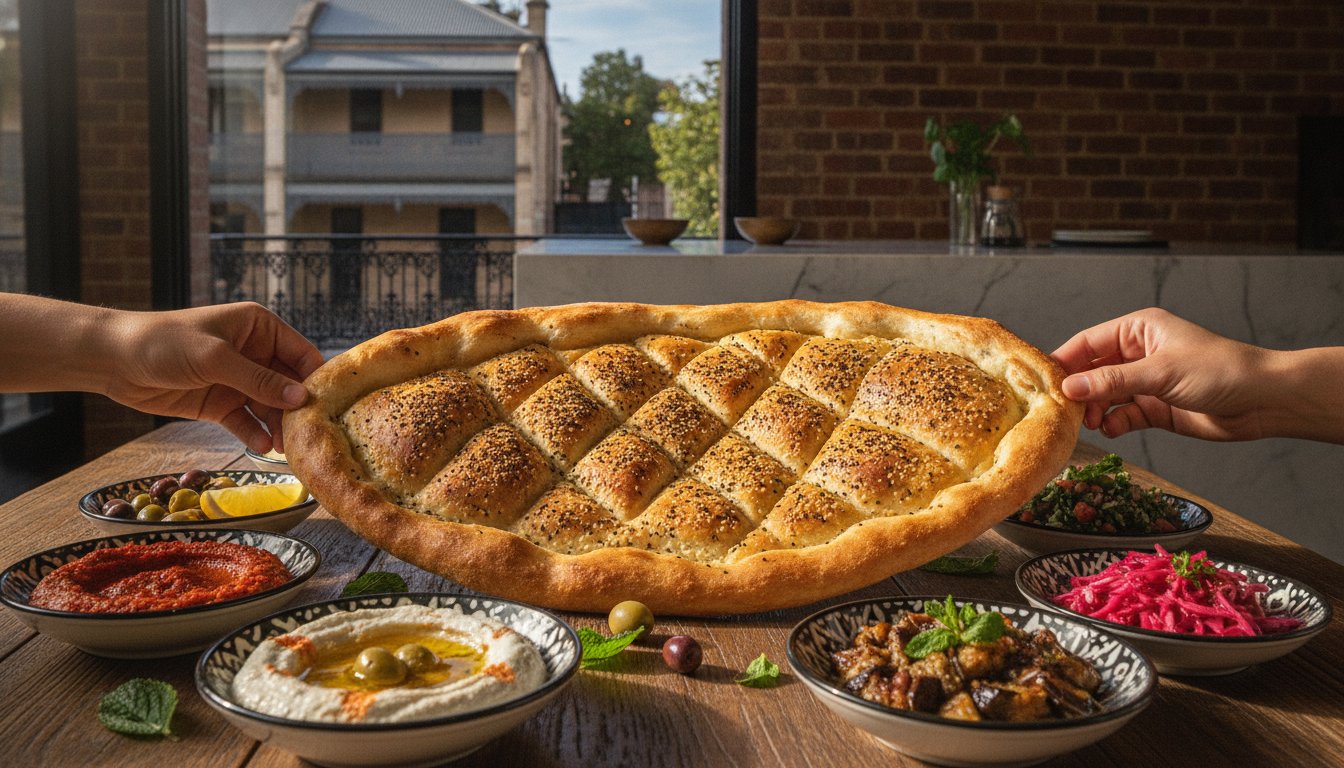
The perfect loaf of fresh Turkish bread isn’t just a side dish; it’s a sensory masterpiece that defines the entire meal. We’ve all stood in a supermarket aisle, settling for a plastic-wrapped loaf that’s disappointingly dry or doughy. It’s frustrating when you crave that authentic, pillowy texture and stone-baked aroma but end up with something lacking soul. You know a meal is only as good as the bread used to scoop up every drop of flavour, yet finding the real deal among generic flatbreads is often a challenge.
In this guide, we’ll reveal the secrets to identifying authentic Pide and why traditional baking techniques used since 1985 create a superior experience. You’ll learn how to pair your bread with handcrafted mezzes and grills to honour Turkish hospitality. We’re also sharing practical advice on storing and reheating your loaf to keep it tender and delicious. With the Australian bread and cake retail market hitting $987.8 million in 2026, it’s clear that quality matters more than ever. We’ll help you find a reliable local spot that treats bread making with respect, ensuring every bite is as warm and welcoming as a family home.
Key Takeaways
- Understand the cultural distinction between Ekmek and Pide to ensure you’re choosing the right loaf for your next feast.
- Uncover why a traditional stone oven is the secret to achieving the signature texture and aroma that home kitchens simply can’t replicate.
- Learn how to pair your bread with handcrafted mezzes and charcoal grills to elevate your meal into a celebratory shared experience.
- Master the professional techniques for spotting, storing, and reviving fresh Turkish bread so you never have to settle for a dry or doughy slice again.
- Discover a trusted Surry Hills landmark that has been perfecting the art of authentic, handcrafted Turkish baking for over four decades.
What is Fresh Turkish Bread? More Than Just a Side Dish
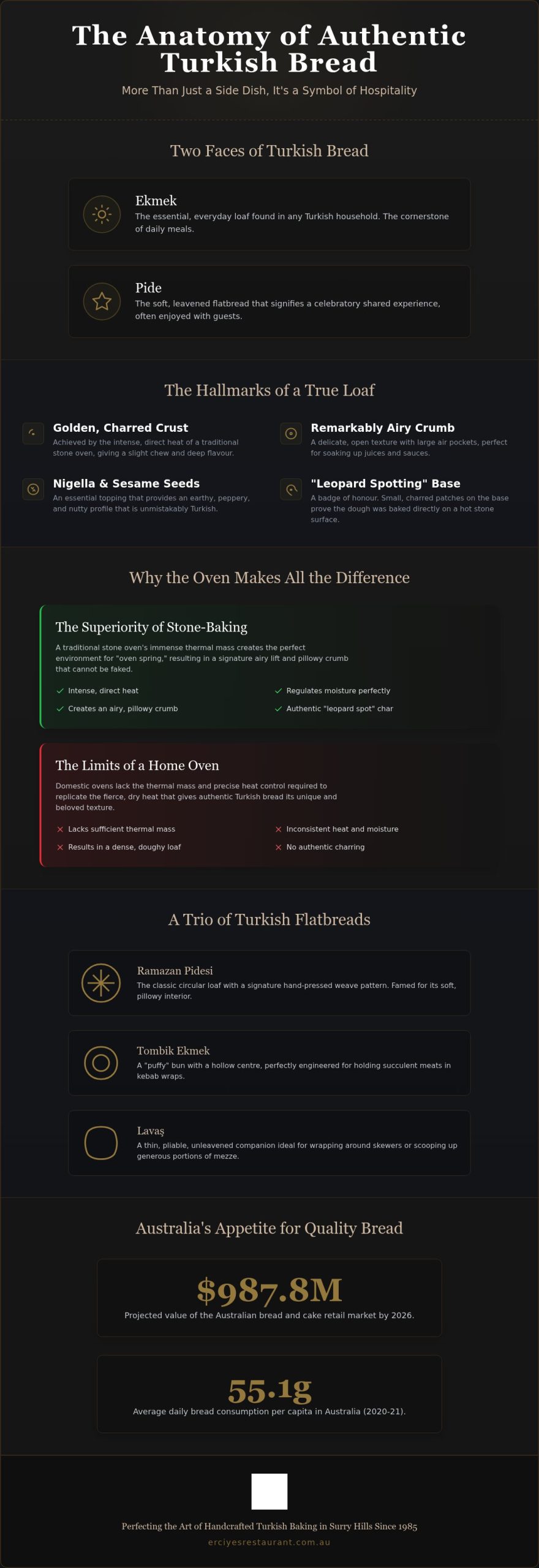
In a Turkish household, bread is far more than a simple accompaniment; it’s a sacred symbol of hospitality and sharing. When you sit down for a meal, the presence of fresh Turkish bread signals that you’re an honoured guest. While many Australians use the term as a catch-all, there’s a beautiful distinction between ekmek, the everyday loaf, and pide, the soft, leavened flatbread. True authenticity is found in the sensory details. You’ll recognise it by the golden, slightly charred crust, the remarkably airy crumb, and that unmistakable aroma of toasted nigella and sesame seeds. It’s a staple so essential that Australians consumed an average of 55.1 grams of bread per capita daily in 2020-21, though nothing compares to a handcrafted loaf straight from the oven.
The Different Styles of Turkish Flatbread
Traditional Turkish baking offers a rich variety of textures designed for specific culinary roles. The most iconic is Ramazan pidesi, a classic circular loaf featuring a signature hand-pressed weave pattern. It’s famous for its soft, pillowy interior. For those enjoying our kebab wraps, you’ll likely encounter Tombik Ekmek. It’s a “puffy” bun with a hollow centre that’s perfect for holding succulent meats. If you’re ordering from our charcoal grills, you’ll want Lavaş. This thin, unleavened companion is pliable enough to wrap around a skewer or scoop up a generous portion of hummus. Each style serves a purpose, ensuring no flavour is left behind on the plate.
Why Freshness is Non-Negotiable
You can’t fake the quality of bread that’s been baked only hours before it reaches your table. Authentic Turkish bread relies on a simple, honest ingredient list: flour, water, yeast, and salt. Because it’s free from the artificial preservatives found in supermarket aisles, its life cycle is short and beautiful. From the moment it leaves the intense heat of the stone oven, the texture begins to evolve. When it’s warm, it’s incredibly tender and flexible. As it cools, the crust develops a slight chew that’s perfect for mopping up the juices from our handcrafted mezzes. In traditional dining, the bread acts as your primary utensil. It’s designed to be torn by hand, never sliced with a machine, to preserve the delicate air pockets that define a high-quality loaf.
The Anatomy of Authenticity: What Makes a Loaf Truly Turkish?
A masterfully crafted loaf of fresh Turkish bread is a study in restrained perfection. While industrial bakeries often rely on additives to speed up their production lines, authentic baking demands a much slower pace. The foundation is built on just four humble ingredients: high-quality flour, water, yeast, and salt. It is the long fermentation process that truly develops the character of the dough, breaking down complex starches to ensure the bread is both flavourful and easy on the stomach. This patient, handcrafted approach is a cornerstone of the flatbread making and sharing culture that has united communities for centuries.
The Magic of Nigella and Sesame Seeds
The final flourish before the dough meets the heat is the application of a delicate egg wash. This provides that iconic golden sheen and acts as the essential “glue” for the topping trifecta. Nigella seeds, sometimes known as Charnushka, provide the earthy and slightly peppery soul of the loaf. When paired with toasted sesame seeds, they create a complex, nutty profile that defines the Turkish experience. As the bread bakes, the high heat releases the essential oils within these seeds, perfuming the air with an aroma that supermarket varieties simply cannot match. It is a celebratory scent that signals a meal is ready to be shared.
The Stone-Baked Difference
Most home bakers find it impossible to achieve the perfect crust because domestic ovens lack the thermal mass of a traditional stone oven. The heavy stone floor of a professional oven regulates moisture levels with incredible precision, providing the intense, direct heat required for a proper bake. This environment creates a sudden burst of steam and heat known as “oven spring”, which gives the bread its signature airy lift and pillowy crumb.
You will know a loaf is authentic by the “leopard spotting” on the base. These small, charred patches are a badge of honour, indicating the dough has been kissed by a fierce, dry heat that locks in a tender interior while forming a crisp, resilient exterior. If you are curious to see this traditional process in action, you can always find our team at work in the heart of Surry Hills, where we have been honouring these stone-baked techniques since 1985.
From Mezze to Mains: How to Pair Turkish Bread Like a Pro
Bread isn’t just a side; it’s the bridge that connects every vibrant flavour on your plate. In a traditional meal, the loaf is central to Turkish culture, serving as a vessel for storytelling and shared joy. Whether you’re tearing off a piece to scoop up a creamy dip or using it to catch the smoky drippings from a charcoal grill, the bread is an active participant in the feast. A well-crafted loaf of fresh Turkish bread possesses a sturdy yet soft structure. This allows it to hold up beautifully against heavy, bold accompaniments like garlic toum or rich hummus without becoming soggy or falling apart. It’s the ultimate “mop” for every delicious juice left on the platter.
A traditional Turkish breakfast is incomplete without a basket of warm bread. It’s the perfect companion for sweet and savoury spreads alike. We love seeing guests dip a crusty piece into a pool of honey and creamy kaymak, or pairing it with salty feta, olives, and sliced tomatoes. The bread’s airy crumb acts like a sponge, soaking up olive oil and lemon juice to ensure no flavour is ever wasted. It turns a simple meal into a celebratory experience that lingers long after the last bite is gone.
The Perfect Mezze Match
Scooping up authentic Turkish mezze in Sydney requires a bread that’s soft enough to fold but resilient enough to carry a load. There is a wonderful sensory contrast when you press a piece of warm, stone-baked bread into a bowl of chilled Jajik or smoky Baba Ganoush. This interplay of temperatures and textures is what makes a mezze platter feel balanced and complete. Without the bread, these dips are merely ingredients; with it, they become a communal feast that brings people together around the table.
Turkish Bread for Large Groups and Catering
If you’re organising mezze platter catering Sydney, the bread is often the hero of the spread. For a successful corporate lunch or private event, we recommend portioning roughly one-quarter to one-half of a loaf per person. This ensures everyone has enough to enjoy with their grills and salads. To keep your fresh Turkish bread at its best during a long function, keep it wrapped in a thick, clean linen cloth until the moment it’s served. This simple step preserves the internal moisture and keeps that “fresh from the oven” tenderness intact for your guests.
The Freshness Factor: How to Spot, Store, and Revive Your Loaf
Nothing compares to the moment you hold a loaf of fresh Turkish bread that’s still warm from the stone hearth. Because traditional Pide is made without the artificial preservatives found in supermarket long-life options, its peak window is short but glorious. To truly appreciate the craftsmanship, you need to know how to handle it from the bakery to your kitchen bench. It’s a delicate balance of preserving moisture while maintaining that signature crust.
Spotting the Real Deal in Sydney
When you’re hunting for the best loaf, let your senses lead the way. Start with the “Squeeze Test”. A truly authentic loaf should have a gentle, airy bounce-back when pressed. If it feels dense or stays indented, it’s likely past its prime. Next, flip the bread over. You’re looking for those distinctive, slightly charred markings from the stone floor of the oven. Finally, take a deep breath. A high-quality loaf will have a potent, earthy aroma of toasted nigella and sesame seeds that fills the room and builds anticipation for the meal ahead.
How to Revive Your Bread at Home
If you have leftovers, remember the golden rule of storage: never put your bread in the fridge. The cold environment actually accelerates the staling process, turning a soft crumb into something dry and crumbly. Instead, keep it in a paper bag at room temperature. If you find yourself with fresh Turkish bread from the day before, you can easily restore it to its former glory using the “Water Mist” technique. Simply flick a few drops of water onto the crust or give it a very light spray before popping it into a preheated 180°C oven for three to five minutes.
This gentle steam rehydrates the exterior while the heat softens the middle. While a toaster is fine for a quick snack, the oven is the superior choice for preserving the delicate texture of the whole loaf. Be careful with the timing; you want to warm it through, not turn it into a hard rusk. For longer storage, you can freeze the bread in an airtight bag for up to a month. Just ensure it’s completely thawed at room temperature before you apply the mist-and-bake method. Experience the difference that daily baking makes by visiting us to pick up a fresh loaf today at our Surry Hills home.
Erciyes Restaurant: Sydney’s Home for Handcrafted Turkish Bread Since 1985
When you walk through our doors in Surry Hills, the first thing that greets you isn’t a menu; it’s the intoxicating scent of fresh Turkish bread lifting from our stone oven. Since 1985, Erciyes has stood as a proud guardian of Anatolian culinary traditions right here in the heart of Sydney. For over 40 years, we’ve remained a family-owned institution, dedicated to the belief that a true Turkish feast begins and ends with the quality of the loaf on the table. We don’t just serve food; we invite you into our heritage.
Our commitment to daily freshness is the heartbeat of our kitchen. We believe our guests deserve a loaf that hasn’t seen the inside of a plastic bag or a delivery truck. This unwavering dedication to the craft is the secret behind our signature Turkish pide Sydney. Each portion of dough is hand-stretched with care and fired in our traditional oven until it reaches that elusive balance of a crisp, golden exterior and a cloud-like, tender centre. It’s a labour of love that we perform every single day for every guest who sits at our table.
A Family Tradition in Every Bite
At Erciyes Restaurant, we treat every loaf with the same reverence our ancestors did. While the Sydney food scene is constantly evolving, our heritage recipes remain untouched by modern shortcuts. The heavy stone floor of our oven is the silent hero of our kitchen, providing the steady, intense heat required to create the “leopard spotting” and airy crumb our regulars have craved for decades. It’s this consistency that has turned first-time visitors into lifelong friends who visit us weekly for their essential bread fix. We take immense pride in being a reliable local staple where the quality never wavers.
Visit Us in Surry Hills
Our central location makes us the perfect destination for a quick takeaway or a grand celebratory feast. If you’re looking for more than just a meal, book a table for our full live belly dancing Sydney restaurant experience. It’s a vibrant night of culture, music, and of course, endless baskets of warm, fresh Turkish bread. For those sunny Sydney afternoons, our takeaway service allows you to pack a fresh loaf and a selection of handcrafted mezzes for a picnic in the park. Whether you’re dining in with family or ordering a corporate catering package for a large event, we invite you to share in the tradition that has made us a Sydney favourite since 1985.
Experience the Warmth of Handcrafted Bread
Finding the perfect loaf is about more than just a quick trip to the shops; it’s about connecting with a heritage that spans generations. You now know that true quality lies in simple ingredients, the intense heat of a stone oven, and the patient fermentation that develops every airy air pocket. Whether you’re scooping up smoky Baba Ganoush or mopping up the rich juices from a charcoal grill, the right bread turns a simple meal into a shared celebration. Proper storage and revival techniques ensure that every bite stays as tender as the moment it was fired.
At Erciyes, we’ve remained a family-owned staple since 1985, dedicated to keeping these traditions alive for our community. We take pride in being Sydney’s favourite Turkish destination, where every portion of fresh Turkish bread is baked fresh on-site daily to ensure that “straight from the oven” magic. Don’t settle for supermarket alternatives when you can experience the real thing in the heart of Surry Hills.
Book a table at Erciyes and savour our fresh bread today. We can’t wait to welcome you to our table and share a piece of our history with you.
Frequently Asked Questions
What is the difference between Turkish bread and Lebanese bread?
Turkish bread is a thick, leavened loaf with a soft, pillowy crumb, whereas Lebanese bread is a thin, unleavened pocket bread. While both are staples of Middle Eastern cuisine, the Turkish variety relies on yeast and a longer fermentation to achieve its signature height and airy interior. Lebanese bread is designed to be split open for fillings, while Turkish bread is better suited for scooping up dips.
Is Turkish bread vegan-friendly?
Traditional Turkish bread made with just flour, water, yeast, and salt is naturally vegan-friendly. However, many authentic bakeries apply an egg wash to the top of the loaf to achieve that beautiful golden sheen and help the seeds stick. If you’re following a strict vegan diet, it’s always best to ask if the glaze contains egg. At Erciyes, we focus on traditional methods that prioritise flavour and authenticity.
How long does fresh Turkish bread stay good for?
A loaf of fresh Turkish bread is at its absolute best within the first 12 to 24 hours of baking. Because authentic varieties don’t contain artificial preservatives, they’ll naturally begin to firm up after the first day. To maximise its lifespan, store it in a paper bag at room temperature rather than plastic, which can make the crust soggy. If it’s been more than a day, use our revival techniques to restore its tenderness.
Can I freeze Turkish bread?
Yes, you can absolutely freeze Turkish bread to preserve its airy texture for up to one month. To do this properly, wrap the loaf tightly in foil or place it in an airtight freezer bag to prevent freezer burn. When you’re ready to enjoy it, let it thaw completely at room temperature before warming it in the oven. This method ensures the bread retains its characteristic softness without becoming unpleasantly dry or crumbly.
What are the black seeds on top of Turkish bread?
The small black seeds are nigella seeds, which have a unique, earthy flavour profile that sits somewhere between onion, oregano, and black pepper. When paired with toasted sesame seeds, they provide the essential aromatic soul of the loaf. These seeds aren’t just for decoration; they release essential oils during the baking process that give the bread its distinctive, celebratory scent that fills our restaurant every morning.
Why is my Turkish bread sometimes tough or chewy?
Toughness usually occurs when bread has been stored in the fridge or over-processed in a microwave. Refrigeration actually speeds up the staling process by crystallising the starches in the dough. Additionally, if the bread wasn’t baked in a high-heat stone oven, it may lack the rapid “oven spring” needed to create a light, airy crumb. Authentic stone-baked bread should have a resilient but tender bite that’s never unpleasantly leathery.
How do I reheat Turkish bread without it getting hard?
The secret to reheating without hardening is to introduce a little moisture before placing it in a preheated oven. Lightly mist the crust with water and bake at 180°C for about five minutes. This creates a small amount of steam that rehydrates the loaf. Avoid using a microwave for large pieces, as this often results in a rubbery texture that turns rock-hard as soon as the bread begins to cool down.
Where can I buy authentic stone-baked Turkish bread in Sydney?
You can find authentic, handcrafted fresh Turkish bread daily at Erciyes Restaurant in Surry Hills. We’ve been a local staple since 1985, firing our stone oven every morning to ensure the highest quality for our diners and takeaway guests. Our central location makes it easy to pick up a warm loaf to accompany your home-cooked meals or to enjoy alongside our famous handcrafted mezzes and charcoal grills in the heart of Sydney.