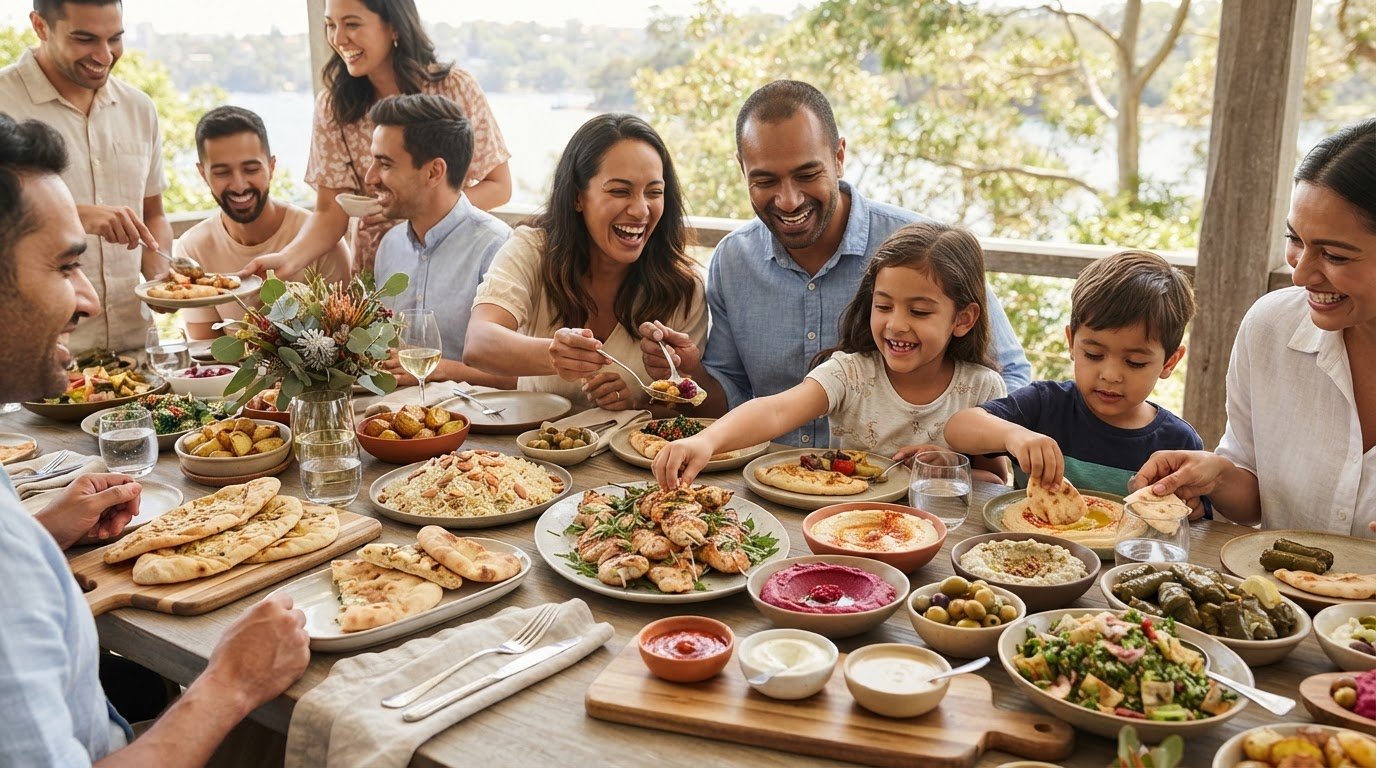
A crowd-pleasing menu doesn’t mean serving everyone the same thing. Catering for picky eaters works best when familiar dishes sit alongside new flavours, with a mix of mains and sides, dietary options, and sauces served separately so guests can build a plate they enjoy. Keep the choices clear and inviting.
It’s natural to want every guest, from cautious children to adventurous adults, to find something they’ll enjoy. The key is offering variety without overwhelming the menu, while respecting dietary needs and introducing unfamiliar foods gently.
In this guide, you’ll learn how to plan a varied spread, account for food preferences and dietary requirements, and present new dishes as an invitation rather than a challenge.
Key Takeaways
- Build a balanced spread with familiar favourites, varied sides and clear choices so guests can create a plate that suits them.
- Gather dietary needs early and plan inclusive options, including vegetarian, vegan and gluten-free choices.
- For a practical, adaptable spread, consider a salad bar and keep children’s mealtimes relaxed, with familiar foods alongside new tastes.
- For a Turkish-inspired menu, Erciyes Turkish Restaurant’s pide, handcrafted mezzes, charcoal grills and Turkish sweets offer a range of flavours to share.
Offering a variety of menu options
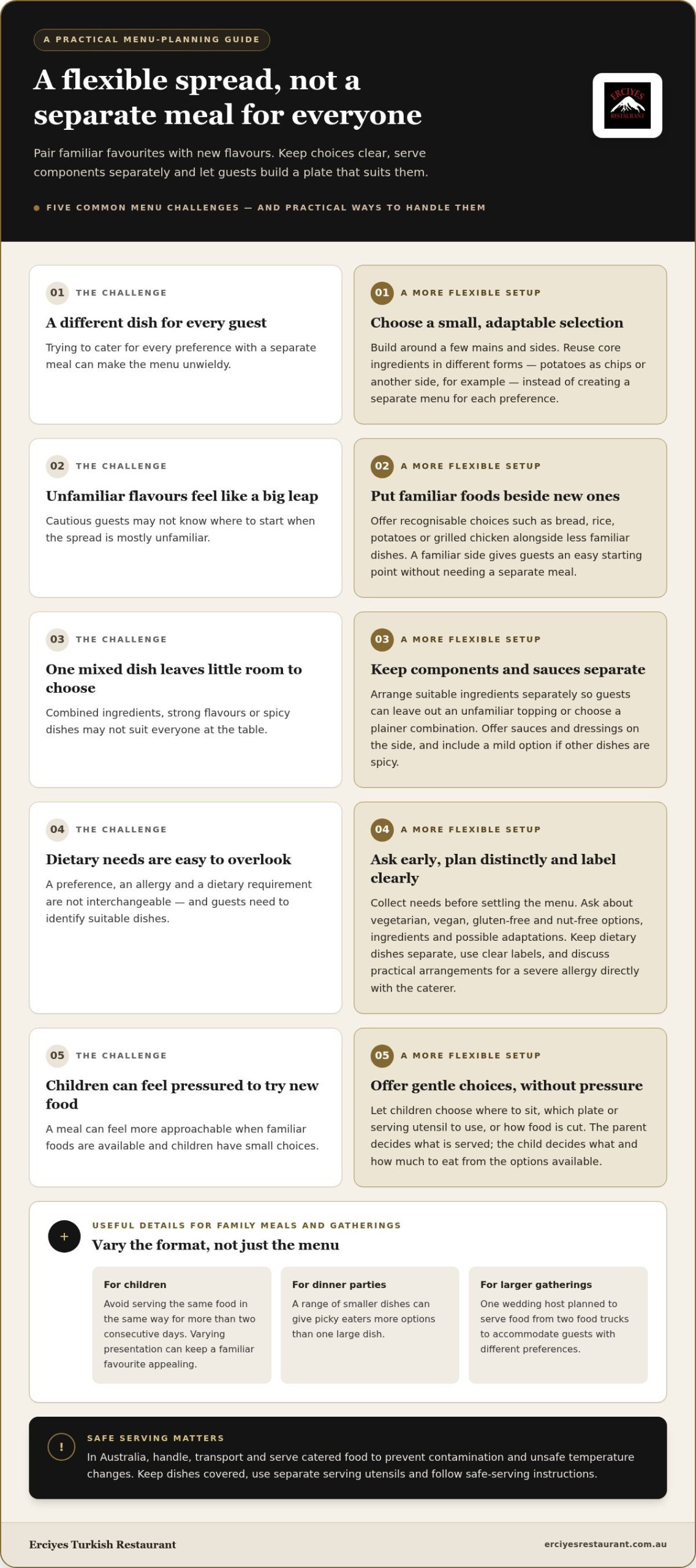
In Australia, catered food should be handled, transported and served to prevent contamination and unsafe temperature changes. Keep dishes covered, use separate serving utensils, and follow safe-serving instructions. To offer variety without ordering too much, choose a small selection of adaptable mains and sides instead of a different dish for every guest.
- Build the menu around familiar choices. Include recognisable foods such as bread, rice, potatoes or grilled chicken alongside less familiar dishes. A familiar side gives cautious guests an easy starting point without requiring a separate meal.
- Offer several kinds of dishes. Pair a main course with a choice of sides, appetisers and a mild option if other dishes are spicy. A spread of smaller dishes lets guests select what suits them. Keep sauces and dressings separate, so diners can control added flavours.
- Choose ingredients that work in more than one dish. For example, potatoes can appear as chips or another side, while vegetables can be served separately from a main. Reusing core ingredients in different forms creates choice without adding an entirely separate menu for each preference.
- Make the menu flexible to serve. Arrange suitable components separately, rather than combining every ingredient in one dish. Guests can then leave out an unfamiliar topping or choose a plainer combination. Clear dish labels also help people scan the spread and make decisions.
- Give children small choices beyond food. Let them choose where to sit, which plate or serving utensil to use, or how food is cut. For family meal planning, avoid serving the same food in the same way for more than two consecutive days. Varying presentation can keep a familiar favourite appealing, while familiar foods alongside new ones offer a gentle introduction.
At family meals, the parent decides what is served, while the child decides what and how much to eat from the options available. Repeating a favourite may sometimes lead to a food jag: a child can tire of eating the same thing and suddenly stop. Serving familiar foods alongside new foods children are getting used to seeing can increase variety in a toddler’s diet.
Dietary restrictions and preferences
Ask how the menu can accommodate vegetarian, vegan, gluten-free and nut-free diets. Find out which ingredients are used, how dishes will be labelled, and whether suitable alternatives can be planned. Clearly share each guest’s needs, including whether a restriction is an allergy or a preference.
- Collect needs before settling the menu. Invite guests to share dietary requirements and preferences when they respond. Note who needs vegetarian or vegan food, who avoids gluten, and whether anyone has a nut allergy. This gives you a clearer picture of the choices to provide.
- Ask specific menu questions. For customisation, ask which dishes can be adapted, what ingredients they contain, and how dietary options will be identified. For example, ask whether a vegetarian main can be served separately from meat dishes.
- Plan an option that suits each need. Include dishes that meet guests’ stated requirements, rather than assuming one alternative works for everyone. A vegan dish, for instance, may suit a guest avoiding animal products, while another guest may need gluten-free food.
- Keep dietary dishes distinct. Consider how the food will be presented and served. Separate serving dishes and clearly marked options make it easier for guests to choose appropriately. Discuss practical arrangements for a severe allergy directly with the caterer.
- Make room for preferences, too. A guest may dislike a particular texture or flavour without having a dietary restriction. Offer a plain alternative, such as rice beside a strongly seasoned dish, so guests can choose without needing a separate meal.
- Review the final menu against your notes. Before sharing it with guests, compare each option with the requirements collected. Check that labels use clear descriptions, such as “vegan” or “gluten-free”, and that guests can identify suitable choices at the event.
What are affordable catering options for picky eaters in Australia?
- Start with a shared, flexible format. A salad bar lets guests choose what goes into their meal, from leafy greens to familiar toppings. Add a simple base such as bread or rice, then offer a modest selection of extras. This gives cautious diners control without requiring a separate plate for every preference.
- Choose dishes with ingredients in common. Build the menu around ingredients that can appear in different ways. For example, serve grilled chicken with rice and vegetables, then keep sauces and dressings on the side. Shared ingredients can simplify the order while still giving guests a choice of combinations.
- Use sides to widen the choice. A familiar side can make a less familiar main easier to approach. Bread, potatoes or plain rice can suit guests who prefer mild flavours, while a fresh salad adds another option. Choose sides that complement several dishes rather than ordering a unique accompaniment for each one.
- Keep the menu focused. More dishes don’t automatically make a better spread. Select a few contrasting options, such as a mild main, a vegetarian dish and a fresh side. Clear descriptions help guests decide quickly and reduce the need to order separate meals for every individual taste.
- Match quantities to the event. Consider the guest list, meal timing and whether food is a snack or the main meal. Ask guests about dietary needs and preferences before settling the menu. For a casual gathering, a selection of smaller dishes can let people sample what appeals without requiring a large, individual serving of every option.
Good value comes from balancing variety with the event’s needs. A flexible salad bar, shared ingredients and well-chosen sides can make a spread welcoming without turning every dish into a separate order.
Are kids’ party catering menus suitable for fussy eaters?
They can be, if the menu includes simple, familiar foods alongside a little variety. Around 50% of parents report that their child is a fussy eater, so plan for different appetites without turning the party meal into a negotiation.
- Choose straightforward dishes. Children often favour familiar flavours and uncomplicated combinations. A plain pasta dish, mild chicken pieces or fruit can feel more approachable than food with mixed textures or unfamiliar ingredients. Keep descriptions simple so children can recognise what’s on offer.
- Include a familiar option with the main spread. Put a food you know the birthday child enjoys alongside other dishes, and provide enough for them to eat comfortably. This gives them a reliable choice while other children explore the menu.
- Offer choice without pressure. Let children decide whether they want to try an unfamiliar item. A small taste beside a known favourite can make it easier to explore, while insisting that a child eats may contribute to mealtime battles. Keep the mood relaxed.
- Make the serving easy to navigate. Present components separately where practical, such as keeping toppings apart from plain pasta. That lets children choose what goes on their plate. Keep the menu clear and avoid presenting too many unfamiliar options at once.
- Plan for the party, not just the menu. Think about when food will be served and whether children will be hungry after activities. If the gathering includes adults, too, choose a spread with options for both age groups. For a catered event with varied tastes, explore catering options.
Keep the menu anchored in recognisable choices, and make variety an invitation rather than a requirement. Offering alternative foods or pressuring children to eat can contribute to increased feeding issues and mealtime battles. A relaxed approach lets each child choose from what’s available without turning the meal into a test of willingness or appetite. Make the food easy to identify and the choices comfortable.
Erciyes Turkish Restaurant: Turkish Pide
Erciyes Turkish Restaurant caters gatherings with Turkish pide, handcrafted mezzes, charcoal grills and Turkish sweets. When planning an event for guests with different tastes, these dishes offer a range of flavours and textures to share. Pide provides a familiar starting point, while smaller mezzes let guests sample different tastes at their own pace. Charcoal-grilled dishes bring savoury depth to the spread, and Turkish sweets offer a distinctive finish.
Choose this Turkish-inspired menu when you want to share a variety of dishes rather than serve a single centrepiece. For catering in Sydney, contact Erciyes Turkish Restaurant to discuss your gathering.
Make your next gathering a shared experience
Thoughtful catering for picky eaters makes the meal feel welcoming, not like a test of adventurousness. Give guests time to settle in, choose what appeals and discover new flavours at their own pace. That balance can turn a table of different preferences into a shared occasion.
For a Turkish-inspired gathering in Sydney, Erciyes Turkish Restaurant offers Turkish pide, handcrafted mezzes and charcoal grills. These dishes bring varied textures and flavours to the table, giving guests different ways to join the meal. Consider this style of catering when you want a generous spread with a distinctive culinary character.
Ready to plan a gathering with food guests can enjoy together? Contact Erciyes Turkish Restaurant to discuss catering for your event. A welcoming menu is a lovely place to begin.
Frequently Asked Questions
What catering options work best for picky eaters?
Good catering for picky eaters pairs familiar choices with optional tastes for guests who want to explore. At a Sydney event, serve food in stages: start with straightforward favourites, then bring out more distinctive dishes for guests to sample. Add brief menu cards naming key ingredients so guests can make confident choices without needing a lengthy explanation at the table.