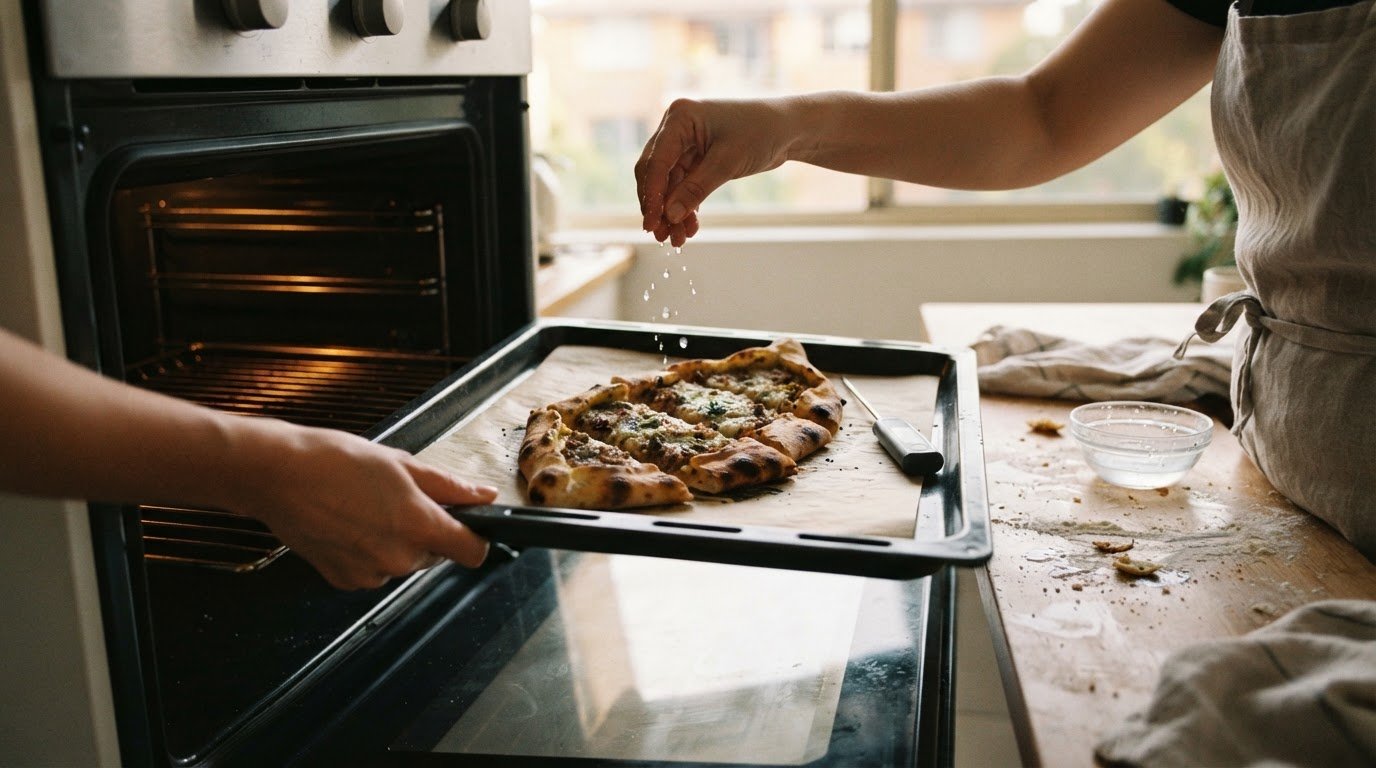
A gentle oven is the key to how to reheat leftover pide without turning its tender centre dry: sprinkle it with a very small amount of water, then warm it at 250°F for 5 to 10 minutes. Check that it’s warm in the centre before serving. Simple, and no soggy crust required.
Leftover pide can still bring the comfort of a freshly warmed meal, but too much heat or too long in the oven can leave it tough. This guide walks you through the oven method, explains when a little water helps, and shows you how to store pide at room temperature or in the fridge.
A gentle reheat helps warm the filling without drying out the bread. You’ll also find tips for storing pide and reheating frozen portions.
Key Takeaways
- Use a gentle oven method and judge readiness by the pide’s centre, not just its crust.
- Choose between room-temperature and fridge storage using the article’s guidance on cooling and keeping leftovers.
- Learn how to add moisture carefully to help the bread stay tender as it reheats.
- Understand what to consider when checking reheated pide for food safety in Australia.
Reheating pide in the oven
For tender bread and a warm filling, use a moderate oven and check the centre before serving. A light sprinkle of water can help keep the pide from drying out as it reheats.
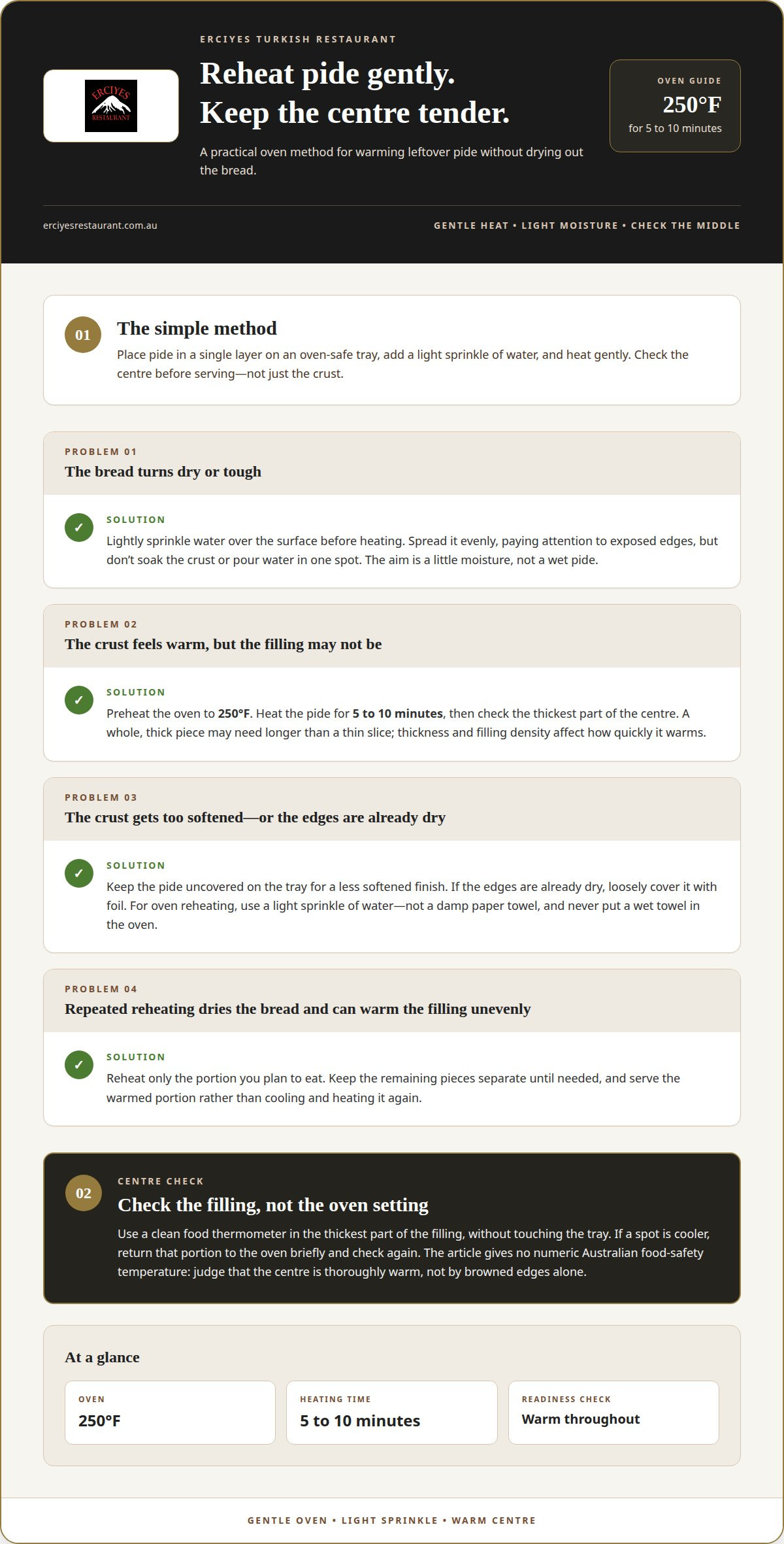
- Preheat your oven to 250°F, then place the pide on an oven-safe tray. Arrange pieces in a single layer so warm air can circulate around them. If reheating a large pide, cut it into portions first. Smaller pieces are easier to handle and check at the centre.
- Lightly sprinkle the surface with water before heating, taking care not to soak the crust. Keep the pide uncovered on the tray for a less softened finish. If the edges are already dry, loosely cover it with foil.
- Heat for 5 to 10 minutes, then check the centre. A whole, thick piece may need longer than a thin slice, so use the centre’s warmth rather than browning alone. Meat, cheese and vegetable fillings don’t have separate reheating times in this method; their thickness and density affect how quickly they warm.
-
Check the internal temperature
Use a clean food thermometer to check the pide’s centre, especially where the filling is thickest. The oven guidance gives a time and calls for a warm centre, but doesn’t establish a numeric Australian food-safety temperature. Don’t judge the middle by the crust alone. Cut into the thickest portion and check that the filling is warm throughout before serving.
-
Avoid reheating pide more than once
Reheat only the portion you plan to eat instead of warming the whole pide repeatedly. Repeated heating can dry out the bread, and a thick filling may warm unevenly. Serve a reheated portion rather than cooling and warming it again, and keep the remaining pieces separate until needed.
Storing pide at room temperature or in the fridge
- Let the pide cool completely before storing it. Putting warm food in a container can create condensation and soften the crust. Once cool, divide a large pide into portions so you can take out only what you plan to eat. Keep the portions covered to protect the bread and filling.
- Choose room-temperature storage only if you’ll eat the pide within 2 days. Place the cooled pieces in a covered container, away from direct sunlight and heat. For example, keep the container on a cool pantry shelf rather than beside an oven. Mark the storage day on the container, so you can keep track of when the pide was put away.
- For longer storage, refrigerate cooled pide in a covered container. Refrigerated pide can be stored for up to 3 days after cooling completely. Arrange slices in a single layer where possible, or separate stacked pieces with baking paper. This helps prevent soft fillings from sticking to the bread and makes it easier to lift out one portion.
- Decide between the pantry and fridge by considering when you’ll serve the leftovers. If you expect to eat them within 2 days, room-temperature storage is an option; for later meals, use the fridge and the 3-day limit. Label the container with its storage date, then remove only the portion you need. Keep the rest covered until serving.
Turkish pide can be refrigerated for up to a week. Keep the pieces covered during that time, and take out only the portion you plan to serve, leaving the rest stored in the fridge.
Adding water before reheating
- Use just a light sprinkle of water before putting the pide in the oven. Spread it over the surface rather than pouring water in one spot. The goal is to add a little moisture, not soak the crust or filling. For pide topped with cheese, meat or vegetables, keep the sprinkle light so the toppings don’t get wet.
- Spread the water evenly over the bread to avoid pooling, which can leave one patch softer than the rest. Pay particular attention to exposed edges, as they can dry out sooner than the centre. Don’t add more water just because the pide looks dry; too much moisture can soften the crust.
- Place the lightly moistened pide on an oven-safe tray and heat it at 250°F for 5 to 10 minutes. The water helps the bread retain softness as it warms. Check the centre before serving, particularly on a thick piece with a substantial filling. If it needs more warmth, continue heating briefly and check again.
- A light sprinkle is different from covering the pide with a damp paper towel. A damp towel can help keep pide soft after baking, but for oven reheating, use a light sprinkle instead. Don’t put a wet towel in the oven. Serve the pide promptly once it’s warm.
For future baking, Turkish pide dough can be refrigerated for up to 24 hours before baking; it rises for 40 minutes before shaping.
What internal temperature should reheated pide reach for food safety in Australia?
- Use a food thermometer to check the pide’s centre, not the oven setting. Insert the probe into the thickest part of the filling without touching the tray. The oven temperature describes the cooking environment; the reading tells you how warm the centre has become.
- Check the thickest part of each portion, especially if the pieces are different sizes. A thin vegetable pide slice and a thick meat-filled piece won’t warm at the same rate. If reheating several pieces, test the largest one first and check any noticeably thicker portions separately.
- Insert the probe into the centre of the filling, not the crust. For pide topped with cheese, meat or vegetables, take the reading where the filling is deepest. A warm crust can be misleading: the middle may still be cool, especially in a folded or generously filled piece.
- Wait for the thermometer reading to settle before deciding whether the centre is warm enough. If one spot is cooler, return that portion to the oven and check again. Don’t rely on time alone: the pide’s thickness, starting temperature and amount of filling affect how quickly the centre warms.
- Clean the thermometer between checks, particularly when testing different fillings. Wipe the probe before checking another portion, and keep its tip away from the tray. This helps you get a clearer reading of each piece’s centre.
- Serve each portion when its centre is thoroughly warm, rather than judging by browned edges. A thin cheese pide may warm sooner than a thick meat pide, so check the thicker piece directly. Appearance and oven time alone can’t tell you whether its centre is warm.
Erciyes Turkish Restaurant: Turkish Pide
If you’d rather enjoy pide as part of a meal than reheat leftovers at home, Erciyes Turkish Restaurant serves Turkish Pide in Sydney. Pair it with Handcrafted Mezzes, Charcoal Grills or Turkish Sweets for a meal built around Turkish flavours.
Choose pide when you’re in the mood for a comforting centrepiece; add mezzes or Turkish Sweets to round out the table. For another meal, turn to the oven method above and warm your leftovers carefully, checking the centre before serving.
Visit Erciyes Turkish Restaurant to explore its Turkish Pide.
Make your next pide meal one to look forward to
Knowing how to reheat leftover pide gives you another chance to enjoy a meal at home, but it can also inspire what comes next. Think about the flavours you’d like to bring to the table, whether that means keeping things simple or making a shared meal of it. A good meal doesn’t need to be complicated; it starts with choosing something you’re genuinely keen to eat.
If you’d rather leave the cooking to someone else next time, explore Erciyes Turkish Restaurant as your next stop for Turkish food in Sydney. A visit can turn the question of what to make into a relaxed meal to enjoy with family or friends.
Contact Erciyes Turkish Restaurant and plan a meal to look forward to.
Frequently Asked Questions
How can I reheat the pide?
For a gently warmed centre and a less softened crust, reheat pide in the oven. Start with a portion rather than warming the whole piece, and separate slices before heating if their fillings or thicknesses differ. Check the middle before serving: a browned edge doesn’t mean the filling has warmed through.
How long can I store the pide in the refrigerator?
Refrigerated pide can be stored for up to 3 days after cooling completely. Keep it covered so the bread doesn’t dry out or pick up odours from other foods. If your leftovers include different fillings, store the pieces separately where practical. That makes it easier to take out a portion that suits your next meal without handling every slice.
What is the best way to reheat leftover pide in the oven?
Sprinkle the pide with a very small amount of water, then heat it in the oven at 250°F for 5 to 10 minutes. Use an oven-safe tray and keep pieces in a single layer. A thin slice may warm sooner than a thick, filled portion, so check the centre before serving rather than relying on the crust’s colour.
How long and at what temperature should you reheat pide in an Australian oven?
Use 250°F and allow 5 to 10 minutes for Turkish pide, checking that the centre is warm. Oven dials and displays can use different temperature units, so match the setting to the unit shown on your appliance. Avoid extending the time just to brown the top. A thick filling may need more attention than a thinner piece.
How do you reheat pide in an air fryer without drying it out?
Warm leftover pide in an air fryer until the centre is warm, checking it before serving. Arrange pieces in a single layer so they heat evenly, and avoid crowding the basket. If a piece is thick, assess it before serving rather than assuming the outside’s warmth means the filling is ready. Serve once heated to your liking.
Can you reheat pide in a microwave, and how can you keep the crust from going soggy?
A microwave can warm pide, but it may soften the crust. Heat a portion on a microwave-safe plate and stop when the centre is warm. To restore some crispness, finish it briefly in a dry frying pan or oven. Avoid covering it tightly, as trapped steam can soften the bread.