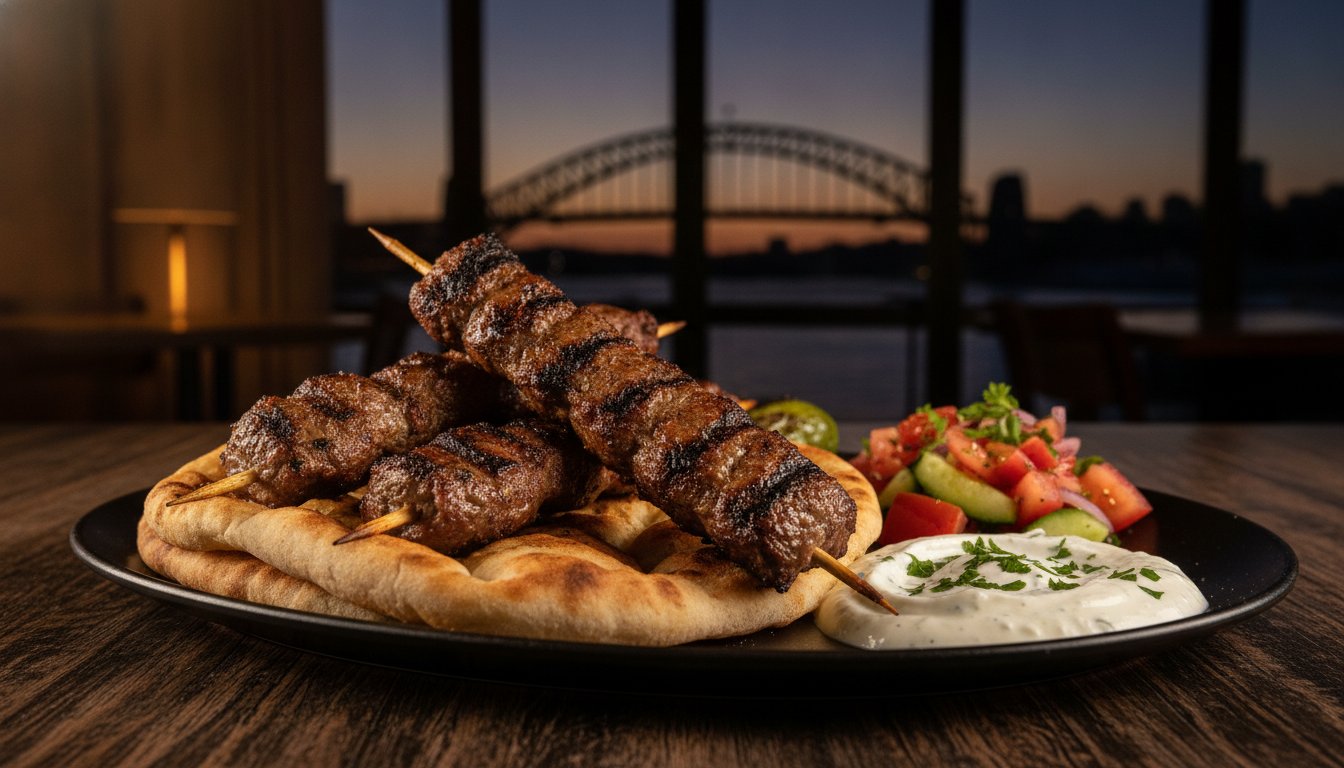
If you think a kebab is just a late-night convenience meal to be scoffed on a street corner, you’re missing out on centuries of culinary heritage. Most of us have settled for mystery meats and generic wraps after a night out, but there’s a world of difference between a standard snack and an authentic Turkish masterpiece. We understand the frustration of poor quality ingredients and limited menus that don’t offer much beyond a basic roll. Since 1985, our family has focused on the sizzle of the charcoal grill and the warmth of traditional hospitality to show Sydney what real flavour looks like.
In this guide, you’ll discover the rich history, artisanal preparation methods, and vibrant flavours that elevate the Turkish kebab into a true global icon. We’ll help you move beyond the “drunk food” stereotype to understand the cultural significance behind every bite. You’ll learn how to spot premium ingredients and distinguish between a smoky Shish, a succulent Doner, and a perfectly seasoned Kofte. It’s time to celebrate the craftsmanship of traditional cooking and finally know exactly what to order for a truly satisfying meal.
Key Takeaways
- Discover how a true kebab is defined by its Ottoman heritage and traditional preparation rather than just being a quick late-night snack.
- Master the distinct differences between Shish, Doner, and Kofte to ensure you’re ordering the right cut and texture for your meal.
- Learn how to spot an authentic kitchen by looking for the presence of a traditional charcoal grill and hand-prepared meats.
- Understand why the combination of premium produce and wood-fired smoke is the secret to achieving deep, complex flavours.
- Uncover the cultural significance of shared dining and how family-led craftsmanship has shaped Sydney’s Turkish food scene since 1985.
What is a kebab? Defining the heart of Turkish cuisine
A true kebab is far more than just a quick wrap grabbed on the way home; it is a diverse and celebrated pillar of Turkish culture. While many Australians associate the term with a standard roll, it actually refers to a vast range of grilled or roasted meat dishes that have sustained families for generations. In our kitchen, we see it as an art form that balances the intensity of the flame with the delicate touch of the spice rack. A kebab is a culinary technique involving fire and marination.
The tradition finds its roots in the Ottoman Empire, where the term originally described meat cooked over open flames. When curious diners ask, What is a kebab?, the answer lies in a history of nomadic survival and imperial luxury. In Australia, the term has certainly evolved to suit our local tastes, but the authentic core remains unchanged. It requires high-quality protein, traditional spices, and the patient application of heat to achieve that signature tenderness.
The evolution from nomadic fires to Sydney tables
The history of this dish is as rugged as it is delicious. Centuries ago, Turkish soldiers used their own swords to grill meat over campfires during long military campaigns. This practical method of cooking over wood and charcoal eventually moved from the battlefield to the sophisticated urban streets of Istanbul, becoming a refined street food staple. Since 1985, Erciyes has been a Sydney tradition, bringing these exact methods to the heart of the city. We believe that 40 years of family heritage makes a difference you can taste, as we still use the same traditional methods that our ancestors perfected.
Common misconceptions: Fast food vs. slow craft
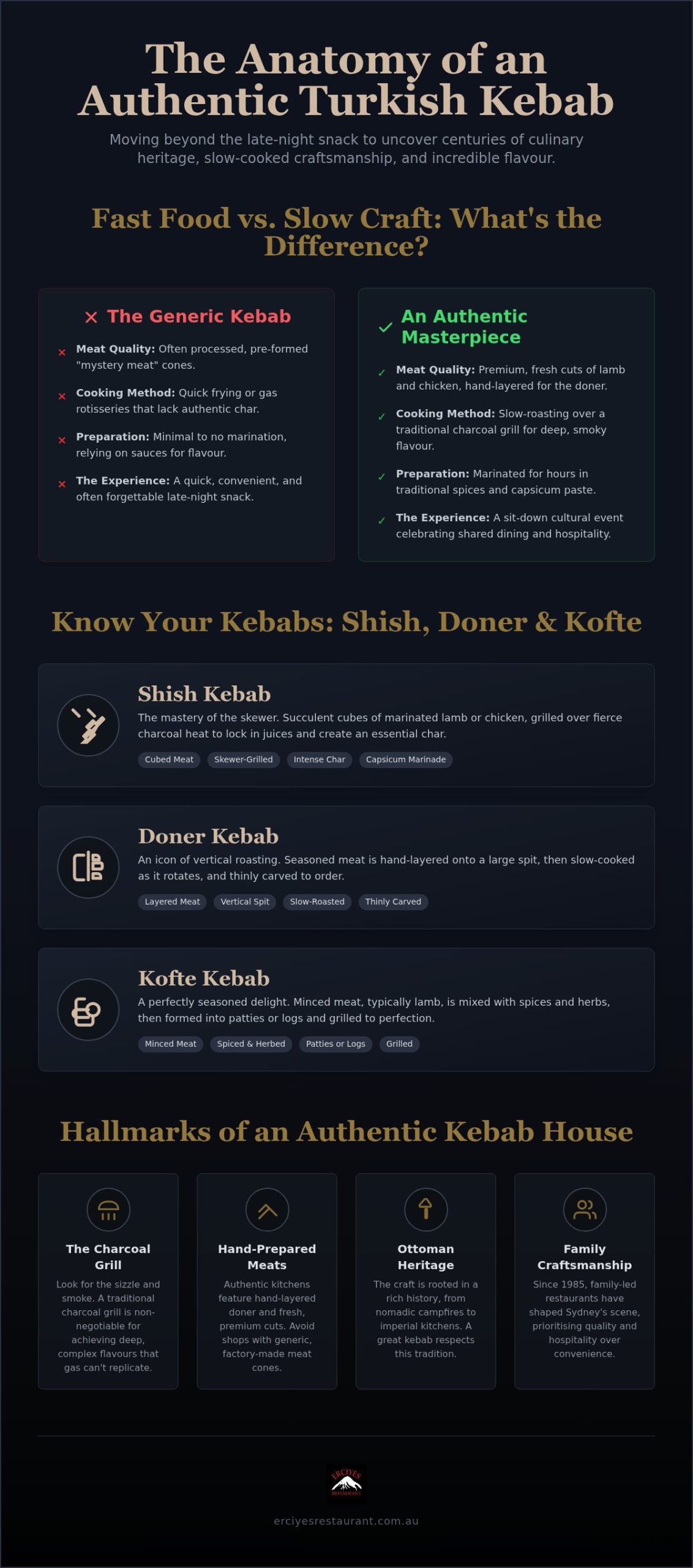
One of the biggest hurdles for authentic Turkish cuisine is the “drunk food” stereotype. A real Kebab isn’t something thrown together in seconds; it’s a slow craft that demands respect and patience. Consider the differences between generic shops and a traditional house:
- Preparation: True flavour is built through hours of marination. We don’t use quick frying; we rely on the steady, aromatic heat of the charcoal grill to render the fat and char the meat.
- Quality: Instead of the processed “mystery meat” found in many generic outlets, an authentic kitchen features hand-layered doner and fresh cuts of premium lamb and chicken.
- Experience: While a wrap is convenient for a busy afternoon, the true experience is a sit-down affair. It’s about the smell of the smoke, the warmth of the hospitality, and the joy of a shared meal with loved ones.
By choosing a restaurant that honours these slow-cooking traditions, you’re not just eating a meal. You’re participating in a cultural legacy that prioritises quality over convenience. It’s the difference between a simple snack and a sensory journey that has travelled across continents to reach your plate.
Shish, Doner, and Kofte: Understanding the different styles
Each style of Kebab offers a unique sensory experience. The texture and flavour profile change based on the specific cut of meat and how it interacts with the heat. Whether it’s the intense, direct fire of a skewer or the slow, gentle basting of a rotisserie, the vessel used for cooking dictates the final taste. Even the choice of bread and sides is carefully curated to match the specific meat preparation. To see how these elements come together in a portable format, you can explore the ultimate guide to the kebab wrap in Sydney.
The Shish Kebab: The mastery of the skewer
The Shish is a celebration of the skewer. We take succulent cubes of lamb or chicken and marinate them in a vibrant blend of capsicum paste and traditional spices. This process ensures the meat remains tender when it meets the fierce heat of our traditional charcoal grills. That essential “char” on the outside, which gas simply cannot replicate, locks in the juices. Adding vegetables like peppers and tomatoes to the skewer isn’t just for show; they provide a necessary flavour balance and a touch of sweetness to the smoky protein.
The Doner Kebab: A lesson in vertical roasting
Vertical roasting is an art form that requires a keen eye and a steady hand. The history of the doner kebab reveals a story of innovation and cultural resilience, leading to the iconic vertical cone we see today. We hand-layer seasoned meat to ensure every slice is perfect. Hand-carving with a long blade is vastly superior to electric slicers, as it preserves the texture and allows for those crispy, caramelised edges. While it shares similarities with Greek Gyros or Lebanese Shawarma, the Turkish Doner is defined by its specific spice profile and lean meat layering.
Kofte: The seasoned meatball tradition
Kofte brings a different dimension to the table. This is a seasoned meatball tradition where minced lamb and beef are mixed with fresh herbs like parsley and finely diced onion. The secret lies in the kneading; a well-kneaded kofte has a bouncy, resilient texture that holds up beautifully on the grill. These recipes vary across different regions of Turkey, with some preferring a spicier kick and others focusing on the pure flavour of the meat. Experience these diverse textures for yourself by visiting our authentic charcoal grills to taste the difference 40 years of tradition makes.
The anatomy of a perfect kebab: Bread, spice, and smoke
A perfect Kebab isn’t an accident; it’s a deliberate construction of sensory layers. It starts with the quality of the raw produce, but the real magic happens when that protein meets the “holy trinity” of Turkish spices: earthy cumin, tangy sumac, and the gentle, oily heat of pul biber. These aren’t just additives. They are non-negotiable elements that define the very soul of the dish. This meal has evolved into a powerful cultural symbol, representing the beautiful migration of flavours from the heart of Anatolia to the streets of Sydney.
Then there’s the vessel. You can’t serve world-class meat on stale, store-bought wraps. Authentic Turkish dining relies on fresh, handmade bread that’s soft enough to soak up the aromatic juices but sturdy enough to hold the weight of the grill. Whether it’s a pillowy pide or a thin, charred lavash, the bread is the final handshake between the chef and the guest. It’s the foundation that brings every other element together into a single, satisfying bite.
The role of the charcoal grill
Beyond the meat: Authentic garnishes and sauces
The supporting cast is just as vital as the lead. A real Turkish meal isn’t complete without the bright acidity of sumac-rubbed onions, which cut through the richness of the grilled fat. We avoid industrial, shelf-stable sauces that mask the meat’s quality. Instead, we focus on homemade garlic sauce and zesty accompaniments that enhance rather than hide the primary flavours. You’ll always find pickled chillies for a sharp kick and fresh parsley for a hit of herbal brightness. These garnishes aren’t just for decoration. They are functional components designed to balance the palate and ensure every mouthful feels fresh and vibrant.
How to spot a quality kebab house in Sydney
Finding a truly exceptional Kebab in a city as diverse as ours requires a bit of detective work. With over 2,000 shops across the state, the quality varies wildly from gourmet restaurants to basic takeaway joints. You can identify the best spots before you even take a seat by looking for specific visual cues. First, look for a real charcoal pit. If you can see the red glow of the coals and smell the wood smoke, you’re in the right place. Next, observe the meat. Authentic kitchens use hand-stacked layers of marinated protein rather than the smooth, processed meat cylinders found in lower-quality shops. These hand-prepared cones have visible textures and irregular edges that catch the heat and create those delicious, crispy bits.
The “freshness test” is another foolproof method for the discerning diner. Take a quick look at the salad bar. Are the tomatoes firm and the parsley vibrant, or does everything look wilted and tired? In a quality house, the salads are prepared throughout the day to ensure a crisp contrast to the warm meat. This attention to detail usually signals that the kitchen takes pride in every ingredient, from the smallest garnish to the main event. Finally, look for a long-standing family history. When a business has been operated by the same family for decades, like our own journey since 1985, it shows a commitment to quality that has stood the test of time.
Signs of an authentic Turkish kitchen
A traditional kitchen is a hub of activity. One of the most reliable signs is a dedicated pide oven. If the bread is being baked fresh on-site, it shows a level of craftsmanship that usually extends to the entire menu. A quality establishment won’t just offer meat in a wrap; it will present a full range of traditional dishes. Look for a menu that includes authentic Turkish mezze in Sydney and various pides. This variety indicates a chef who understands the breadth of our culinary heritage rather than just the basics.
The importance of “The Hand” in preparation
In our culture, we often talk about “El Lezzeti,” which translates to the “flavour of the hand.” This refers to the skill and soul a chef puts into their work. You should avoid any shop using pre-processed, frozen meat rolls. These lack the texture and fat distribution of a hand-layered doner. Carving is also a skill that takes years to master. A master carver knows exactly how to slice the meat to the perfect thickness, ensuring it’s tender but with those essential smoky edges. Beyond the food, pay attention to the hospitality. A true Turkish restaurant treats you like a guest in their home, offering a warm welcome and a sense of belonging. If you’re looking for this level of care and tradition, come and experience our charcoal grills for yourself.
Experience the legacy: Why Erciyes is a Sydney tradition
Erciyes isn’t just a restaurant; it’s a living piece of Sydney’s culinary history. Since 1985, we’ve been the heart of Cleveland Street, welcoming generations of guests into our family. While the city has changed around us, our commitment to the authentic Kebab remains exactly the same as the day we first opened our doors. We invite you to move beyond the quick takeaway wrap and immerse yourself in a full charcoal platter. It’s a celebratory experience that honours the smoke of the grill, the vibrancy of our mezzes, and the warmth of a true Turkish welcome. Every dish we serve is a tribute to the craftsmanship we’ve honed over four decades.
From our family to yours
The secret to our longevity is simple. We treat every guest like an expected member of our own family. For 40 years, the same family has operated Erciyes, ensuring that every skewer and every pide meets our exacting standards. We are incredibly proud of Erciyes Restaurant: 40 years of tradition and the legacy we’ve built in the heart of Sydney. This dedication starts with sourcing the finest Australian meats, which are then prepared using the same traditional recipes we brought with us in the eighties. We don’t believe in shortcuts. We believe in the timeless power of authentic flavours and the meticulous nature of handcrafted preparation.
Planning your visit or event
When you visit us, you aren’t just getting a meal; you’re getting a front-row seat to Turkish culture. Our 120-seat dining room is designed for abundance and shared joy, making it the perfect spot for a vibrant group night out. To truly experience the energy of our heritage, join us for our live belly dancing entertainment. It’s a sensory feast where the rhythm of the music matches the sizzle of the charcoal grill. Whether you’re planning a casual dinner or looking for private dining Sydney Turkish options for a special function, we are here to host you. Book a table for our famous weekend nights and let us show you why we’ve remained a Sydney staple since 1985. We can’t wait to share our table and our stories with you.
Join the tradition of authentic Turkish dining
Now that you know the difference between a late-night snack and a slow-crafted masterpiece, you’re ready to experience the true heart of Turkish cuisine. Remember that a quality Kebab is defined by the layers of marination, the aromatic kiss of the charcoal grill, and the warmth of the hospitality that accompanies it. You don’t have to settle for mystery meats or generic wraps when you can look for the visual cues of an authentic kitchen, such as hand-stacked doner and fresh pide ovens.
Since 1985, our family-owned and operated restaurant has been a Sydney favourite, remaining dedicated to the traditional methods that make every bite unforgettable. We invite you to step away from the takeaway counter and join us for a celebratory meal where the flavours of the Ottoman Empire meet the vibrant energy of Surry Hills. Book your table at Erciyes and taste 40 years of tradition. We look forward to welcoming you into our home and sharing the sensory joy of our authentic charcoal grills. Come and be part of our story tonight.
Frequently Asked Questions
What is the healthiest type of kebab to order?
The Shish is generally the healthiest choice for anyone watching their intake. Because it consists of lean cubes of lamb or chicken breast grilled over open flames, you avoid the higher fat content found in some rotisserie styles. We serve our skewers with a generous portion of fresh salad and sumac onions to provide a balanced meal. It’s a protein-rich option that focuses on clean flavours without the need for heavy, processed oils.
What is the difference between a Doner Kebab and a Gyros?
While they look similar, the difference lies in the heritage and seasoning. A Turkish Doner typically uses lamb, beef, or chicken seasoned with earthy spices like cumin and pul biber. In contrast, Greek Gyros often features pork or chicken with a heavy focus on oregano and lemon. The breads differ too; we prefer our handmade pide or thin wraps over the thicker Greek pita. Each offers a distinct cultural taste of the Mediterranean.
Is the meat in a traditional kebab processed?
In an authentic Turkish kitchen, the meat is never processed into a mystery roll. We take pride in hand-stacking fresh, marinated cuts of quality Australian meat to create our doner cones. This traditional method ensures you get real texture and flavour in every slice. Generic shops often use frozen, pre-made cylinders that contain binders and fillers. You can always tell the difference by the visible grain and irregular edges of the meat.
Can I get a vegetarian kebab in a Turkish restaurant?
You certainly can find delicious vegetarian options in a traditional restaurant. While the charcoal grill is famous for meat, we also prepare exceptional grilled vegetable skewers that satisfy any appetite. Beyond the Kebab itself, our menu features handcrafted mezzes like hummus and baba ganoush, along with cheese and spinach pides. It’s easy to enjoy a full, vibrant Turkish feast without any meat at all while still soaking up the atmosphere.
What are the best sauces for an authentic kebab?
For a truly authentic experience, stick to garlic and chilli sauces made in-house. A traditional garlic sauce should be pungent and creamy, while the chilli sauce provides a zesty kick that enhances the smoky meat. Many guests also enjoy a drizzle of tahini for its nutty depth. We recommend avoiding industrial BBQ or tomato sauces, as these tend to mask the delicate balance of Turkish spices like sumac and cumin that we work so hard to perfect.
Why is it called a “shish” kebab?
The name comes directly from the Turkish word for skewer. This refers to the specific technique of threading marinated cubes of meat onto metal rods before they are placed over hot coals. While other styles involve rotisseries, the shish focuses on direct heat and individual portions. It allows for a more intense sear on each piece of meat, which is why it remains a favourite for those who appreciate the smoky crust of the charcoal grill.
How many calories are in a standard lamb kebab wrap?
A standard lamb wrap in a large Lebanese bread can range anywhere from 800 to over 1,000 calories depending on the sauces and cheese added. However, choosing a charcoal-grilled plate with salad and a smaller portion of bread is a much lighter way to enjoy the same flavours. We focus on using quality Australian meats and fresh vegetables, which allows you to appreciate the Kebab as a wholesome meal rather than just a high-calorie convenience snack.
What makes a charcoal-grilled kebab taste different?
The superior taste of charcoal comes from the aromatic smoke created when fat hits the white-hot coals. This natural wood smoke perfumes the meat in a way that gas or electric grills simply cannot mimic. Additionally, the intense heat of the coals creates a beautiful caramelised crust while keeping the inside tender and succulent. It’s a centuries-old method that transforms simple ingredients into something truly extraordinary through the power of fire and smoke.