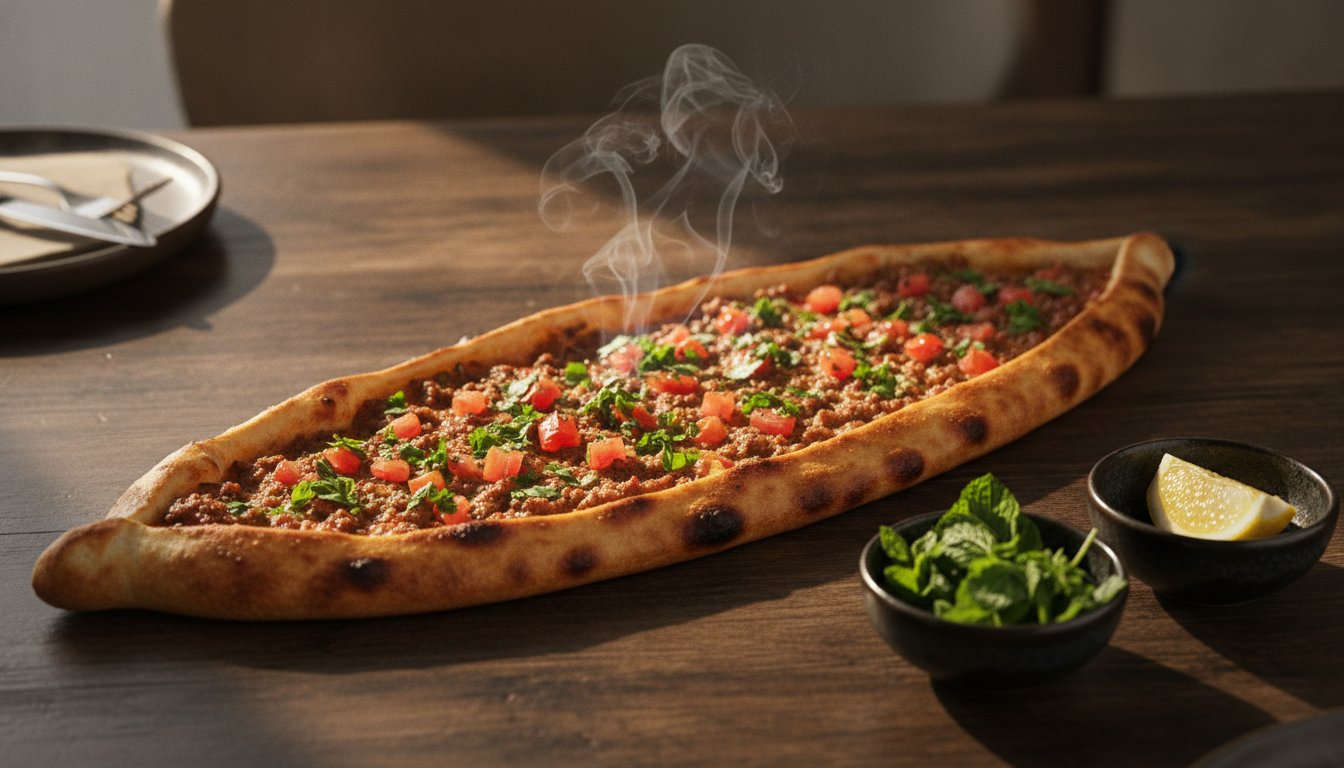
What if the “Turkish pizza” you’ve been ordering for a quick Friday night takeaway is actually a pale imitation of a five-hundred-year-old culinary masterpiece? It’s easy to settle for a greasy box when you’re craving something warm and doughy, but authentic turkish pide is a handcrafted art form that deserves so much more than a casual comparison to its Italian cousin. You likely already appreciate that nothing beats the aroma of fresh dough hitting a roaring wood-fired oven, yet finding that perfect, boat-shaped balance of crispy crust and tender filling often feels like a challenge in a sea of generic options.
We want to help you move beyond the confusion and truly discover the soul of Anatolian hospitality. This guide will take you through the rich history of this iconic flatbread, from its royal Ottoman roots to the regional varieties that define Turkish culture today. You’ll learn how to distinguish a true pide from other staples like lahmacun or gozleme; explore traditional toppings that honour heritage; and find out exactly where to experience that signature wood-fired char right here in the heart of Sydney.
Key Takeaways
- Learn why authentic turkish pide is a leavened, boat-shaped masterpiece defined by wood-fired char and smoky aromas rather than just a pizza alternative.
- Discover the technical differences between pide and Italian pizza, including the unique absence of a tomato base and the softer, bread-like texture of the handcrafted dough.
- Explore the essential components of a traditional pide, from the importance of long fermentation to the bold flavours of toppings like Sujuk and Pastirma.
- Identify must-try regional varieties, such as the classic spiced ground meat Kıymalı or the succulent, hand-cut lamb cubes found in Kuşbaşılı.
- Uncover the heritage of Sydney’s own Erciyes Turkish Restaurant, where family recipes and traditional ovens have been honouring Anatolian hospitality in Surry Hills since 1985.
What is Turkish Pide? Beyond the “Turkish Pizza” Label
Step into any traditional bakery in Turkey, and the first thing that hits you isn’t just the heat; it’s the intoxicating perfume of yeast and charred wood. While many outsiders call it “Turkish pizza”, turkish pide is a distinct culinary category with its own rules and soul. It’s a leavened flatbread, stretched by hand and baked at high temperatures to achieve a perfect contrast between a soft, pillowy centre and a crisp, golden exterior. What is Pide? At its heart, it’s a versatile vessel for regional flavours, ranging from humble street-side snacks to the centrepiece of an elegant evening meal.
The Origins of the Iconic Boat Shape
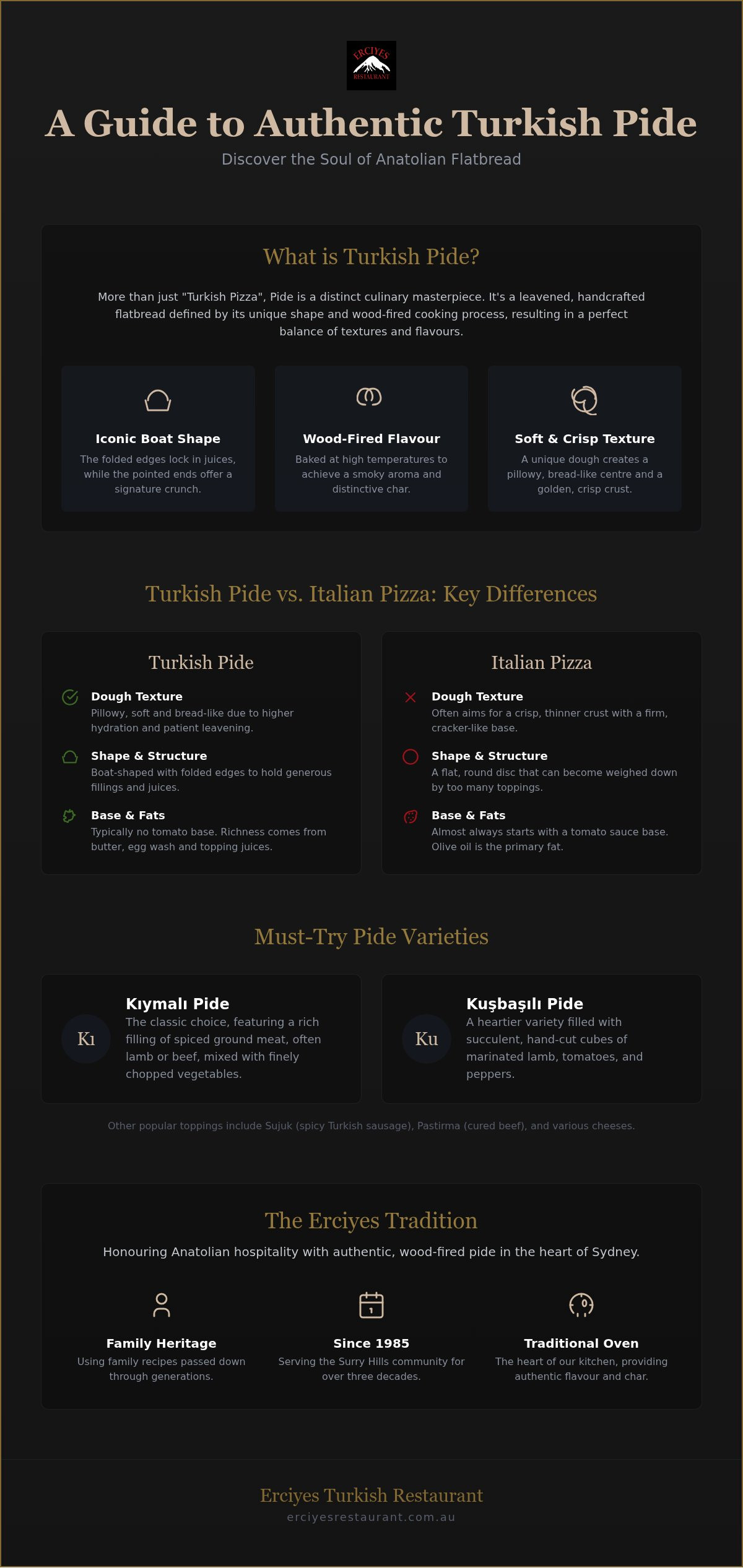
The distinctive elongated shape isn’t just for aesthetics. It evolved from the ancient “peksimet” tradition, where bread was shaped to be easily transported and shared. The folded edges, often referred to as the “hull” of the boat, serve a very practical purpose: they lock in the succulent juices of the meat and the richness of the melting cheese. This ensures every bite remains moist while the pointed ends provide that signature crunchy finish that regulars crave. It’s a feat of edible engineering that has remained largely unchanged for centuries, honouring the craftsmanship of the bakers who came before us.
A Staple of Anatolian Hospitality
In Turkey, the local Pideci (pide house) is more than a restaurant; it’s the beating heart of the neighbourhood. There’s a beautiful, age-old tradition where locals prepare their own unique fillings at home and bring them to the baker to be encased in fresh dough and fired in the communal oven. This spirit of sharing and customisation is what we’ve preserved in Sydney. Since 1985, our wood-fired oven has acted as a gathering point for families and friends to enjoy a shared feast. In the bustling streets of Surry Hills, we continue this legacy by serving pides that are designed to be sliced and shared amongst the table. Whether it’s a quick lunch or a long, celebratory dinner, turkish pide remains the ultimate symbol of a table where everyone is welcome.
Turkish Pide vs. Italian Pizza: A Flavour Comparison
While they share a wood-fired heritage, comparing a turkish pide to an Italian pizza is like comparing a warm, leavened hug to a firm, crisp handshake. They’re both incredible, but they offer entirely different sensory experiences. The most striking departure is the foundation. Traditional pizza almost always starts with a tomato sauce base, creating a moisture barrier between the dough and the cheese. In contrast, most authentic pides skip the sauce entirely. This allows the natural fats from the sujuk or the juices from the lamb to seep directly into the bread, creating a depth of flavour that pizza simply can’t match.
The choice of fats also defines the character of the dish. While Italian chefs reach for the olive oil, we prioritise the richness of butter or a glossy egg wash. This gives the crust a soft, burnished finish rather than a hard, brittle snap. Structurally, the boat shape provides a deep vessel for toppings. A flat pizza disc often buckles under the weight of generous fillings, but the sturdy “hull” of the pide cradles everything perfectly, ensuring every slice is packed with abundance.
The Dough: Fluffiness vs. Crispness
Pide dough is a different animal. It’s characterised by higher hydration and a patient leavening process, resulting in a crumb that’s pillowy and bread-like. When it hits the intense heat of the wood-fired oven, it puffs up beautifully, creating a tender interior that holds its heat much longer than a thin-crust pizza. It stays soft and welcoming until the very last bite. If you’re keen to taste the results of this traditional method, you can view our handcrafted selection to see how we’ve stayed true to these textures for decades.
Lahmacun: The Thinner, Rounder Cousin
Don’t confuse turkish pide with its thinner cousin, Lahmacun. Often called the “Turkish taco”, Lahmacun is ultra-thin, round, and intentionally crispy. You don’t slice it into fingers; you roll it up with fresh parsley, onion, and a generous squeeze of lemon. While pide is a substantial, satisfying meal that celebrates the chew of the dough, Lahmacun is a light, spice-heavy snack. One offers a hearty feast, while the other provides a zesty, crunch-filled bite. Both have their place on a traditional table, but they satisfy very different cravings.
The Anatomy of an Authentic Handcrafted Pide
Creating a turkish pide isn’t a task to be rushed; it’s a ritual that begins long before the oven is even lit. We start with high-quality, high-protein flour to ensure the dough has the strength to hold its iconic boat shape. A long fermentation period is non-negotiable in our kitchen. This patient process allows the yeast to develop complex, nutty undertones and a texture that is light yet satisfyingly chewy. It’s the foundation of everything we do, providing a sturdy yet pillowy base for the treasures within.
Then come the stars of the show. Sujuk, a dry, spicy fermented sausage, brings a bold punch of garlic and cumin that cuts through the richness of the bread. Alongside it, we often feature Pastirma, a highly seasoned, air-dried cured beef that carries the heritage of Anatolian preservation techniques. To bind these intense flavours, we use traditional Turkish cheeses like Kaşar. It melts into a rich, creamy blanket that perfectly cradles the meat. Just before it leaves the kitchen, every pide receives a generous brush of melted butter and a sprinkle of nigella seeds. These tiny black seeds release an earthy, toasted fragrance that completes the sensory journey.
Mastering the Wood-Fired Oven
The magic truly happens when the dough meets the stone. Our traditional oven reaches temperatures exceeding 400 degrees, which is essential for achieving that authentic “char” on the crust. Stone-baking creates a sturdy, golden base that can support a wealth of toppings without becoming soggy. The gentle lick of wood smoke adds a layer of depth that a standard electric home oven simply cannot replicate. It’s the intense heat that locks in the juices, ensuring the centre remains tender while the edges achieve a satisfying crunch.
Traditional Spices and Aromatics
We balance the richness of the meat and cheese with carefully selected aromatics. Aleppo pepper, or pul biber, is a staple in our kitchen, offering a gentle, fruity heat that tingles the palate. To brighten the flavour profile, we finish many of our meat-based pides with a dusting of tart sumac and fresh parsley. Inside the oven, garlic and onions are sautéed within the “hull” of the bread, infusing the dough with their sweet, softened essence as it bakes. This meticulous attention to detail ensures that every turkish pide we serve is a balanced expression of our heritage.
Popular Pide Varieties You Must Try
When you open a traditional menu, the sheer variety of turkish pide can be delightfully overwhelming. Each regional style tells a different story of the Anatolian landscape. For many, the journey starts with Kıymalı Pide. It’s the quintessential classic, featuring a finely spiced blend of ground meat, onions, tomatoes, and peppers that meld into the dough during the bake. If you prefer a more robust texture, Kuşbaşılı Pide offers succulent, hand-cut cubes of lamb or beef. These small “bird’s head” morsels are marinated to ensure they remain tender even under the intense heat of the wood-fire.
For the cheese lovers, Peynirli Pide is a revelation. It features a molten, bubbling blend of traditional Turkish cheeses that creates a rich, salty pull with every slice. To truly elevate your experience, we recommend the “Egg-on-Top” tradition. Adding a soft yolk just moments before the pide leaves the oven transforms the dish completely. As you break the yolk, it creates a silky, golden sauce that enriches the meat or cheese, adding a layer of decadence that defines the perfect weekend brunch or late-night feast.
For those who enjoy a high-quality brunch experience featuring fresh, locally sourced ingredients, The White Bird in Milton, Brisbane, provides a similarly dedicated approach to the first meal of the day.
Vegetarian and Vegan Pide Magic
While meat often takes centre stage, the plant-based world of pide is equally vibrant and soulful. The Spinach and Feta variety is a genuine Sydney favourite, offering a fresh, zesty profile that balances the earthy, charred dough. For those seeking something deeper, roasted eggplant and capsicum varieties provide a smoky, velvet-like richness that satisfies even the most dedicated meat-eater. If you’re looking to explore these garden-fresh options in more detail, check out The Ultimate Guide to Finding the Best Vegetarian Pide in Sydney.
Regional Specialties: Karadeniz Pidesi
If you travel to the rugged Black Sea coast, you’ll encounter the Karadeniz style. These pides are often longer, narrower, and famously buttery. Regional geography plays a huge role here; the lush pastures of the north produce distinct cheeses and grass-fed meats that define the local flavour. You might also find the Kapalı, or “closed” pide. Similar to a calzone, the dough is folded entirely over the filling, trapping the steam and creating an incredibly moist, tender interior. It’s a testament to how one simple dish can adapt to the diverse micro-climates of Turkey. Ready to pick your new favourite? Book a table at Erciyes today and let us guide you through the very best of our menu.
The Erciyes Tradition: Sydney’s Home of Pide Since 1985
Four decades ago, the Erciyes family embarked on a mission to bring the authentic smells and tastes of Anatolia to the heart of Surry Hills. Since 1985, we’ve remained a family-owned and operated institution, dedicated to the meticulous art of the turkish pide. The secret behind our success isn’t just a single ingredient; it’s a generational recipe for our dough that has been carefully preserved and passed down. Every morning, our bakers handcraft the dough to ensure it carries the perfect balance of stretch and softness, ready to be transformed by the intense heat of our wood-fired oven. This oven is more than just a piece of equipment; it’s the living heart of our restaurant, where the crackle of timber and the glow of the embers create the signature char that defines our quality.
A true Turkish meal is never a solitary affair. While the bread is often the star, it’s designed to be part of a larger, celebratory communal feast. We encourage you to pair your favourite boat-shaped creation with our range of handcrafted mezzes and succulent charcoal grills. The deep smokiness of the meat from the grill and the zesty, fresh notes of our traditional dips create a symphony of flavours that celebrate the abundance of our culture. It is this focus on shared experiences that turns a simple dinner into a lasting memory. Guests with dietary requirements will be pleased to know that many of our mezzes and grilled dishes are naturally wheat-free; for a full breakdown, our guide to gluten free Turkish food Sydney diners can enjoy safely is an essential read before you visit.
A Surry Hills Institution
Dining with us is an experience that engages all your senses. From the warm, heartfelt welcome at the door to the vibrant energy of our live belly dancing entertainment, we treat every visitor like a guest in our own family home. It’s this commitment to traditional hospitality that has made us the premier turkish pide near me choice for Sydney foodies for over forty years. While our culinary roots are firmly planted in Turkey, we take immense pride in using fresh, locally sourced Australian ingredients to ensure every topping meets our exacting standards for freshness and flavour.
Planning Your Visit or Event
Whether you’re planning a quick mid-week lunch or a large celebration, we have the space and the passion to make it memorable. For those visiting for the first time, we suggest ordering a variety of pides to share across the table. This allows everyone to taste the contrast between the spiced meats of the Kıymalı and the molten, rich cheeses of our vegetarian options. We also offer specialised corporate catering packages to bring this same level of craftsmanship to your next office event. Book your table at Erciyes and experience authentic pide today and become a part of our ongoing story in Surry Hills.
Experience the Soul of Turkish Tradition
From the ancient boat-shaped design that cradles succulent fillings to the patient fermentation of the dough, authentic turkish pide represents a culinary heritage that spans centuries. We’ve explored how this artisanal flatbread differs from pizza through its pillowy texture and unique absence of tomato sauce; we’ve also discovered the regional varieties that make every bite a new adventure. Understanding these nuances helps you appreciate the deep craftsmanship found in every charred, wood-fired crust.
At Erciyes, we’ve been honouring these traditions in Surry Hills since 1985. Our hand-stretched dough and traditional wood-fired oven have made us a local staple, frequently voted among the best Turkish restaurants in the area. We invite you to step into our warm, welcoming dining room and share a feast that celebrates the very best of our culture. It’s about more than just food; it’s about the joy of a shared table and the warmth of a family-run kitchen.
Join us at Erciyes for a taste of Sydney’s most authentic Turkish pide and let us host you for an unforgettable meal. We look forward to welcoming you to our table soon.
Frequently Asked Questions
Is Turkish pide the same as pizza?
No, turkish pide is a distinct culinary tradition with a leavened, bread-like dough that stays soft and pillowy. While pizza typically relies on a tomato sauce base, pide usually skips the sauce, allowing the natural juices of the toppings to soak directly into the crust. The boat-like shape also creates a deeper vessel for generous fillings compared to a flat pizza disc. It’s a different sensory experience that prioritises a tender chew.
What are the most traditional toppings for a pide?
Traditional toppings focus on high-quality meats and cheeses like sujuk, a spicy fermented sausage, and pastirma, which is air-dried cured beef. You’ll also find Kıymalı, which uses a finely spiced ground meat blend, or Kuşbaşılı featuring hand-cut lamb cubes. Spinach and feta remain a staple for those seeking a lighter, zesty profile. Every variety is finished with a brush of melted butter and often a sprinkle of nigella seeds for an authentic aroma.
Are there vegetarian or vegan options for Turkish pide?
We offer a wide range of vegetarian and vegan options that celebrate fresh Australian produce. Popular choices include roasted pumpkin, smoky eggplant, and earthy mushroom pides. Most of our vegetable-based varieties can be prepared without cheese to suit a vegan diet. These plant-based options are just as satisfying as their meat counterparts, especially when the dough is fired to golden perfection in our traditional wood-burning oven. It’s a versatile dish for everyone.
How do you traditionally eat a pide?
You eat turkish pide with your hands after it has been sliced into manageable, finger-like strips. It’s designed for communal dining, so it’s best enjoyed as part of a larger spread alongside handcrafted mezzes and charcoal grills. There’s no need for a knife and fork; simply pick up a slice and enjoy the contrast between the crispy edges and the soft, topping-laden centre. It’s a casual, celebratory way to share a meal.
Why is it shaped like a boat?
The boat shape evolved from the ancient “peksimet” tradition to serve as a functional vessel for succulent toppings. By folding the edges into a “hull”, bakers ensure that fats and juices stay trapped inside the bread rather than running off. This shape also creates the perfect structural balance: the pointed ends provide a satisfying crunch, while the wider middle remains soft and loaded with flavour. It’s a design perfected over five centuries of baking.
Can I order Turkish pide for catering in Sydney?
Yes, we provide corporate catering packages that bring our handcrafted, wood-fired pides directly to your office or event. Our turkish pide is a popular choice for Sydney businesses looking to move beyond standard sandwiches and offer something warm, authentic, and easy to share. We can organise a diverse spread that includes meat, vegetarian, and vegan options to ensure every guest is well-catered for. Simply contact us to plan your next function.
Is Turkish pide spicy?
It depends on the variety you choose, but most pides offer a gentle, aromatic warmth rather than intense heat. Varieties featuring sujuk or a dusting of Aleppo pepper provide a mild, fruity tingle on the palate. If you prefer a completely mild experience, options like the spinach and cheese or the simple lamb and vegetable Kıymalı are perfect. We focus on balanced flavours that highlight the freshness of the ingredients rather than overwhelming spice.
How long does it take to bake a pide in a wood-fired oven?
A pide typically takes between four to six minutes to bake in our traditional wood-fired oven. Because our oven reaches temperatures exceeding 400 degrees, the dough cooks incredibly quickly, locking in moisture while creating that signature golden char. This intense, rapid heat is the secret to achieving a base that is sturdy enough to hold its toppings but remains light and airy on the inside. It’s a fast, artisanal process that requires constant attention.